
Performers are Mean People
/It would seem the most obvious thing in the world that martial arts are performing arts. I mean, Jackie Chan, hello? But denial of this notion is deeply embedded in contemporary Chinese culture.
 Beijing Opera (Jingju) has as its most basic physical training something called "da" literally hitting or striking. The warm ups I learned as a kid studying Northern Shaolin are the very same ones used in Beijing Opera. The stage roles are divided into either martial or civil categories (wu and wen). Extensive weapons training is given to everyone because much of the traditional repertoire involves depicting historic conflicts and battles. Probably the best piece of evidence is the most famous Chinese Opera star of the 20th Century, the female impersonating dan Mei Lanfeng, studied Baguazhang with one of the toughest internal martial artists of his time! It was said to have improved his sword dance.
Yet people will tell you that Chinese Opera has nothing to do with martial arts.
Beijing Opera is just one of many forms of physical theater in China. There are urban regional styles like what Jackie Chan studied as a kid and there are rural regional styles. There are also village lineage families, and there are amateur village and regional styles. And within all of those categories there are ritual styles. This is a quick gloss to give readers a sense of the scope--there were probably more than a hundred styles of physical theater in 19th Century China.
But there is a big problem here. Denial.
Jackie Chan has said in variously self deprecating ways that he doesn't know about fighting. And although it is well known that the Physical Theater of the Red Junks was created by the first Wing-Chun masters, it is also reported that they kept their fighting skills entirely separate from their performing skills. Even today tight lines of distinction are drawn---at least in peoples minds---despite the fact that the stances used in fighting and performing are the same, and it is hard to know when a martial arts form has crossed-over into theater.
And everyone knows that Bruce Lee left Hong Kong for the US because he wanted to come here and teach Cha-Cha, right? It's true.
Martial artists go to great lengths to deny any links to performing arts; the "New Life" and other nationalists movements in the 20th Century set out to completely separate martial arts from religious ritual and theater. Sometimes they went ahead and just changed the arts, like Yang and Wu styles of taijiquan. For example, Chen, the older style, is chockablock with pantomime training. Other times they just discarded whole categories of practice, like back bends and high kicks, and sometimes they went for straight faced denial: "No, that movement isn't for cueing the music, it's for poking your eyes out!"
Mean People!
I have not even finished reading David Johnson's new book, Spectacle and Sacrifice, The Ritual Foundations of Village Life in North China, but the chapter on Entertainers is so astounding I just had to blog!
Entertainers (yuehu) were a degraded caste in China. Long time readers of this blog may know that I was deeply shocked and offended by my experiences of caste in India in the 1990's. Chinese culture is not nearly as shocking to my American sensibilities, but then again, I've been studying Chinese martial arts for 32 years and no one has ever spelled it out to me as clearly as Johnson does in his book.
An entertainer had to move off to the side of the road to let "good people" pass.
While there were two major categories of entertainers, there were also castes within castes. The basic categories were coarse (cu) and fine (xi), generally it appears that the coarse played music and the fine played music but also had acting skills.
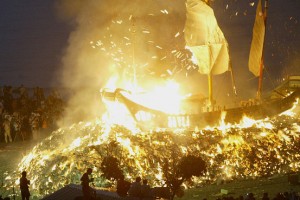 "Mean people" were used for everything from entertaining visiting dignitaries, to weddings, to the most sacred rituals of a region. "Opera Families" were profane outsiders who lived in separate districts or separate villages and yet were paid to entertain and purify--to bring order and expel evil.
A caste of hated artists brings to mind Roma (Gypsy) culture in Europe [hat tip to Liu Ming for the analogy]. The "mean people" were considered profane, but they were a necessity for the maintenance of the sacred. Ritual Theater was the most common and widespread religious experience in China before the 20th Century. (Here are some links to previous posts.)
There were many different types of ritual performance throughout the calender year and every single village handled things differently. So it is important to note that amateur commoners performed important roles in rituals and theater, as did Daoist priest, Buddhist monks, Yinyang masters, military personal, local elites, children and even high officials. In fact, I think it is fair to say that some village rituals had a role for everyone.
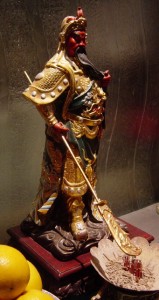 Which brings us back to martial arts. Martial arts were used extensively in these rituals. It seems almost too obvious that the basic physical training for popular and rarefied physical theater in China was in fact martial arts training. Each region had it's own style of gongfu (kung fu) and it's own style of theater (ci). But the basic training was the same. It could be refined for either fighting, performing, or both.
What I've just now realized is that the ideology of modernity functioned in China as a cover for the deep animosity towards the performing castes. These castes are now probably close to extinction. Of course it's risky to generalize, but we now have a better explanation of why most martial arts lineages did everything they could to deny their past participation in ritual performance (lion dance being the big exception). While the entertainer castes were officially liberated, their historic vocation as ritual experts was derided as the root cause of China's humiliations and failures as a nation! I suspect that in some cases individual artists from degraded castes managed to survive by first denying any connection to ritual theater, and then skillfully transforming themselves into pure martial artists.
Now I have to re-think what qigong is in this context. Kind of gives a different meaning to the expression "secret teaching," doesn't it?
(Remember if you are reading this on facebook you can see more images by clicking "original context" below.)
Beijing Opera (Jingju) has as its most basic physical training something called "da" literally hitting or striking. The warm ups I learned as a kid studying Northern Shaolin are the very same ones used in Beijing Opera. The stage roles are divided into either martial or civil categories (wu and wen). Extensive weapons training is given to everyone because much of the traditional repertoire involves depicting historic conflicts and battles. Probably the best piece of evidence is the most famous Chinese Opera star of the 20th Century, the female impersonating dan Mei Lanfeng, studied Baguazhang with one of the toughest internal martial artists of his time! It was said to have improved his sword dance.Yet people will tell you that Chinese Opera has nothing to do with martial arts.
Beijing Opera is just one of many forms of physical theater in China. There are urban regional styles like what Jackie Chan studied as a kid and there are rural regional styles. There are also village lineage families, and there are amateur village and regional styles. And within all of those categories there are ritual styles. This is a quick gloss to give readers a sense of the scope--there were probably more than a hundred styles of physical theater in 19th Century China.
But there is a big problem here. Denial.
Jackie Chan has said in variously self deprecating ways that he doesn't know about fighting. And although it is well known that the Physical Theater of the Red Junks was created by the first Wing-Chun masters, it is also reported that they kept their fighting skills entirely separate from their performing skills. Even today tight lines of distinction are drawn---at least in peoples minds---despite the fact that the stances used in fighting and performing are the same, and it is hard to know when a martial arts form has crossed-over into theater.
And everyone knows that Bruce Lee left Hong Kong for the US because he wanted to come here and teach Cha-Cha, right? It's true.
Martial artists go to great lengths to deny any links to performing arts; the "New Life" and other nationalists movements in the 20th Century set out to completely separate martial arts from religious ritual and theater. Sometimes they went ahead and just changed the arts, like Yang and Wu styles of taijiquan. For example, Chen, the older style, is chockablock with pantomime training. Other times they just discarded whole categories of practice, like back bends and high kicks, and sometimes they went for straight faced denial: "No, that movement isn't for cueing the music, it's for poking your eyes out!"
Mean People!
I have not even finished reading David Johnson's new book, Spectacle and Sacrifice, The Ritual Foundations of Village Life in North China, but the chapter on Entertainers is so astounding I just had to blog!
Entertainers (yuehu) were a degraded caste in China. Long time readers of this blog may know that I was deeply shocked and offended by my experiences of caste in India in the 1990's. Chinese culture is not nearly as shocking to my American sensibilities, but then again, I've been studying Chinese martial arts for 32 years and no one has ever spelled it out to me as clearly as Johnson does in his book.
An entertainer had to move off to the side of the road to let "good people" pass.
[Performers] were known as jianmin, "mean people": they could not marry commoners, could not sit for examinations, and could not change their status. In some cases they were required to be on call to the local yamen to entertain at banquets and other occasions. (Just what their responsibilities were is never made clear, but they may well have included sexual services.) They were treated with contempt by the general population....
While there were two major categories of entertainers, there were also castes within castes. The basic categories were coarse (cu) and fine (xi), generally it appears that the coarse played music and the fine played music but also had acting skills.
"Mean people" were used for everything from entertaining visiting dignitaries, to weddings, to the most sacred rituals of a region. "Opera Families" were profane outsiders who lived in separate districts or separate villages and yet were paid to entertain and purify--to bring order and expel evil.A caste of hated artists brings to mind Roma (Gypsy) culture in Europe [hat tip to Liu Ming for the analogy]. The "mean people" were considered profane, but they were a necessity for the maintenance of the sacred. Ritual Theater was the most common and widespread religious experience in China before the 20th Century. (Here are some links to previous posts.)
There were many different types of ritual performance throughout the calender year and every single village handled things differently. So it is important to note that amateur commoners performed important roles in rituals and theater, as did Daoist priest, Buddhist monks, Yinyang masters, military personal, local elites, children and even high officials. In fact, I think it is fair to say that some village rituals had a role for everyone.
Which brings us back to martial arts. Martial arts were used extensively in these rituals. It seems almost too obvious that the basic physical training for popular and rarefied physical theater in China was in fact martial arts training. Each region had it's own style of gongfu (kung fu) and it's own style of theater (ci). But the basic training was the same. It could be refined for either fighting, performing, or both.What I've just now realized is that the ideology of modernity functioned in China as a cover for the deep animosity towards the performing castes. These castes are now probably close to extinction. Of course it's risky to generalize, but we now have a better explanation of why most martial arts lineages did everything they could to deny their past participation in ritual performance (lion dance being the big exception). While the entertainer castes were officially liberated, their historic vocation as ritual experts was derided as the root cause of China's humiliations and failures as a nation! I suspect that in some cases individual artists from degraded castes managed to survive by first denying any connection to ritual theater, and then skillfully transforming themselves into pure martial artists.
Now I have to re-think what qigong is in this context. Kind of gives a different meaning to the expression "secret teaching," doesn't it?
(Remember if you are reading this on facebook you can see more images by clicking "original context" below.)
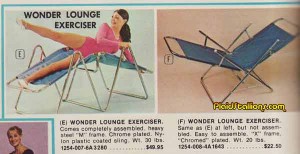 How do laws effect the way we train our bodies? Drugs, hormones, and steroids can dramatically change the way we train. We've all seen the pictures. Pain is one of the big factors that stops people from training yet some painkillers are totally legal and some are not. The whole steroid issue is confusing because one of the main reasons people take them is to train past the point at which pain would normally stop a person form training, so why are painkillers OK and steroids aren't? Oh yeah side effects, like painkillers don't have those. Many people are now aware that Ma Huang, an important herb in the Chinese Medical Pharmacopeia, is now illegal in the US because it was being used as a steroid, and one person gave themselves a heart attack. Please give us our Ma Huang back!
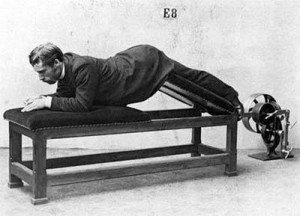 There are tons of exercise inventions, toys and apparatus that are illegal because someone hurt themselves and sued. I suspect we are missing out on some brilliant training equipment and other fun stuff because no manufacturer was will to take the risk.
 There are two parts to it. The first is basic physical education. If a weighted knee rolls inward and the foot turns outward simultaneously, the Anterior Cruciate Ligament is in danger of breaking. Everyone needs to know this. Just telling people to keep their knee over their toe is not enough information. Students need to understand what they are training to avoid. But a knee really can move in a complete circle around the foot as long as forces are not putting that ligament at risk. In fact it is a good idea to train this way because it teaches the student to keep their whole foot on the ground, there-by avoiding rolling over on the ankle and ma
 ny other possible strains.
 With the knee forward of the toe and the Achilles tendon fully extended the heel can even come off the ground. This is used in Bagua Zhang's so called "lower basin" training, and in Daoyin dragon walk. These two are advanced techniques and need to be introduced over time, but they are safe.
 Some of the old masters were brutal. And it is probably true that people got badly hurt every once in a while. I'm happy to leave that in the past. But there is also a kind of rough confidence about the body which comes from tens of thousands of hours of practice. To the untrained eye that confidence may look dangerous or risky when in fact it is a gift and a treasure.
 Dojorat linked to this
  months. High-school was safer over all, but the fights, if they happened were more dangerous. People also got " jumped," which was kind of like being mugged by a group, but it was usually people you knew. I suspect that
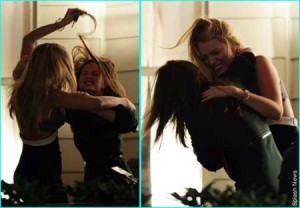 Young women in the US who are in high-school today have mothers who "benefited" from Title 9, which mandated that girls have equal access to athletics. They are second generation athletes. There is also a new phenomenon of female clowning which seems to be part of the same change. The clown school in San Francisco has 50% female enrollment.