Dantian Disease

One of the most interesting discussions from Internal Martial Arts Summer Camp was about Dantian* Disease.  Now, at first blush one is likely to surmise this is a euphemism for being fat.  But actually it was about the specific types of work related injuries internal martial artists get.  
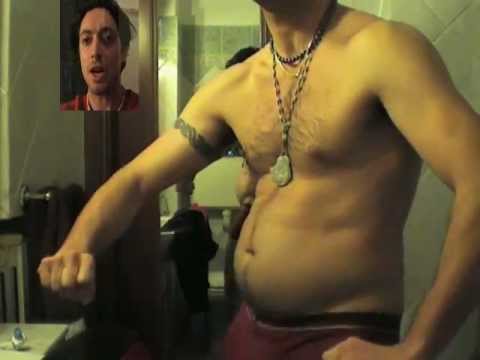
Some weird image from the internet demonstrating a bulging dantianFirst we need to put aside the over eating issue.  Any athlete who trains very hard when they are young is going to consume large amounts of food.  Most athletes who fail to improve the efficiency of their movement before age 30, get too injured to continue.  An athlete who succeeds at improving the efficiency of his movement, must significantly reduce the amount of food he eats by the age of 35 or he will begin gaining a lot of weight.  While reducing food intake is certainly an act of will, it does not require an act of will power.  As movement becomes more efficient, appetite naturally diminishes.  It is quite simply the result of paying attention.

We are also not discussing body type here.  All the various body types have intrinsic beauty.

As a person develops internal power (neijin), several changes take place in the body.  First of all, the legs do more of the work and the arms do less.  Secondly the muscles that run up and down the back closest to the spine become stronger.  These muscles are balanced by the iliopsoas muscles which travel in front of the pelvis from the mid- and lower back to the insides of the legs. The softer, and more relaxed one is in the upper body the more efficiently, and effectively internal power is expressed through these muscles and other adjacent muscles as well.  

The problem arises because the particular quality of muscle that develops is very dense, it becomes progressively more tendon like.  The thicker and denser a tendon is, the more elastic power it stores.  Like a strong bow that is very difficult to draw, once it is fully drawn it has immense shooting power.  His type of muscle must be lengthened everyday otherwise it will put pressure on the lower back.

Of course the lower back can actually handle an enormous amount of pressure.  But over long periods of time, or after some minor injury temporarily makes whole body lengthening difficult, the spinal discs can become compressed.  This compression causes the belly, casually referred to as “the lower dantian,” to stick out!

Compression almost always produces some pain, but we have wildly different sensitivities to pain, as well as mechanisms for coping with it.  Most people can ignore minor pain for years on end with out any trouble at all.  Especially in a case like this where there can be substantial benefits in the way of power.

So, how does one fix this problem? this internal occupational hazard? How does one reduce a bulging dantian?  By simply and completely conforming to Daoist precepts; cultivate weakness and emptiness. 


*Note: The term dantian, is literally cinnabar field.  It refers simultaneously to a long list of concepts.  In external alchemy (early chemistry), the composite substance cinnabar was supposed to be refined into mercury and then into gold and other rare elements.  In internal alchemy, mixed qi and jing are distilled and then refined into shen (spirit?) which is then refined into xu (emptiness).  The term could metaphorically refer simply to a place where change takes place.  Tian by itself simply means a field, but the pairing of cinnabar with a field implies a large outdoor space where ritual transformation or rectification takes place.  In martial arts the dantian most often refers to the lower third of the torso simultaneously as a location and a function of centralized organization or coordination for the storing and releasing of force.  There are other areas occasionally referred to as dantians, for instance the head is sometimes called the upper dantian in reference to its role in inner alchemy.  Three dantians an upper lower and middle is also conventional, and some would even venture that the whole body is a dantian.
Live Blogging 3

Very excited about my new secret weapon.  It is called plunger power.  But of course I can not reveal much more than the name.  It makes you back away while making me more healthy!  

George Xu was talking this morning about this poem (at the bottom)

http://realtaichi.blogspot.co.uk/2007/04/two-heroes-meet.html

And mysteriously yesterday and today they are discussion the same guy Song Shuming on Rum Soaked Fist!

Song, actually claimed that poem and a bunch more that I have yet to find, were written by a famous daoist he was directly descended from, Song Yuanqiao.  But on closer examination this Song Yuanqiao was most likely known because he was in a Wuxia (martial arts) novel!

Fun stuff.  I hope we find the full text. And if anyone knows more about a real historical figure called Song Yuanqian or has read the novel, please help us out in the comments below!  

Also I ordered this book:  

Green Peony and the Rise of the Chinese Martial Arts Novel (Suny Series in Chinese Philosophy and Culture) 
Wan, Margaret B.; Paperback 


Update: Found the novel-- http://en.wikipedia.org/wiki/List_of_The_Heaven_Sword_and_Dragon_Saber_characters

Live Blogging 2

This morning George Xu told me about his elementry school class mate who was a professionally trained pick pocket.  This came up because we were discussing the similarities between high levels of martial arts skill, magic tricks, and pick pocketing.

Anyway, there was a pick pocketing guild for crying out loud.  This kid had mastered 8th Dan on Rolling Wheels!  Which is the equivalent of 6th Dan on still ground.  The ranking went all the way up to 10th Dan.  At 8th Dan you had to be able to pick one persons pocket for every stop on the trolley.  

The kid got caught after he picked the cheif of police's pocket, successfully I should add, but the cheif of police was wise to their strategies of escape and realized after the kid asked him a question that this kid was trying to figure out if he should exit right away or wait.  The police ended up killing the kids teacher after they kept the kid in jail for 6 months.  

________________________

Class is going great, but there isn't much to report at the moment.  

Live Blogging

I'm here live blogging at the George Xu workshop in Sonoma, California.  We are at a beautiful Zen Mountain retreat, I'm staying in a yurt.  

Lots of fun people here, an argument about stem cells and qi nearly came to blows.  Very funny, but then everyone laughed it off and went to breakfast.  It is very stimulating already because there is a high level of skill for me to interact with and a high level of intellect too.  

I heard both roosters and coyotes this morning.

George layed out his current iteration of levels, I will briefly state them for the record but I'm not sure if I got it right:

1. loose free and active upper body

1. (alternate) external/physical leads the dantian

2. Dantian leads the body, all types of dantian originating or controlling power

2. (alternate) dantain and body move at the same time

3. feet lead 

3.  (alternate) whole body is a dantian and empty, allowing the feet to lead

4. mind outside the body attacks opponents weak point (lack of awareness error), [this is seeing dependent] qi rising and sinking at the same time, empty and full at the same time.

5. Internal is bigger then external. (can be done with eyes closed)


These can be found on George's website described in other ways.  But they have to be felt, that is the only way to learn/unlearn them.  

______________________

Mean while I was thinking about a new way to define internal and external.

External:  Upon seeing or feeling the "perfect model" one tries to copy it by refining what they already know.

Internal:  Upon seeing or feeling the "perfect model" one tries to identify exactly what they are already doing and then just stop doing that thing (discard that power).  

This then suggests that original nature, or predator mind, or true nature...whatever we want to call it, is available and discoverable only when we drop our aggression, only when we drop our identity, only when we discard all effort, only when we discard all intention, or focus...etc, etc....

Speed

I learned to skateboard on steep hills in San Francisco.  They are steep enough that one hardly ever needs to push off with the foot, it’s just jump on and go.  Skateboards do not have speed controls.  No accelerator, no brakes.  How fast you are going is determined entirely by the steepness of the hill and how often one turns or slides.  Of course, this being the Era of The Wimp, now’a’days some skateboards have itty-bitty wheels that keep them moving at snail like speeds.  But in my day 35 miles an hour was about what one would expect to achieve if you went straight down the hill.  If you were going too fast to make a turn, you just died.  

That seems like a pretty good introduction to a mostly unrelated subject I want to talk about.  There is a common and legitimate compliant about people who practice push-hands as training for fighting.  The complaint is that some techniques only seem to work when they are done slowly.  Or stated another way, push-hands techniques tend to fail at higher speeds.  

There is a way to inoculate oneself against this problem.  It is quite simple and easy to  condition.  Of course it has to be conditioned to function at high speeds.  Normal learning and practicing won’t work unless they are put inside of a spontaneity inducing game.

Here are the instructions.  Begin touching forearms.  Stick to your partner.  If you become unstuck, just start over.  Use the entire surface of your arms, you can use other body parts too as long as you stick.  There are three levels of sticking and they must be practiced distinctly and exclusively.  The order in which you condition them does not matter.  1) Bone- structure against structure, if you lose contact with your partner’s entire structure, even for a split second, you are not doing it.  2) Skin- the contact must become so light that it is continuously sliding, skin passing by skin.  If you roll along the surface or press into the muscle or bone, or lose contact, you are not doing it.  3) Muscle- flesh touching flesh continuous rolling, no sliding what-so-ever, no pressing structure against structure, no bone contact, no losing contact.  (note: 1 and 2 are the extremes, 3 is in the middle)

The three levels must be distinct because they become guides for spontaneous action.  This is really part of the soft-hand (roushou) game more than it is part of push-hands.  To practice this you must develop a level of emotional safety with your partner that allows you to slap each other anywhere.  You should at least be at the level of comfort in which slapping and being slapped makes you happy.  (Generally speaking, if you and your partner are comfortable doing this while crying, you have reached an even higher level of trust.)

I’m not particularly confident that this type of kinesthetic knowledge can be communicated through a paragraph of writing, but if you already have an serious push-hands, roushou or sticky-hands practice, hopefully you can figure it out.  Keep in mind this key idea:  You are developing a game that conditions spontaneity such that the need to control speed is no longer a consideration.  Like skateboarding, there is no accelerator and there are no brakes.  Speed is determined by the depth of contact. 

Gomde

After being on the road for three months and returning to San Francisco for just over a week, I headed up to Leggett California to join my wife Sarah at a Tibetan Buddhist Retreat Center called Rangjung Yeshe Gomde, or just Gomde for short.

Since I’ve gotten here I’ve had some time to work on my book everyday.  The retreats here taper off with the end of the September and we are staying around to help run the place for the next three months.  Hopefully this will give me a lot of time to write.  Lots of people have asked me what I’m writing about so I’ve conjured a proto-title: Obscuring the Martial Arts; how and why the arts have been cut off from their roots and what finding those roots reveals about contemporary practice.  It’s a start.

Anyway, Gomde is on the Eel River which is great for swimming this time of year and we have a canoe to paddle about in too.  We are sleeping outside in a big tent until things quiet down for the fall.  Hopefully by the time the rains start some private indoor space will open up.

 In this part of the country you have to really look where you are walking because you might step on a hippy, there are a lot of them up here.  I have deep respect for those highly evolved individuals who have developed the ability to manage incompetent people.  Blessings.

Besides my usual gongfu practice, writing and helping with whatever needs to get done around here, I’ve been playing my tabla drum and chatting with the Tibetan language experts and various Doctoral candidates in Buddhist studies.  Gomde is at the center of a project which is working on translating 84,000 Buddhist texts.  

I do plan to write about Tibetan Buddhism a bit.  I’m working up to it.  

The Binary Mind

I've been meaning to write about a short list of people.  And I have a list of blog ideas to follow up on.  But this morning I'm thinking about something else that is holding me back.

Johnstone's discussion of status in the last post can be seen from a different angle.  I seem to have developed the ability to decide whether to have a positive or a negative outlook.  I can choose whether to frame the world by its positives or by its negatives.  I'm not sure if the split in my mind is becoming stronger or if I'm just becoming more aware of it.  

This applies to people too.  I can choose whether to view someone with respect or contempt.  If I view everyone with respect I become a happy, low status, bumbling idiot.  If I view everyone with contempt I become a dower fashion model.

This applies to objects in the world and events too.  I can treat the chair I'm sitting on with contempt or respect.  It changes the way I sit, and feel.  I can treat everything in your house with contempt, or everything in San Francisco with contempt.  Or, I can treat everything on a mountain path with respect or everything on someone elses blog with respect.  

The norm however is to mix and match, to respect the weather and have contempt for a particular person.  Or even to have contempt for a person's clothing choices but respect for their opinions on food.  

I can respect how cool a chair looks but have contempt for the lack of thought that went into making it comfortable to sit in.  

I would posit that this (0,1) or (+,–) is fundament to thinking.  An idea or a complex opinion is really a long chain of pluses and minuses or perhaps a series of ( 0 )boxes inside of ( 1 )boxes, inside of (0) boxes (n+1, n+2...)(n–1, n–2...).  

Perhaps, to my readers, this seems too robotic, or too enlightened, or too obvious.  If this is the case then you have either consciously or unconsciously put this post in the negative box.  On the other hand if you are feeling that this post could very well improve your driving skills (do you treat stop signs with contempt?), or get you a promotion at work, or make you a better meditator, or mediator, then you have consciously or unconsciously put this post in a positive box.  

Someone might like me because I'm a jerk. Or think I'm a jerk, but love my ideas. But still, I'm not seeing any nuance in the world, only layers of pluses and minuses, respect and contempt, pity and purchase.  

The decision, up or down, is, I think, faster than the conscious mind.  The conscious mind is always playing catch-up.  In other words, our mind chooses to prefer certain musical notes, in certain combinations, to other tones, and only after the decision has been made can we explain it to ourselves.  If we don't explain it to ourselves, it remains unconscious, but it is still happening all the time.  These preferences are imprinting on us all day long, and at night during our dreams.  

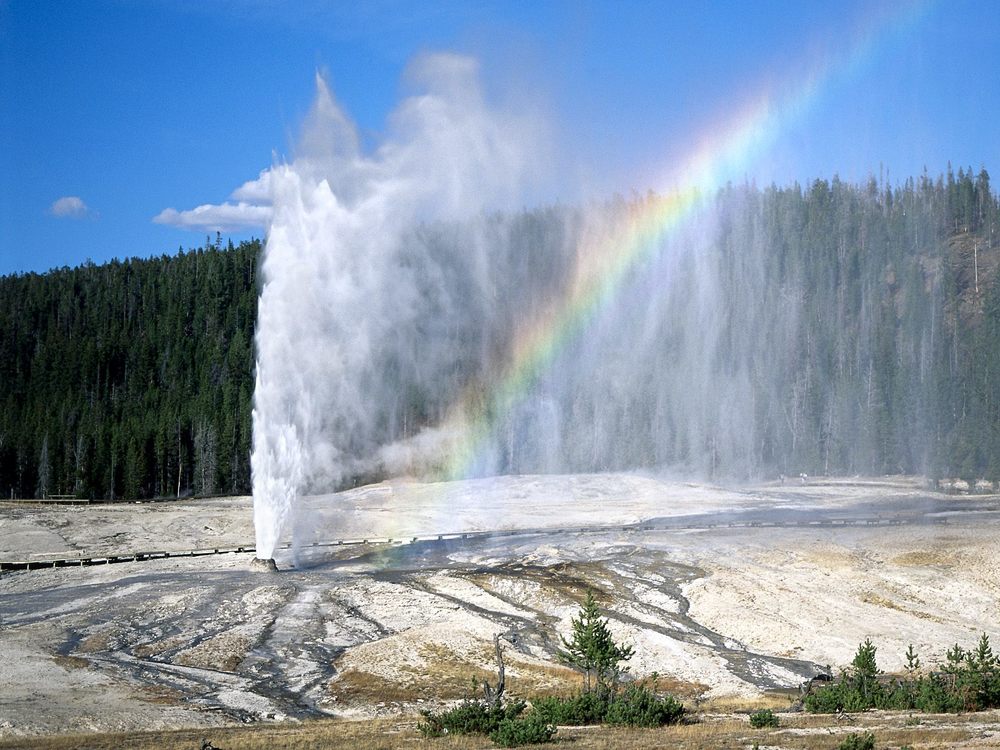
So how is it possible that I am claiming to be able to choose?  I suspect that, for instance, I look at a baby and I think that is a baby, it is a beautiful unique human life, I must respect it, and it has such cute eyes, but it has a pretty ugly face, and that scream is really annoying!  Well, I think it is possible to just look at the baby and erase all of those pluses and minuses.  After a moment or two of looking at this baby as a zero, no doubt another preference will come up.  But I can just erase that preference too.  At that point I have a choice.  I can choose respect or contempt.  Once I've chosen contempt (for instance), the justifications and explanations just flow out like hot water from the Old Faithful geyser at Yellow Springs National Park.  One of the more boring and predictable geysers at Yellow Stone.


Failing at the Beginning and the End

International living treasure, Keith Johnstone.  

If you haven't read his book Impro: Improvisation and the Theatre  ...well, you're missing out on one of the best books ever written.  But then maybe I'm biased.  I'm not a freaking robot, automaton, empty shirt!  Then again, how would I know if I was one?  
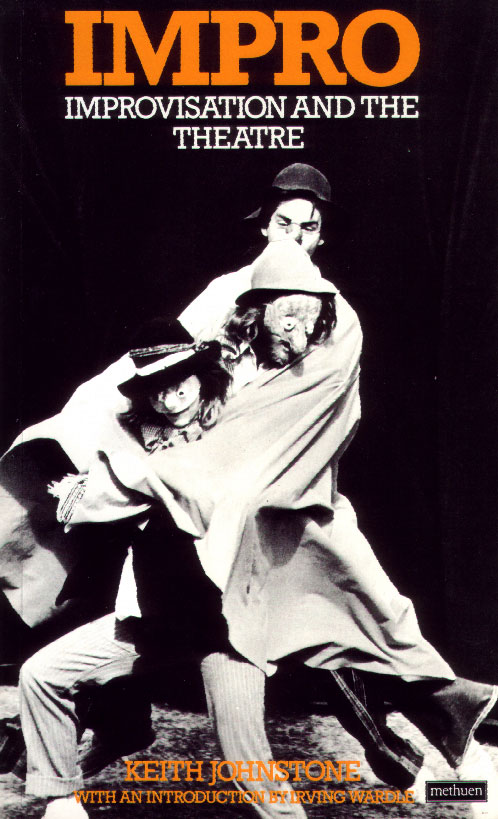
When I finally got Sgt. Rory Miller to read Johnstone, he wrote back to me, "Martial arts are to fighting as acting is to improvisation."

There is a little bit of new material in these videos, stuff that isn't in Impro.  I only know that because I've read the book countless times.  One thing that is new, is that he defines trance simply as the absence of a little voice in the back of our heads analyzing, strategizing, calculating and attempting to steer our actions.  

Having had a bit of time on my trip to read some Buddhist texts with my wife, I realized that I reached enlightenment. My wife says that regardless of this achievement, I'm still responsible for washing the dishes. Unfortunately, being an unlicensed immortal, there has been no one around to give me a certificate of completion.  Buddhists and Daoists alike, use various description to describe the same experience.  One calls it a view, another calls it a base, and another calls it a pervasive awareness, complete emptiness, a limitless release of the spatial mind.  The Zen tradition, Dzogchen (Tibetan Buddhism), Zuowang (Daoism), all refer to transcending duality via a non-conceptual method.  

I hear it reported that some people have trouble getting non-conceptual methods to work, so they try other stuff.  It is really out of all this other stuff that someone came up with the term 'enlightened,' because if you just do the non-conceptual thing, well...it doesn't lead to that kind of naming.

If I were to get up on a stage and start explicitly teaching non-conceptuality, I would use the stage itself as my metaphor.  The experience is like an empty stage.  You can put anything on it.  It doesn't change the stage or make it go away.  You can easily be so involved in what is on the stage that you forget there is a stage there.

So I would hazard that everything on the stage is a sort of trance.  I haven't squared this with Keith Johnstone's explanation.  But I'm working on it.

Something he says in the 6th video in this series is that movement experts as they age can get really grumpy and crotchety in general and tend to have a hard time improvising.  This is because their bodies know what to do.  That's a bit close to home.

I mean, I'm tapped into the flow and all, but the process of teaching what is right, what is correct movement-wise, is a double edged spear.  It is imperative for us as teachers that we let go of knowing.  It is imperative that we keep returning to 'beginner's body;' to uncoordinated, clumsy, wild and empty.

As a student, I have mostly held improvisation as the fruition of practice.  I studied with Johnstone when I was 15 and the damage was permanent.  

It is dreadfully important for teachers to create situations where they themselves fail. Otherwise we condition ourselves to believe we are correct.  If we are conditioned to a belief, we will be insulated from reality.  We have to keep creating new tests.  And if we want to condition our students to be free fighters, then they also need to experience us, their teachers, failing miserably.  Did you know that if coffee makes you sleepy, it is diagnostic for ADHD?

Probably not great business advice huh?  Still, I'm going to get yinyang t-shirts printed that say 'Sometimes I'm a Loser,' and make a go of it.  I heard that the Italians named weak coffee Americano, because they wanted to make fun of us weak Americans.  Like taking on the insult Yankee, which meant one who masturbates a lot, I think we as teachers can try to find some actual humility.  Like the stage, it's always there, it's always available...

There is an imperative for us to figure out how to put improvisation at the very beginning and keep it at the center of martial arts training at every level.  

_________________

Johnstone says we are a culture that fears trance.  Perhaps we could say, wherever modernity arises trance goes into hiding.  When we talk about the art of improvisational movement we are talking about going into different types of trance.  There are many, many way to do this, setting a rhythm, catching a feeling, imagining a scene.  

Isn't it interesting that there is a parallel between Johnstone talking about the central challenge of knowing what the person we are on stage with wants, and the Taijiquan classics (Sunzi too) talking about knowing your adversary better than she knows herself?  

Martial Arts forms and stances are really like scripts that we extemporize off of, we use them to spin off into chaos and then we fight our way back to them.   In a pure improvisation we wouldn't know them, we might not even remember them.  

This body forgetting is a great challenge.  Are tension and remembering one and the same?


Wondering Where the Wealth is Coming From?

My wife and I are coming to the end of a three month road trip.  The future still looks uncertain, as I suspected it would.

I'm in Bend at the moment.  There is more ballet here than martial arts.  I don't know how to interpret that information.  

For those following our trip spatially, after leaving Hamilton Montana we travelled up to Glacier National Park, which is very cool.  We could have spent a month there I think, perhaps on a future trip.  On the way out we visited the Miracle of America Museum on my sister's recommendation (she is a museum-ologist).  It is an amazingly weird place, there is a whole room dedicated to old chain saws, there are old fighter jets and missile carriers and farm equipment.  There is a fantastic history of the snow mobile.  Lot's of stuff on war.  Old toys.  Part junk yard, part tribute to white supremacy, part 'wow, that's some cool old sh-t' and part 'I've always wanted to see one of those up close and swing it around my head' kind of a place.  

We spent a night on the ...... river in Idaho and landed at my sister's place in Seattle the next day.  I've always liked Seattle, I spent a lot of time there with my grandmother as a kid.  Strangely, they have a dog poo problem like San Francisco had in the '70's before personal responsibility became a 'thing.'  Seattle seems to be a little more beer oriented than San Francisco but compared to Boulder, Bozeman, or Missoula, it is more on the wine side of the fence.  It is also a lot bigger.  I had great meetings with martial artists and my friend Josh Leeger. 

We then went down to Portland and spent a wonderful night with Rory Miller and his wife Kami.  Then ate and drank our way through Portland with my wife Sarah's brother who is a chef.  Portland has changed a lot since I was there last.  It has a huge food, coffee, bicycles and beer scene.  

As a general rule in America, there is more Homeless Pride the closer one comes to the coast.

Here is the list of insanely energetic Martial Arts folk I've met with a few quick comments:

Susan Mathews (Durango: Great use of centerline and wide qi base, fun and insightful about working with parkinsons)

Mike Sigman (Durango:  Strong opinion about what the beginning instructions and method need to be in any internal martial arts training.  Basically, the body is a spiderman suit (a fine web-like net) controlled by the dantain.  Excellent discussion and rough play, people should be lining up to test their theories with him!)

Ken Cohen (Boulder:  Fantastic discussion, very supportive and insightful.  He way exceeded my expectation in terms of knowledge and experience and openness!)

Steven Smith (Missoula:  Great time playing by the rivers, insightful about the importance of putting improvisation at the front end of martial arts training.)

Chris from the old blog Martial Development (Seattle: runs a wonderful push hands group!  Great night of play with him and also Steve, as former student of New York's "The Black Taoist.")

Josh Leeger (Seattle:  As usually, had no trouble keeping my interest over 4.5 hours of rapid fire ideas exchange.)

Xie Bingcan (Seattle:  Could not feel any physcial action at all in his arms or shoulders while he tossed students around.)

Rory Miller (Portland:  He openned his safe for me.  Great insights about culture flowing at a mile a minute while fighting in the kitchen, whiskey, nagila, and swords.)

More to come.

 _____

By the way, I know that all wealth comes from creativity (unless you happen to trip on a giant gold nugget).  I'm seeing a lot of wealth in places that are not obviously producing it, playgrounds for early retirement I think.  I would like to see a map of every credit card purchase over the last ten years in the US.  There are more ballet studios in Bend than martial arts studios.  We toured the breweries last night and felt under dressed.


Quick Update

(I wrote this two weeks ago but it didn't post because my internet connection got cut off.)

 Went to the Bozeman farmers market just after writing the last post.  There were about 8 farmers and 100 small business stalls.  It was really a networking spot that happens twice a week this time of year.  We had some pulled pork and some brisket with southern berry spices, some aspin-wood fired pizza, lemon-ginger-mint iced tea, bought cibata and salad greens for the road.  There were about 30 picnic tables and we just sat there and talked to people about place and lifestyle and business.  

We met some Christians with an adventure mission; you know God meets rock-climbing, mountain biking and kayaking.  Fun.  And an older couple who were born in Bozeman, very warm but a bit like deer in the headlights...the town used to stop at 7th street and all we had to eat in the winter was elk and deer.  We heard that 40% of folks here don't work, because they don't need too.  A great number of homes are second homes.  I have not yet met anyone with a job-job.  It's self-employment or odd jobs, or part time service.  

The place we camped was so beautiful we had to spend an extra day just sitting there staring.  

And then we found a great coffee shop, the floor was made out of 8x10 railroad ties, hightech, clean, elegant.

We drove to Missoula, and stopped at the Lewis and Clark Caverns on the way...spectacular!

Missoula passed the food test too, okay, pizza and beer, but really good pizza and beer and another martial artist meeting (I've still got to report on all the people I've met!).

I'm in Hamilton Montana at the moment.  Wow.  So beautiful.  The street is closed off and someone set up a skateboard ramp which kids are riding right now.... Is Montana a giant playground where nobody works?  I spent 15 minutes talking to a nine year old who makes and was selling his own knives, well he helps his father make them, they were very cool knives and I don't say that lightly.  After feeling how perfectly balanced they were I asked him about throwing knives.  Yeah, he makes them but they always go quickly...sold out.

Rent is so cheap out here