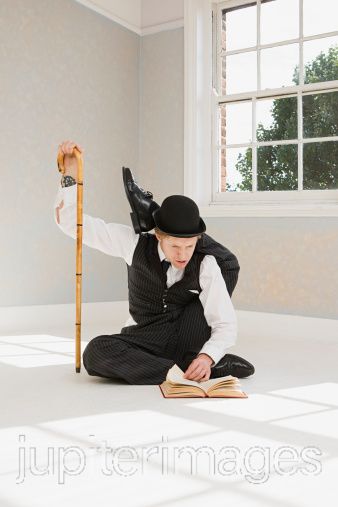
Internal martial arts, theatricality, Chinese religion, and The Golden Elixir.
Books: TAI CHI, BAGUAZHANG AND THE GOLDEN ELIXIR, Internal Martial Arts Before the Boxer Uprising. By Scott Park Phillips. Paper ($30.00), Digital ($9.99)
Possible Origins, A Cultural History of Chinese Martial Arts, Theater and Religion, (2016) By Scott Park Phillips. Paper ($18.95), Digital ($9.99)
Watch Video: A Cultural History of Tai Chi
New Eastover Workshop, in Eastern Massachusetts, Italy, and France are in the works.
Daodejing Online - Learn Daoist Meditation through studying Daoism’s most sacred text Laozi’s Daodejing. You can join from anywhere in the world, $50. Email me if you are interesting in joining!
Does Yoga Mean "To Yoke?"
/Wikipedia offers a nice overview. Here are the important quotes:
The Sanskrit word yoga has many meanings, and is derived from the Sanskrit root "yuj," meaning "to control," "to yoke" or "to unite." Translations include "joining," "uniting," "union," "conjunction," and "means." The word yoga may also derive from the root "yujir samadhau," which means "contemplation" or "absorption."
___________
[Patanjali gives this terse definition] "Yoga is the inhibition (nirodha?) of the modifications (vrtti) of the mind (citta)".
___________
Hatha Yoga is a particular system of Yoga described by Yogi Swatmarama compiler of the Hatha Yoga Pradipika in 15th century India. Hatha Yoga differs substantially from the Raja Yoga of Patanjali in that it focuses on shatkarma," the purification of the physical body as leading to the purification of the mind ("ha"), and "prana," or vital energy.
If this is accurate, there is a strong possibility that Yoga and the Daoyin--Tai Chi--Shaolin matrix have a common origin, or that at least they all stem from a common notion of what a human being is. I would summarize the method of Daoyin as--- "yoking" a purified physical body to "that stuff which animates us" (qi or prana) and then "yoking" that to a larger active spacial mind. ---The use of the word purification here could also mean distillation or total differentiation.
The jing and qi must be purified or distinguished, they can not be mixed. If the physical body (jing) is mixed with prana/qi the result will be gross motor or fine motor movement. All three types of movement are controlled by the spacial mind, however in the case of "yoking" or Daoyin the spacial mind does not effect the body directly it must first unify with the qi/prana which then acts as an intermediary pulling (or pushing) the whole physical body along. So fine motor movement, like typing, is almost impossible to do because it requires direct mental control of the fingers.
Pantanjali's "inhibition of the modifications of the mind," may simply be describing the discarding of all fine and gross motor control. Perhaps it also includes the discarding of artifice, effort, and the maintenance of fantasies. That would put it pretty close to an early definition of Laozi's key concept: wuwei (not doing, or non-aggressive intentionality).
A quick scan of blogs dealing with the question of "yoking" turned up this:
Importantly, yoga did not mean “yoke” or “union” in its classical usage, despite what most yoga teachers and popular writers on yoga say today. But, as many contemporary scholars of Indian philosophy will point out, it would indeed be odd for yoga to mean something like “yoke” or “union” since the objective of Patanjali’s yoga, as it is laid out in the Yoga-Sutra, is for the yogi to recognize and realize the true nature of the universe – i.e. that pure consciousness (purusa) is distinct from mere matter (prakrti), which includes our minds and our thoughts. In other words, the yogi does not seek union or oneness with the world; rather, he seeks to liberate himself from his attachment to the worldly.
And I would respond that to distinguish consciousness (spacial mind and qi) from matter (body mass and ideas) is simply a returning to our original nature. I would tend to describe our original nature as a functional order rather than a "union" since "union" is really a matter of perspective--whether we call it one, two (one 'yoked' to one) or three (one yoked to two) really depends where "we" are standing. Does "our" original nature really have any fixed limits? Sounds like liberation to me!
Daoyin Part 1: The Dog
/Daoyin is an ancient Daoist movement meditation art. About 500 years ago it was combined with theater, fighting skills, and ritual. The result was the creation of the diverse arts of Shaolin, Tai Chi, and what you see in this video--
Circus Style Daoyin-- a performing art that uses animal movements to ritually re-discover our true nature.
It is the original "Yoga-TaiChi." Dig?
Japanese Culture and Earthquakes
/
In November 1855, the Great Ansei Earthquake struck the city of Edo (now Tokyo), claiming 7,000 lives and inflicting widespread damage. Within days, a new type of color woodblock print known as namazu-e (lit. "catfish pictures") became popular among the residents of the shaken city. These prints featured depictions of mythical giant catfish (namazu) who, according to popular legend, caused earthquakes by thrashing about in their underground lairs. In addition to providing humor and social commentary, many prints claimed to offer protection from future earthquakes.
Namazu with construction tools, portrayed as the legendary warrior BenkeiSucker Punch, A film about self-defense
/Certainly there have always been people who found ways to practice fighting and reasons for claiming their actions were righteous. But that is not the same as claiming self-defense. For instance, in China it was common to claim that one had to fight to protect ones honor or property. But what if you had no property or no honor? Theater professionals were the lowest social caste, below even thieves, clearly they had no honor to defend. Similarly Biblical justice, an eye for an eye, is framed as the settling of a score, it is not an argument for self-defense.
This is why I was so taken by Sgt. Rory Miller's arguments in Meditations on Violence. He explained that very few forms of social violence justify an act of self-defense. With a few exceptions social violence is avoidable and deterrable. Social violence is the form of violence that most people have experience with, consequently they tend to confuse it with asocial violence which is a much rarer form of violence. Asocial violence almost always requires an act of self-defense. For instance, in the international arena we hear the absurd and incomprehensible argument that Israel responds to attacks against it's civilian population with disproportionate force. This type of argument only makes sense if you believe this is a social conflict. In an asocial conflict one is expected to use the minimum amount of force necessary to neutralize the threat. In the case of Israel, it has yet to neutralize the threat, up until the threat is neutralized any level of violence is justified. Likewise in a social conflict, if we can easily retreat we are expected to do so. But you don't retreat once someone has broken into your house. Retreating from asocial violence tends to leave a trail of blood. The 1948 declaration of Jewish autonomy will continue to be an offense to all those who consider Jews less than fully human.
Bernard Lewis recently explained that there is no word for 'Freedom' in Arabic, the closest term is something a kin to 'justice.' In the recent demonstrations in Egypt people were chanting "Freedom" in English. As hopeless as it may sounds to say it, autonomy and self-defense are concepts which require novel and complex arguments to comprehend.
The arguments explaining when and how self-defense is justified are actually new. The argument for women's self-defense may have gotten some inspiration from great figures of the past like Harriet Tubman, but the moral arguments which justify it are still being articulated. The same is true for children's self-defense; witness the national "bullying" debate, and the ever growing number of films and TV shows about girls who fight back.
Self-defense is in the air.
The new film Sucker Punch, by the same guy who made 300, is about justifiable self-defense. Freedom, all freedom, is predicated on our notions of self-defense. Most people reviewing this movie don't seem to understand that. For instance I've read about 30 reviews criticizing the shortness of the plot--not incoherence mind you--shortness. As if the length of the plot matters. The film explores the relationship between the power of dance and the power of the mind to fight for freedom and autonomy. It's a sublimely beautiful film. Check it out.
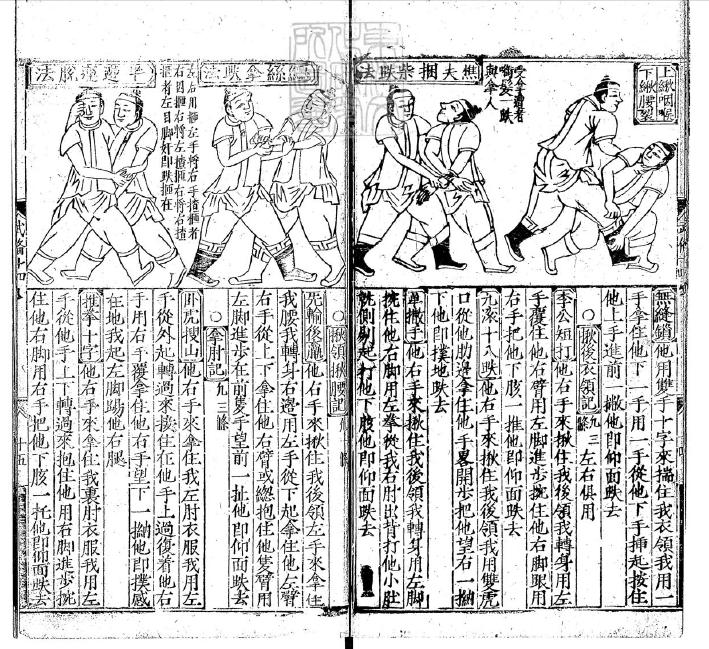
If you want see the Ming Dynasty Encyclopedia entry about martial arts, make the jump below!
The following is a quote from Josh, a scholar of Buddhist studies who was posting on Rum Soaked Fist last year. Later in the argument he acknowledged that for the most part these texts don't explain why people are practicing martial arts. The arguments below fall under defense of property and defense of honor which are weak arguments for self-defense unless you are in Texas. Being a master of ones body does imply some notion of autonomy in the same way a dance style like Flamenco does. The 'self-protection' quoted below does imply self-defense, however in my recent readings of Historical Chinese plays about the justice system the actors are surprisingly inarticulate about why they were justified in fighting. Also note the theatrical nature of some of the pictures and challenge match nature of others:
"In the Ming and Qing periods, it became popular to print large encyclopedic collections of commonplace knowledge, which are generally known as riyong leishu "encyclopedias for daily use." Endymion Wilkinson says of these that "These riyong leishu "encyclopedias for daily use" form an important source on popular religion and everyday attitudes, social practices, law, and the economy not found in other extant sources." (Chinese History: A Manual, p. 608). In other words, these writings were intended for a broad (but literate) audience. Among the variety of topics they present, several of these collections include chapters that briefly cover martial arts. I'll provide a few examples. The first of these collections, Wanbao quanshu, is generally considered to be a 16th century compilation. In fascicle 19, there is the chapter called "Wubei men" ("Skills of Martial Readiness") which offers a number of excerpts on martial arts practice. The chapter begins with a short verse extolling the virtues of practicing boxing. One of the lines states that after learning boxing, "During the daytime you will not have to worry about people coming to borrow from you, and at nighttime you will have no fear of thieves coming to steal from you."
In another collection from roughly the same time period, the Wanyong zhengzong, the introduction states that the one who studies boxing "will master his body, and will not be bullied by villains... [boxing] is the basis for self-protection.... The gentleman who does not practice this art will be bullied, cursed, have his possessions seized, and will unknowingly be subjected to worry and harm."
I think that these quotes and their presence in works intended for a general audience speak for themselves, and very much contradict the statements that you have made above regarding the perceived function of CMA in pre-modern Chinese society, at least at this particular time."


What's New!
/Also, here is a cool new blog about what isn't new...ancient Tibet-o-civilization: Early Tibet.
And here is my friend Maija's fun Blog: Sword and Circle.
I don't know the story behind this blog but I like it, maybe you will too. Dark Wingchun.
I found that last blog because Maija published the following article on it (and Facebook), looking around the web she has written on this theme a few times but this is the newest incarnation: Random Flow.
I like her ideas a lot. My view of two person set flow routines (in reference to her random flow routines) is that if they are taught as techniques the purpose is lost. Knowing where the force is going to come from is what makes this type of practice safe even with momentum and power in the mix. Maija quotes her teacher Sonny, “If I know what you are going to do and where you are going to be next, I can beat you no problem!” That would be true if a person could truly know. But to me what exemplifies the great tradition of gongfu is movement which can not be stopped by any technique. It is an incredible presence. This means training two person flow drills until they have no gaps, until one is defended on all four sides while simultaneously attacking. The purpose of two person flow drills is to be able to beat an opponent even when he knows exactly what I am going to do. So in the end we must be talking about an identical experience, we train the form to get as close to totally undifferentiated chaos as is humanly possible. Which also happens to be my definition of the term Tai Chi.
Here is a video of some of my students doing a set flow drill (starts at 44 seconds in).
You also might want to check out this at Daoist Studies.org
And Livia Kohn has a new blog!
Here is the link to her Three Pines Press, and an interesting book on Sex in the Suwen.
The Social Muscles
/
Everyone is familiar with the idea of social stress. Social stress happens whenever there is any challenge to a person's preferred status. There have been a lot of rat studies about social stress (their hair tends to fall out). There have also been a few studies of British civil servants (their hair falls out too). Generally the lower you are in the social hierarchy the more stress. That's probably because the lower you go in a hierarchy, the more people their are competing. Positions at the top of social hierarchies are generally less stressful, but that depends on how real the challenges are and how often they are coming--the opposite could be true.I used the word real in the last sentence, but social status is actually mostly about illusory things like who has the most friends or the biggest house, or even more illusory things like, 'do you believe in _____' (insert any group defining marker like: god, unions, aliens, PCB's, barefoot running...) It's nearly impossible to have a conversation without experiencing some social stress.

Our experience of social dynamics is largely unconscious. Experiences with improvisational theater, intense conflict, or other dramatic breaks from normal behavior can lift the veil off of social dynamics. Suddenly you just 'wake up' and notice that every word, glance, sound, or movement is changing peoples status before your eyes. Most people are status specialists, one person fights to be dominant, another looks around for a strong person to be number two to, others show their top row of teeth and nod "yes" a lot-- they are happy subordinates. There are infinite degrees of social status and it can change in the blink of an eye, or rather, it always changes in the blink of an eye. Most people have a preferred status but status is constantly in flux, changes happen in quantum leaps. Good teachers are masters of changing from low to high status in a flash, one moment the students find themselves cheerfully interacting with each other, helpful, and cooperative, the next moment they are frozen listening to the teacher's instructions with bated breath.All of these status expressions are physical. They come from deep inside the body and they are effected by our perception of personal and architectural space and ownership. (See my blog post on Body Mapping.) These largely unconscious movements and expressions arise from torso movement in and around the organs. You can consciously activate them, but once they are active they are hard to control. You can decide to get angry, but then deciding to calm yourself back down ain't that easy. It's a lot of work to fake being happy--try doing it for an extended period of time and the stress will become debilitating.
Social Muscles are all the muscles of the torso that create, control, assert, and manage social status. When we practice internal martial arts we want to let-go (tou kai = dissolve outward) all our social muscles. We want to discard the impulse to control our status with physical expressions of dominance and submission. If this sounds easy, perhaps I'm not being clear. If you are home by yourself reading a book, or watching Chopped on the Food Network, you are reacting to stress cues of dominance and submission. Any time you think, "I liiiiiike," or "Sexy-time," or "Really?" you are activating your Social Muscles. Some experiences are obviously more stressful than others (I find watching Chopped really stressful).
Readers may be thinking, "But dude, it's relaxing talking with friends or curling up on the couch with the latest Bed Bath & Beyond catalog!" It doesn't matter. One part of your experience is relaxing, and probably being stimulated by happy chemicals too, another part is actively, unconsciously, reacting to social stress. Facing my own demons, my happy chemicals are clearly triggered when I get in an argument, I love it, and perhaps it is less stressful for me than for other people, but it's still stressful, my Social Muscles are still working overtime!
What often passes for "relaxing" is actually just people hanging out in their preferred status. I love soaking in hot water and breathing fresh air. Visiting a spa can certainly be a real break from social stress, but sometimes the people at spas are down right freaky. When hanging out at a spa becomes your preferred status, you have entered a weird zone.
My guess is that beginning as infants we spontaneously make faces and change body shapes. Our internal organs just move around and do random stuff in response to stimulation. But our parents give us consistent feedback for specific expressions, gestures, sounds, and whole body movements. Through this consistent feedback we learn to interact socially. In the beginning I doubt it is stressful, a baby can cry loudly for 4 hours straight. What makes it stressful is the attempt to constrain impulses. If you just get angry, it's not stressful. But hardly anyone does that. We start to get angry and then we check ourselves, or wonder why, or attempt to assert dominance and fail, or restrain ourselves, distract ourselves, simmer, or just "walk away." That stuff is all really stressful. Social Muscles work to contain spontaneous reactions. ¹
It seems to me that most "displays" of emotion are attempts to change our social status. I remember being in India in a post office. After the 4th hour of waiting in lines to mail some books back home, and getting turned away from a counter for about the sixth time, because I hadn't wrapped the books properly, I just started crying. I willed it. In America I would have done something differently, something more on "script," but in India my dominance/submission messages weren't working anyway so I chose to throw all caution to the wind. The tears were a satisfying release for me, but the people around me started looking enormously upset. Suddenly everyone was helping me. There were a lot of young people sending letters to Harvard and MIT, and they all stopped to help me. About 20 of them pulled me outside and listened to my problem and then they started helping me solve it, they found me a guy who sews up books (really, in plastic and canvas) and another person who writes out addresses and sews on labels and one who affixes wax seals. It was weird. Anyway my point is that because I was in another culture and had been pushed to the brink, I was able to discarded who I am. I could have a pure, baby like, expression of emotion, a non-stressful expression of emotion, and just watch the reactions. That never happens at home, I know my place, we all know our place and we work hard to keep it.
The practice of internal martial arts is about completely letting go of the social USE of the muscles. This is especially true of the abdominal muscles and the ways these muscles connect to the face, hands and feet. The Social Muscles are extraordinarily powerful, when we drop all social constraints we can become angelic, monstrous, predator-like, or to use traditional Daoist terminology-- immortal.²
__________________________
¹I use the word spontaneous here with some trepidation because, I think, the impulse to contain or control social situations seems spontaneous to the extent that it is unconscious. Perhaps primal urge would be a better choice of words, or maybe something Chinese like yuande, original nature.
²The Chinese character for immortal, xian, is made up of a mountain and a person. So as a literal image it means: mountain man. AKA, big foot, sasquatch, & yeti.
Xian = Immortal = mountain+personFlexibility For Beginners
/
The way to achieve flexibility is to practice everyday.About 10 percent of the population does not need to stretch at all because their ligaments are already soft and loose. If you are one of those people you can develop flexibility simply by getting into weird positions and comfortably hanging out and wiggling around-- while scrupulously avoiding stretching.

Flexibility is the ability to get in and out of weird positions with minimal effort. Stretching is a form of stress. There is a big difference between the two.
Most people think that the way to get flexibility is by stretching muscles, but muscles don't need to be stretched, they simply need to relax. Muscles tension is being re-established during everyday activity. Sitting in a chair drinking a cup of coffee while reading the newspaper creates tension. Not as much, and not the same tension, as driving a car in traffic, but tension never the less. Once a muscle is in a comfortable elongated position it doesn't need pressure on it, it just needs time to relax. Flexibility comes from putting muscles in elongated positions, not from stretching them.
The challenge for the beginner is to avoid developing an antagonistic relationship between regular everyday stress and daily practice. The norm out there in the world is that people take up stretching, they immediately over do it, and then after a time of intermittent struggle, they give up. Flexibility, getting in and out of weird positions with minimal effort, needs to be practiced everyday. Anything less than everyday practice will add an element of struggle. Eventually the positions will no longer feel weird, but they may always look weird.
Beginners should try to understand the difference between muscles and joints. Joints are trickier than muscles. Once muscles are loose, there is some danger that ligaments may begin to stretch. A ligament, by definition, connects a bone to another bone. Ligaments are the main limitation on range of motion in a given joint. If you stretch a ligament, it will leave you stiff for days because the muscles around it will tighten up to protect it. If you really over stretch you'll do permanent damage.
Ligaments can be lengthened safely, but this is an advanced practice. Think six hours a day, think professional contortionist.
For the rest of us, after about two years of daily flexibility practices combined with some internal practice like Tai Chi or Qigong there will be a dramatic improvement in whole body flexibility. Once this is established, overall joint quality can start to improve. The joints can become be tong, which means: all the way through. Thus whatever the qi quality of movement or stillness happens to be, it is the same on both sides of a joint and all the way through it.
_________________
One reason there is so much confusion out there about this issue is that the most flexible people in our society, the "experts," mostly started developing flexibility when they were young. If a student is under age 20 and they practice everyday, they can go ahead and stretch vigorously. High kicks, are fine too. So are intense back bends and holding low difficult stances. For a person under 20 it is important to thoroughly warm up, but trying to stretch ones body into funny shapes and extreme positions can start from day one. Warning, it is still quite possible for a young person to over stretch and to stretch unevenly, so it is really important to have a teacher regularly monitoring ones stretching. I use the age 20 somewhat arbitrarily. For some people the cut off is younger, say 17, for some it is older maybe 25. Childhood injuries can change the calculation significantly too. Teaching the young is simply a different animal than teaching full grown adults, the two populations need to be treated differently.
The young heal very fast, when I was young I could pull or strain muscles several days in a row and be fine in a couple of days. At 43 if I get a minor muscle strain it needs immediate care, rest and liniments. A major muscle strain and I can be injured for weeks (knock on wood, I haven't had one in over 3 years). Today, when I move it may look wild and extreme to the untrained eye, but in reality I'm very conservative.
My secret is: practice everyday.
Stevo
/Which reminds me. At a Rory Miller workshop the other day there was a guy who trains a lot of martial arts... but mostly with weapons. He said that when he does train open-hand he usually focuses on striking. This guy expressed a lack of confidence with ground fighting and even stand up grappling. He said something like, "I haven't really wrestled since I was a little kid." I was like, don't dismiss that. If you wrestled as a little kid that's the best possible training there is. As it turned out, when I grappled with him standing up he had a tendency to want to use jumping action in his legs to get control, but he quickly noticed that didn't work. When we went to the ground, he was as good as anyone. It's like riding a bike.
Structure Vs. Momentum
/Structure training has many facets and side trajectories. The most significant in no particular order are, center-line awareness and control, power investigation and development, and creating potent default stances you can fight your way to when you are loosing in a self-defense situation.
But all that aside, the main purpose of structure training is to learn how to give up control of a fight in exchange for taking a dominant position. This is more or less what I was getting at when I named this blog "weakness with a twist." If you can reposition yourself with a structural advantage, having control over the fight isn't that important. You can effectively let your opponent buck and roll while you tap them on the shoulder from behind. It isn't usually that easy to pull off, but it is that simple.
Structure training isn't the whole fight by a long shot, but it is a very important piece.
Electric VolcanoContrast this with momentum training. Learning good structure usually involves a substantial loss of power do to the loss of natural momentum. For instance untrained people often throw their shoulder and head into a punch because they intuitively know that it will increase the momentum of their strike. We martial artists often un-teach this inclination right at the beginning because throwing your shoulder and head into a strike will likely land you in a worse position, especially if the punch misses it's target.
Again, the order in which this unwieldy mass of teachings are learned is up in the air, but there is some logic to teaching Momentum after Structure is established.
If structure training is about giving up control to gain position, then momentum training is about giving up both control and position in exchange for adding chaos. The more mass there is barreling through space along spiral trajectories, the more inherent danger. The less momentum there is in a fight the safer it is. If the person you are fighting is focused on defense, he is less focused on hurting you. If your opponent is trying to control or dominate you, adding momentum will likely shift him into a defensive mode. The more defensive he is, the more rigid and predictable he will become. The more experienced you are with the chaos of added momentum, the more likely you are to prevail.
Momentum training increases the power of strikes dramatically, but that's a side benefit. The main purpose of momentum training is to get you to drop the wasted effort of trying to dominate and control. Tigers fighting other animals don't waste effort trying to dominate and control. Those are social concerns. Drop them and you will experience greater freedom of action.
The will to dominate and control arises from the fear of chaos (huntun). That doesn't necessarily make it good or bad, it just limits our ability to see things as they actually are.