Internal martial arts, theatricality, Chinese religion, and The Golden Elixir.
Books: TAI CHI, BAGUAZHANG AND THE GOLDEN ELIXIR, Internal Martial Arts Before the Boxer Uprising. By Scott Park Phillips. Paper ($30.00), Digital ($9.99)
Possible Origins, A Cultural History of Chinese Martial Arts, Theater and Religion, (2016) By Scott Park Phillips. Paper ($18.95), Digital ($9.99)
Watch Video: A Cultural History of Tai Chi
New Eastover Workshop, in Eastern Massachusetts, Italy, and France are in the works.
Daodejing Online - Learn Daoist Meditation through studying Daoism’s most sacred text Laozi’s Daodejing. You can join from anywhere in the world, $50. Email me if you are interesting in joining!
Taoist Master Zhuang
/
Michael Saso has his own Youtube Channel. Saso is the author of many books on Daoism and Tantric Buddhism. His early work on Daoist ritual in Taiwan was ground breaking and he remains one of the few people ever to become a Zhengyi Daoshi (Daoist priest).This video of his teacher and one of his teacher's sons is amazing. The roots of baguazhang are not totally obvious in this video of pacing the void, but imagining this ritual done on a national scale and refined over 1700 years, it isn't hard to imagine that baguazhang (the martial art) is just a variation. In the last part of the series (6 parts) you see the priest alternating between walking the magic square and walking a circle something we also do in baguazhang.
You'll also notice that the shoes do not allow one to press through either the ball of the foot or the heal, creating a walk infused with unexpressed power, shi we call it---potential. In basic taijiquan for instance, the four powers peng, ji, lu & an, are each executed from either the ball of the foot or the heel. Eventually emptiness, as ritual action, replaces this type of forceful intention and one paces the void without any agenda. This weakness, as I've been known to call it, is actually profoundly potent. Many people over the years (including me) have criticized Aikido for having a "love your enemy, don't hit him" namby pamby approach to martial arts. But Aikido is correct in describing the potency of emptiness in action as having no intent to harm your enemy. Does anybody want to argue with me when I say it is quite possible to do harm even when you don't intend to?
Kick-Ass is a fun Movie
/Teaching, Guilt, But the Shows Must Go On
/First of all I'm busy teaching. Lots of kids classes. My advanced students are doing a mini-tour of schools and centers with a DeYoung Museum sponsored show for the public on Thursday May 13th at the Band Shell in Golden Gate Park around 1 PM. It looks like we are head-lining because my kids put on such a good show last year. Or maybe it was just an accident. Anyway it should be fun. Part of our show is a group fight scene and... we have 10 year olds with swords.
I'm also presenting a paper and teaching a workshop at the Daoism Conference in LA, June 4th... at the moment my paper is titled: Theater, Exorcism, Ritual and the Martial Arts.
Also I've been doing nothing but reading and sleeping on Saturdays for the last two months. At 40 I realized that guilt was a primary motivator for me. As a self-employed enthusiast, I always have something I feel guilty about not having started or finished yet. So I decided to invert that. I committed to doing absolutely no work on Saturdays. Now I feel guilty if I try to do even a little work on my day of rest. It's like, my job to lay on the couch.
I'm still looking for a space to teach evening classes and I'm looking to create my own after-school program for next school year.
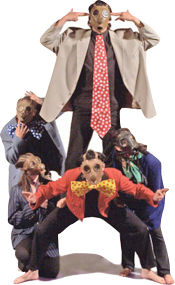
I started taking a Physical Theater class. I haven't been in a class like this for maybe 20 years, but I thought I should test my ideas about the relationship between martial arts and theater training in a more immediate way. The class is called The Flying Actor. At the first lesson we learned two stances which were used together. The names for those two stances in martial arts are Bow stance and Horse stance. The way they do Bow stance is with the front heal up and the arms are in what I would consider a basic shuai jiao or "throwing" position. The horse stance has a high and a low version. One of the things we did a lot was to put a hood over our heads. The hood makes it hard to see but not impossible. I'm used to moving with my eyes open (of course) and also with my eyes closed, but moving with disrupted vision messed me up a bit. Good exercise. We also worked on some basic mime and I realized that I've trained myself not to look at anything close up. My fighter mind doesn't want to narrow my focus to "show" the imaginary object. But I also realized that one of the beginning shaolin instructions is to slowly look into the distance and then draw your vision back to yourself before beginning. It never occurred to me to do it as a mime exercise before, but it fits.Rory Miller is doing a workshop called Responses to Ambushes and Breaking the Freeze, on May 9th, I'm attending with a few of my students. I will not be wearing my pajamas. Check it out.
Oh, and I actually wrote a really long blog post which I might still put up, but I don't know how to finish it. Maybe just a summary is enough: Traditional exercise routines were not for weight loss because in the old days people didn't have Trader Joe's or even McDonald's. Anything claiming to be traditional would have been designed to work without consuming very much food, duh. If anything, a traditional form of exercise would have helped you put on a little extra fat for leaner times. (Wrestling, by the way, is an extreme example.)
And lastly, I've had some stimulating time with George Xu lately and my practice has been really empty, in a good way.
Taoism in the New York Times
/It has got to rank up there as one of the weirdest articles on Daoism I've ever read. Admittedly it is about an art show that I haven't seen, so perhaps the article is just reflecting a very weird show. Still I can't tell if the writer is confused, or sarcastic, or perhaps has a Dadaist editor. Maybe you can?
New Jet Li Movie
/
At least the movie had some cool swords!The new movie Warlords staring Jet Li comes out this Friday and I would have had to see it even if I hadn't been given a free preview ticket because it is a historical epic film dealing with the Taiping Rebellion! This film is really dark and normally I love darkness, but in this film I just couldn't see the point.
I just happen to have been re-reading Jonathan D. Spence's classic God's Chinese Son, The Taiping Heavenly Kingdom of Hong Xiuquan. There is so much truly great theatrical material in the actual history of the Taiping Rebellion that is truly inexcusable for a contemporary film to bore us by following the bond between three men of prowess--two bandit leaders and a Qing Dynasty general named Pang (Jet Li). There are a couple of OK fight scenes but we've come to expect so much more, stay home and re-watch Once Upon A Time in China if you want action.
Ching Shih 1836, Female Pirate LeaderI rarely get on my high horse and defend women, probably because none of the women I know actually need defending, but as I walked out of the film with my friend, who happens to be a female martial artist, we turned to each other and the first thing both of us said was, "What was that woman doing in the movie?" You see, the film makers wrote one of those romantic subplots into the story. It was totally irrelevant and uninteresting. You're probably thinking, yeah, whatever, but consider this: During the period of the Taiping Rebellion there were many well known female bandit and pirate leaders. That's great theatrical material that was completely neglected, no? These were powerful leaders, some of whom actually went back and forth between being pirates and being bandits--from horseback to sailing-- These were women with skills! Damn it, I want to see that movie! Not some drivel about men who fought for 5 years without taking a bath. Hello.
But there is more: During the Taiping Rebellion, copies of the Bible in Chinese were widely distributed. At one point there are so many people going into trance and becoming possessed by Jesus, Mary, Moses, God, God's wife and other characters from the Bible, that the leaders of the Taiping Rebellion have to go around from village to village authenticating Prophets--you know--is that really Jesus talking, or is it the devil pretending to be Jesus?
And this was a huge war that lasted for more than 15 years, with millions of combatants. The Taiping population was fanatical. They separated men and women into different encampments during the whole rebellion. It's possible that hey fielded millions of female troops for battle.
Would it be too much to ask that they make a better movie next time?
Paulie Zink Workshop in Marin
/
Here is the info on a Paulie Zink workshop April 17th and 18th in Marin County, California. This is a bit difficult to write about because he is calling it Yin-Flow Yoga instead of calling it by it's actual name Daoyin. It's a weird problem, he wants to be able to teach his material and it nearly fits within the yoga class context, but if you read the text of the link you won't understand why this guy's stuff is so special. And because of that participant's expectations are going to be for yoga not Daoyin.For those of you not familiar with Paulie Zink, he is the preeminent practitioner of Monkey Kungfu, he dominated the tournaments and exhibitions in the 1980's and I've yet to see a better performer of Monkey Kungfu. There are better acrobats out there and there are better contortionists, and there are possibly people who act a little more like monkeys than he does--but there is no one else I've seen who puts it all together the way he does. It's too bad he never had a whole troop to perform with. He does have a disciple now, so I'm hopeful that his lineage will get passed down.
He credits his ability to years of train in the Daoyin system which he learned along with the Monkey Kungfu. This system is a combination of meditation techniques, some of them very old and shamanic like spending 4 hours balancing on only your knees and elbows staring at a flame, along with balancing, stretching, folding, rolling, exploding, pounding and scrapping. It is made up of animal imitation. Each animal has a whole series of meditations, postures, and forms of locomotion. It is the forms of locomotion that really sets it apart from a yoga class, but around half of the postures are quite similar to yoga postures. The difference is, his frog eats flies and hops, his bunny wiggles it's tail, and his downward-dog, scampers around the room and tries to lick people.I think of Daoyin primarily at a hermit practice done in conjunction with long periods of meditation. It is a capacity increasing tradition and is likely one of the roots of Chinese medicine. In his lineage it seems to have merged with a circus tradition. How did this happen? The answer is pretty simple but not widely understood, in fact I don't think Paulie Zink agrees with me on it. But any way here it is:
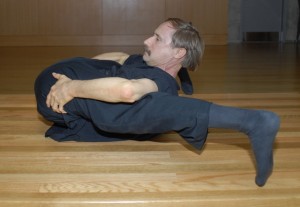
Paulie ZinkThe most common and widespread form of religious experience in China was public Physical Ritual Theater (often called opera in English). There were quasi elite performing families which were part of a designated caste. These families were hated outsiders. It seems likely that Zink's teacher was from one of these families and taught a single outsider (an American) because he wanted to free the art from the tradition. In the South of China, where his tradition comes from, Daoist priests performed public rituals which included theater and theatrical components. So it's not hard to imaging that Daoists were working with performing troops and may have even apprenticed there sons and daughters to each other occasionally.
Anyway, if you've got the time, check out the workshop!
Unity and Harmony
/
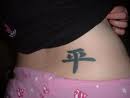
The Chinese Character "ping"How is this for dark irony? The Chinese civil war which took place in the 1850's and 60's was call the Great Peace Rebellion (Tai Ping) and is ranked the world's second bloodiest war of the last 500 years. The Chinese character 'ping' is a common tattoo in the San Francisco. I suppose it would be stating the obvious to point out that the term 'ping,' which is usually translated into English as 'peace,' doesn't really mean peace.
The idea of peace resists description because it is so deeply ingrained in the most basic concepts and metaphors of our civilization. "Peace is just...like, ....peace man, you know?" Because of this it is easy to unconsciously project our notions of peace onto other cultures. The Chinese idea of peace as best I've been able to glean, is a combination of yi (unity) and he (Harmony). And naturally that is the name of another Chinese War, the Boxer Rebellion which is known as the Yi He Uprising.
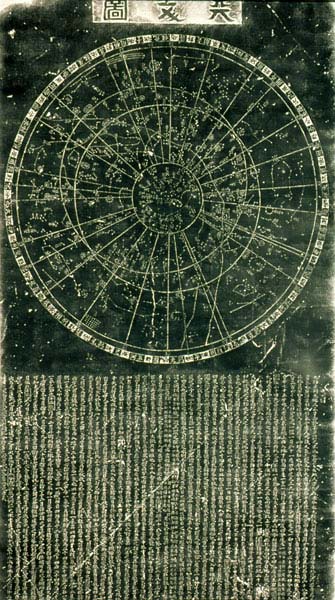
What is going on here? Could this unity harmony thingy explain why Google was able to find the compromise of moving it's operations to Hong Kong?Yi and he are the two most important concepts in Chinese Martial Arts. But before I get into that let's examine them more generally. The Chinese calendar seems like a good place to start. It is thousands of years old. Chinese governments have been publishing a calendar for the whole country almost continuously since the Han Dynasty (1st Century B.C.E.). At first glance it is extremely complex because it is a composite of 10's perhaps 100's of local and ethnic calendars. To name just a few, there is the lunar calendar, there is the stem-branch system of 10's and 12's that make up a 60 day cycle, there are the 28 Lunar Mansions which are also called constellations and since 7 goes into 28 they track with our 7 day weeks, there is the Islamic Calendar subsumed inside the larger calendar, there is a 72 day Yijing divination sequence which reverses its direction at the solstice and equinox, and there are many many more.
When I think of all the little local and ethnic calendars subsumed in the big calender I think of a story I heard about Californian Indians having a calendar which reminded them when it was time to go pick wild onions. By picking onions in particular locations at particular times they loosened the ground and initiated the growth of more onions. They were making gardens in the wilderness. (But of course it wasn't the wilderness to them.) These sorts of ritual cycles are embedded in the Chinese calendar along with innumerable locals celebrations and sacrifices to gods, spirits and ancestors. It was all in one calendar thus we could say there was unity (yi). Harmony is a broad concept, but in a basic sense, harmony is achievable through not scheduling a mandatory meeting for work or school on either of the first two nights of Passover! (To give an example from my own life.) Harmony is achievable because our conduct, our activities, and our rituals, take place with awareness, sensitivity, and responsiveness to a bigger context or environment.
Any attempt by diplomats or corporate representatives to negotiate with the Chinese government must begin with some understanding of unity and harmony. Sitting down at a negotiating table with a powerful Chinese representative without incorporating the concept of unity and harmony would be like meeting an American representative without bringing along the concept of "sitting down at the negotiating table!' It's that basic.
I know I said above that I would explain the importance of unity and harmony in martial arts, but it's not easy to explain. I fear words are likely to fail me but here goes.
Unity means inclusiveness. Harmony means simultaneous individuation. They work together. But in trying to explain them I get stuck. I could go to Daoist cosmology and say that huntun, totally undifferentiated chaos, approaches unity. When everything is undifferentiated we could almost stay it's a single thing. But it is not quite unity because unity can be conceived of as having boundaries, like a country or an egg, whereas huntun has no boundaries.
And of course the Taiji symbol itself is the most ubiquitous image of harmony. It graphically dipicts simultaneous individuation--two distinct things working together inside of each other. But that just starts to sound weird, so lets have an example.Imagine just an egg, without air or ground. Make it a mammal egg so that the shell is soft. Unity is the egg, the totality of your awareness is the egg. The egg is all there is. The egg can have a distinct shell, yolk and white, or it can be scrambled. It's still just an egg, it's still a unity and it's still all there is. In Daoist meditation there is this notion that we can map stillness as a transition between two types of experience which are actually one--the egg with a shell, a white and a yolk, and the egg scrambled.
In the internal martial arts, taijiquan, xingyi, bagua, we are an egg. The totality of our awareness, our sense of where we are and the boundaries of our perception, is an egg. Our physical mass is the yolk (jing). The egg white is clarity and movement, it is what animates us (qi). We could almost say that the egg white is inspiration and motivation; however, in Daoist cosmology this egg white is just the medium for animation--inspiration comes from Dao, it does not have any apparent origin.
The shell of the egg is the boundary of our perception. When we practice internal gongfu the shell is the sky and the horizon--as we see, feel, hear, smell and imagine it. We call this shen (spirit) in martial arts. It contains the yolk and the egg white. In basic training we develop the yolk (the body) so that it is smooth, round, and able to shift and change like a thick liquid which can expand and condense in all directions. Then the yolk itself becomes so quiet that we forget it! We forget it like we would forget our own body in the presence of a beauty beyond words. We move only the egg white, shifting and swirling within an enormous shell, and the body follows without effort or inhibition. That's harmony.George Xu Speaking at the UN
/He is also teaching at the Open Center in New York in May.
And he is going to be at the United Nations while he is in New York being interviewed by Feng Shui GEO Steven Post. Steven (who is also a long time student of George's and set up the NY events) tells me this is part of the process of getting Chinese Internal Martial Arts some kind of "Living Treasure," "World Heritage" type of designation.
Here is a recent quote from George: "You have to make what is imaginary real, and what is real imaginary." Normally that sort of quote causes me to roll my eyes. It sounds ridiculus. But this time he said it in a context that made perfect sense to me. (We were trading upper-cuts.) When a person is truly relaxed and "quiet," the only thing which can cause the body to move is what we normally call "imagination." Normally motivated movement will create tension or resistance in the body and will disturb the experience of "quiet." Likewise, movement devoid of normal muscle sensory activity, will be perceived as imaginary. It is as simple as that.
Please share your ironic thoughts.