
Caring for the Body and the Spirit
/As many of you know, I teach at an acupuncture college where an eleven week 22 hour taijiquan class is a requirement. This last quarter I had an amazing student.
The administration called me to say there was a student coming to the first class who they had not yet let register because she had a disability. They felt she probably wouldn't be able to do the class but she wanted to try so they sent her to the first class to see if I thought she could do it.
She had been through some major injuries in the past 10 years and walked with a cane. One side of her body tends to tighten up so that one leg and one arm are often restricted. For instance she often has to use her able hand to manually open her disabled hand.
I asked her to stand without her cane and to shift her weight from one leg to the other. She could do it, but with difficulty. I said she could take the class. I advised her to practice everyday and not to worry, I would assess and teach her according to her ability.
While her injuries are severe, and perhaps some aspect of them can be considered permanent, there are clear signs that healing is still taking place.
There are optimists in the world, and there are pessimists, but it is truly unusual to meet someone who so clearly acknowledges hardship while meeting every new challenge with glowing optimism. And I do mean glowing. This woman beams.
Having worked with disabled people my whole adult life I've learned a few things to watch out for. Many people unconsciously treat disabled people like they are not very smart and need constant kindness. The constant sweetness of people around them sometimes causes one of two effects. The disable person is so used to having things done for them that they sometimes become personally so weak they don't stand up for themselves. On the opposite polar end, the disabled person can become mean, rude or objectionable, because people are too embarrassed to honestly tell them when it's time to shut up.
The student I had in my class this last quarter has neither of these traits. She has a sophisticated, charming, and positive outlook. She worked hard, she concentrated, and she brought warmth and sensitivity to her interactions with other students. She was a model for all of us. I have no doubt she will make a wonderful Chinese Medical doctor.
For the final exam, I have half the class do the form with their eyes closed while the other half watches, and then they switch. When she was doing the form, and she did do the entire form, It was obvious to me that she had learned more than many of the other students. Parts of the form looked difficult for her, but looking around the room, some students weren't even sure how a particular move was supposed to be executed. I wish every student had her stick-to-it-iveness. Heck, I wish I had her stick-to-it-iveness.
I think everyone's excuses for not having met their practice goals just fell away as they watched her do the form. Do what you can do right now. Is there anything more inspiring than that?
And all this was a great reminder that we aren't practicing for some future health, or some future fight. An accident can happen to anyone. It seems rather foolish to prepare for such a thing when all the benefits of practice are immediately available. It is only through the expensive maintenance of fantasies (about what we are, and what we can become) that we put off the fruition of our practice.
The reason we care for our bodies is not in the future-- if we do indeed care, we care right now.
The administration called me to say there was a student coming to the first class who they had not yet let register because she had a disability. They felt she probably wouldn't be able to do the class but she wanted to try so they sent her to the first class to see if I thought she could do it.
She had been through some major injuries in the past 10 years and walked with a cane. One side of her body tends to tighten up so that one leg and one arm are often restricted. For instance she often has to use her able hand to manually open her disabled hand.
I asked her to stand without her cane and to shift her weight from one leg to the other. She could do it, but with difficulty. I said she could take the class. I advised her to practice everyday and not to worry, I would assess and teach her according to her ability.
While her injuries are severe, and perhaps some aspect of them can be considered permanent, there are clear signs that healing is still taking place.
There are optimists in the world, and there are pessimists, but it is truly unusual to meet someone who so clearly acknowledges hardship while meeting every new challenge with glowing optimism. And I do mean glowing. This woman beams.
Having worked with disabled people my whole adult life I've learned a few things to watch out for. Many people unconsciously treat disabled people like they are not very smart and need constant kindness. The constant sweetness of people around them sometimes causes one of two effects. The disable person is so used to having things done for them that they sometimes become personally so weak they don't stand up for themselves. On the opposite polar end, the disabled person can become mean, rude or objectionable, because people are too embarrassed to honestly tell them when it's time to shut up.
The student I had in my class this last quarter has neither of these traits. She has a sophisticated, charming, and positive outlook. She worked hard, she concentrated, and she brought warmth and sensitivity to her interactions with other students. She was a model for all of us. I have no doubt she will make a wonderful Chinese Medical doctor.
For the final exam, I have half the class do the form with their eyes closed while the other half watches, and then they switch. When she was doing the form, and she did do the entire form, It was obvious to me that she had learned more than many of the other students. Parts of the form looked difficult for her, but looking around the room, some students weren't even sure how a particular move was supposed to be executed. I wish every student had her stick-to-it-iveness. Heck, I wish I had her stick-to-it-iveness.
I think everyone's excuses for not having met their practice goals just fell away as they watched her do the form. Do what you can do right now. Is there anything more inspiring than that?
And all this was a great reminder that we aren't practicing for some future health, or some future fight. An accident can happen to anyone. It seems rather foolish to prepare for such a thing when all the benefits of practice are immediately available. It is only through the expensive maintenance of fantasies (about what we are, and what we can become) that we put off the fruition of our practice.
The reason we care for our bodies is not in the future-- if we do indeed care, we care right now.
 Many people have pointed out that Taijiquan may be an art designed to keep the dynamic quality of our sea legs, while on land. It is at least designed to get us to give up the predictability of our land legs. The image often repeated in both martial arts and Chinese medicine of the dantian being an ocean would somewhat support this thesis to. Shirley seamen realized that the gentle pitching and rolling of the ocean was good for the internal organs. Perhaps they wanted to keep that quality of health once they gave up the sea life.
 So naturally I recommend people try doing their taijiquan on a boat sometime. I would recommend you try it on an airplane too, but now-a-days that will likely get an over reaction from your fellow air travellers.
 A female friend of mine was recently attacked by a crazed crackhead half block from her house. He was big and he kicked her in the ribs.
 Hexagram 10 of the
  Chinese Internal Martial Arts cultivated with a Daoist perspective achieve quite the opposite results of what most people think. These arts are not about gaining control. They are not about preparing for some monstrous future attack. They are not about trying to control or predict the future.
 In Buddhism they have the expression, "Skillful Means," to describe brilliant techniques on the road to enlightenment. But it's also kind of a Buddhist joke because the end result requires no skill at all.
 Her innocent response was good enough.
 This is a continuation of yesterdays post on
  About 13 years ago, the idea of internal flexibility started to take root in my body. It did not come from stretching, nor did it come from standing still or meditation. It came from doing what most people these days would call qigong. Specifically I was doing Tiandifu (Heaven Earth Contract) style of qigong. Most Taijiquan classes include this type of movement; expanding the dantian in all directions while extending the arms over the head and then drawing everything back in. The thing is I did more than most people do and I was really focused on lengthening the spine.
 This translation is by
  Beware of any problem ending in "syndrome." That means it is difficult to diagnose because there are many things which could cause the same symptoms. In this case what we are talking about is a narrowing of the Carpal Tunnels in the wrists accompanied by swelling, pain and numbness or tingling. 9 tendons along with nerve flow and blood pass through each Carpel Tunnel. Surgery for "fixing" this syndrome involves the cutting of the ligament(s) that contain the underside of the wrist. I've never had Carpal Tunnel Syndrome myself, and I've never cured anyone of anything. (I have offered suggestions for treating problems in which it was later reported back to me that, due to having followed my suggestion, the problem went away-- but I will always remain skeptical of my own ability to invoke healing.) I have had students who were diagnosed with Carpal Tunnel Syndrome before coming to study with me, but it is very hard to say with any confidence that a recommendation I made was more important than the 20 other things they were doing to try and cope with the problem. One student I recall was convinced that wearing wristbands with magnets in them completely cured her Carpal Tunnel Syndrome.
  This all came up because I was teaching a two person partner exercise called joint pulsing (kaihe), the opening and closing of the joints. When I first started teaching this years ago, nobody had seen anything like it. Then one quarter a student who was an assistant chiropractor said his boss had an expensive machine that he hooked people up to which did the same thing. Another quarter, a student said she worked with autistic children and the staff had been taught to pulse the children's wrists and elbows because the compression was calming. This quarter a student said she had already learned joint pulsing as an assistant physical therapist. Ugh! Of course, nobody had been told that this information came from Chinese internal martial arts. Nobody had been taught that the purpose of pulsing the joints was to have a passive experience of what one's body can do naturally, on one's own. That is, that the manual experience of having one's joints pulsed reminds us of how we moved in the womb, as toddlers, and even up until age 5 or so. Once we are reminded of the experience of this quality of movement, we can recover the ability to move this way at will. The ability to move and animate our bodies the way we did in the womb is sometimes called Yuan Qi, or original qi. While becoming a human rubber band is a cool trick, the purpose here is to make our movement simpler. Simpler movement is more efficient. Efficient movement is more sensitive. Sensitivity to the ways in which we habitually waste qi, allows us to conserve qi. Conserving qi, is the equivalent of non-aggression- wuwei. Needless to say, none of these student "experts" had learned the easiest part of of joint pulsing which is extending and contracting the fingernails. In Chinese practical anatomy, the nails are considered the ends of all the tendons (Perhaps sinew is a better term because it is more general but tendons works fine for this example.)
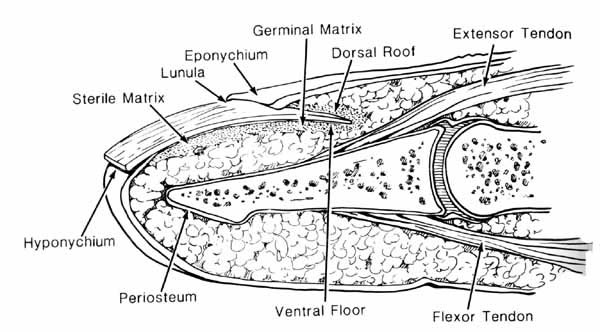 When extending the finger to push down on a typing pad, one's nail should extend out first. For most people this is normal, unconscious, and happens at lighting speed. Carpal Tunnel Syndrome is caused by unconsciously contracting (or drawing in) the fingernails while performing some repetitive finger motion like typing. I know this because when I contract my nails while typing I can feel my carpal tunnels narrowing. After a while they start to swell from the internal friction. But I'm not going to give myself carpal tunnel syndrome just to prove it to anyone else's satisfaction, and I don't know how to cure it once damage has been done to the nerves. So I'm not claiming curative powers here, just that I can teach people a skill that if maintained, will insure they don't get Carpal Tunnel Syndrome at some time in the future. Traditional Chinese long life practices have for centuries been a source for remedial knowledge about the body. Unfortunately the modern tendency to seek out individual methods, fractured from the source, results in a loss of information at best--and a complete obscuration of purpose at worst.