
Prowess
/I've been thinking a lot about prowess lately. The dissertation Martial Gods and Magic Swords, by Avron Boretz got me going on it. This is a difficult work to review, especially since I had to return it to inter-library loan a few days ago.
The classical explanation of the basic gongfu bow or greeting is that you are covering your right fist, which represents maximum explosive power, with your left hand, which represents the commitment and ability to control that power.
Wen, the left hand, culture, writing, government, civility; juxtaposed with Wu, the right hand, raw power, martial, chaotic, military.
Historically governments, and scholars generally had an interest in having us believe that Wen naturally dominates Wu, and that we should fear the opposite situation. Certainly, the Daoist pantheon gives hierarchical precedent to gods in civil roles and lower status to gods in military or punishment roles, and even lower status to demons and chaotic forces.
But reality on earth is not always so simple, nor should it be. There are no true earthly hierarchies.
Avron Boretz is, I think, the first martial artist to really dive into the blended subject of ethnology and history. As a martial artist and a scholar, he managed to get himself joined up with a cult dedicated to The Dark Lord (I kid you not, but in Chinese it would be Xuandi) in a small town in Northern Taiwan. All the inner cult members were martial artists and many of them were involved in crime, like smuggling and prostitution, fringe of society stuff. They were a brotherhood of sworn allegiance, prone to occasional fighting with other brotherhoods. In other words, small time gangsters.
The book takes a hard look at the role of rituals in creating feelings of prowess in men who are otherwise kind of marginal. Because he got quite close to these guys, he writes about many different aspects of the cult. They all go out together to do exorcisms dressed up in costumes as demon generals. Sometimes they get possessed by the demon general they are representing. They all wear thick make-up and go into trance, but they only occasionally become possessed.
One of the ways they determine if a possession is authentic is that the person who was possessed has no memory of it.
The second to last chapter kind of surprised me. It is all about partying with the boys. Heavy drinking nearly every night, women, money, status-- all ways that men demonstrate their prowess.
The only time I have done things I have no memory of was after drinking large amounts of alcohol. I wonder if that is what it is like to be possessed. My experience of it was just the opposite of prowess, it was extreme embarrassment. But I have met people who are proud of their black-out moments, perhaps for some rather desperate people, blacking out could be a form of prowess.
Martial arts and alcohol, seems like a bad combo, but so do sports and alcohol and we all know those games used to be played by very drunk individuals.
These martial dances are not martial arts, but they are displays of prowess and they do have many similarities to the martial arts I practice.
One interesting example is the Big Dipper step, or Seven Star step. When a group of demon generals approaches a house or a business they are about to do an exorcism on, they approach it doing the Seven Star step (chixing bu). They then stamp on the ground and run across the threshold into the building.
I realized that everyone of my Northern Shaolin forms begins with a Seven Star step. In Northern Shaolin, first we stamp on the ground and sink into cat stance, which is like stepping over a threshold. Then our hands shoot out and break apart, as if we were breaking through double doors or the opening in a curtain, and we run three steps, as if we were running into a building or onto a stage, and we do the "monk clears his sleeves" action. I counted it out and it is exactly seven steps. Cool huh?
UPDATE: This is now a book! Gods, Ghosts, and Gangsters!
The classical explanation of the basic gongfu bow or greeting is that you are covering your right fist, which represents maximum explosive power, with your left hand, which represents the commitment and ability to control that power.
Wen, the left hand, culture, writing, government, civility; juxtaposed with Wu, the right hand, raw power, martial, chaotic, military.
Historically governments, and scholars generally had an interest in having us believe that Wen naturally dominates Wu, and that we should fear the opposite situation. Certainly, the Daoist pantheon gives hierarchical precedent to gods in civil roles and lower status to gods in military or punishment roles, and even lower status to demons and chaotic forces.
But reality on earth is not always so simple, nor should it be. There are no true earthly hierarchies.
Avron Boretz is, I think, the first martial artist to really dive into the blended subject of ethnology and history. As a martial artist and a scholar, he managed to get himself joined up with a cult dedicated to The Dark Lord (I kid you not, but in Chinese it would be Xuandi) in a small town in Northern Taiwan. All the inner cult members were martial artists and many of them were involved in crime, like smuggling and prostitution, fringe of society stuff. They were a brotherhood of sworn allegiance, prone to occasional fighting with other brotherhoods. In other words, small time gangsters.
The book takes a hard look at the role of rituals in creating feelings of prowess in men who are otherwise kind of marginal. Because he got quite close to these guys, he writes about many different aspects of the cult. They all go out together to do exorcisms dressed up in costumes as demon generals. Sometimes they get possessed by the demon general they are representing. They all wear thick make-up and go into trance, but they only occasionally become possessed.
One of the ways they determine if a possession is authentic is that the person who was possessed has no memory of it.
The second to last chapter kind of surprised me. It is all about partying with the boys. Heavy drinking nearly every night, women, money, status-- all ways that men demonstrate their prowess.
The only time I have done things I have no memory of was after drinking large amounts of alcohol. I wonder if that is what it is like to be possessed. My experience of it was just the opposite of prowess, it was extreme embarrassment. But I have met people who are proud of their black-out moments, perhaps for some rather desperate people, blacking out could be a form of prowess.
Martial arts and alcohol, seems like a bad combo, but so do sports and alcohol and we all know those games used to be played by very drunk individuals.
These martial dances are not martial arts, but they are displays of prowess and they do have many similarities to the martial arts I practice.
One interesting example is the Big Dipper step, or Seven Star step. When a group of demon generals approaches a house or a business they are about to do an exorcism on, they approach it doing the Seven Star step (chixing bu). They then stamp on the ground and run across the threshold into the building.
I realized that everyone of my Northern Shaolin forms begins with a Seven Star step. In Northern Shaolin, first we stamp on the ground and sink into cat stance, which is like stepping over a threshold. Then our hands shoot out and break apart, as if we were breaking through double doors or the opening in a curtain, and we run three steps, as if we were running into a building or onto a stage, and we do the "monk clears his sleeves" action. I counted it out and it is exactly seven steps. Cool huh?
UPDATE: This is now a book! Gods, Ghosts, and Gangsters!
 The flexibility of Chinese religious convictions is food for thought. This story suggests an interesting blend of confidence and reluctance.
 I grew up arguing every night at the dinner table. For the most part it was an edifying and respectful experience. This kind of intensive educational model is pretty rare world-wide (except in Israel where it is the norm).
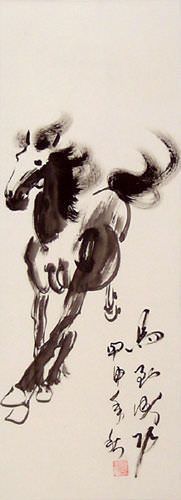 The key thing to digest here is that the wuwei view does not require analysis. By asking the question you are already in the de (perfection, integration, improvement) camp. [note: De is often translated "virtue," it is the de used in the title of the Dao De Jing.]
 It seems like I'm surrounded by people doing various things they call a seasonal liver cleanse. Inevitably these people are thin. The project varies from simply taking a purgative every other day for a week, to not eating for 10 days.
 It's not the season's fault that people have problems, and it is not really the type of food or how much. The problem is that people want to stay up late, they skip their afternoon naps and party right on through.
 I've been reading Avron Albert Boretz's 1996 dissertation: Martial Gods and Magic Swords: The Ritual Production of Manhood in Taiwanese Popular Religion. I got it through Inter-Library Loan, but it looks like it can be
 There is a new publication coming out in June called the
  Indolence literally means "freedom from pain," but it has come to mean: the rejection of obligation, difficulty, or even honor or class. Since most of us have neither honor nor class to reject--those meanings are rare. Indolence is a synonym for laziness, but honestly if you are going to exert all the effort it takes to call someone else "lazy," are you really going to go the extra mile and call them indolent? I mean, you might have to explain it.
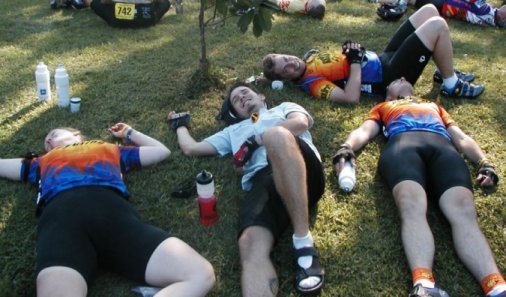
 About 80% of the people I teach habitually slightly dislocate at least one of their hips. While they are young it hardly matters, young hips are juicy and forgiving. They just develop protective muscles which limit range of motion. But if one of these students takes a lot of weight in a slightly dislocated hip they can have pain. As people age the slight dislocation of the hips becomes a bigger and bigger problem.
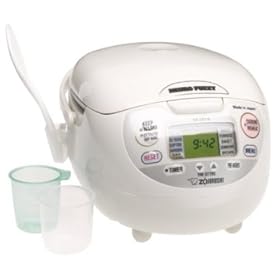 Occasionally I do product reviews. Lately I hear people worrying about the "economy," which I think is silly. If the economy slows down, it's like it's doing taijiquan. We notice where we're wasting energy, we discard excess, our appetites readjust and become more refined, we redesign our interactions for the space and things we use everyday-- generally we simplify our lives.
 another man's splurge
 .
. .
. on toilet paper too.)
 Jade Maiden Works the Shuttles is the name of a taijiquan movement/posture. What does it mean?
 infinite time.