American Qigong Ethics (part 3)

Here are a few more American Qigong Ethics.
2. Know the actual history and cultural context of your qigong methods. Are they part of a larger system or tradition? What inspired them? Don't exaggerate your knowledge or experience--or that of your teacher.

3. Be explicit about what your qigong methods are supposed to do. Being honest here may be counter intuitive. Because kinesthetic learning is characterized by continuously changing cognitive understanding, my best explanation of what a method will do is the one catered to the kinesthetic knowledge of the listener. In other words, this will not lead to pigeon-holing. More likely it will lead to complexity with some ambiguity.

For example, in In Erle Montaigue's book Power Taiji (Which by the way I like because his writing has the flexibility of a conversation.) he lists the Taijiquan posture/movement "Repulse Monkey," as being good for the Gallbladder. While I have a clear and distinct perception of my gallbladder and can evaluate "Repulse Monkey's" direct effect on my gallbladder, most people can not. I also happen to know that in classical Chinese the term "gallbladder" is not only technical but highly metaphoric, it means to open into a springtime of revitalization that will re-inspire and give support to your decision-making capabilities. In contrast, in English the gallbladder produces bile.

If you understand the statement "Repulse Monkey is good for the gallbladder" theAmerican Taijiquan shoes (NOT) way I do, than you also understand that it is not referring to a remedy. It is an engaged process of complete embodiment. My regular readers will recognize this statement as being in tune with a world view that encouraged long-life, slow motion, continuous and consensual exorcism.
4. Help your students understand their own motivations. Don't encourage people to practice for silly reasons or reasons which will eventually leave them feeling disappointed.

(For instance, regular practice of taijiquan will make your calf muscles smaller, so don't expect to look better in These boots!)

    American Qigong Ethics (part 2)

    Recently I was having an informed and thoughtful conversation about schools with a woman who has a high level job in statewide education when she casually mentioned that she studies qigong with a real master.

    "Oh great," I say, "tell me more."

    She tells me he leads a cancer group at one of the local Integrative-Medicine hospital clinics. "What makes him a master?" I ask, explaining that Qigong as medicine is a pretty new idea, and that taxi drivers in China are awarded the title "Master" (Shirfu) as well.

    "Oh he's amazing." She said, "We do a style of walking Qigong around a small park and one day a drunk homeless guy stood up and moved imposingly toward our path shouting insults. My master just waved his hand and the guy promptly went over to a bench and fell asleep."

    "O.K." I thought to myself, "Obe-Wan Kenobi did that in the Star Wars movie too!" "That's an extraordinary claim," I say. "Are you learning how to do that? What other sorts of claims does he make?"

    "Oh, he is very modest. He would never make such a claim himself. I just do it everyday because it makes me feel healthy."

    Now, eye rolling aside, I'm not a truth junkie. I don't want to pop this woman's balloon. I don't know what he is personally claiming, but she has apparently talked herself into exercising everyday. Who am I to get in the way of that?

    Still there is a significant chance that I have been practicing qigong longer than her "Master," who I suspect invented a lineage and an improbable training history. It diminishes me in two ways. First, some people will assume I'm not very knowledgeable because I don't do these sorts of amazing feats. Second, other people may associate Qigong with these improbable claims and disregard my knowledge altogether. Both of these things happen all the time.

    Does her master have some ethical responsibility to clarify his powers of agency?  How different is this from Jerry Alan Johnson who wrote a dictionary sized book on Qigong that I wouldn't even use as a door-stop?  Johnson uses the "sword-fingers" mudra to do "needless" acupuncture, and one of his students is the main Qigong teacher at a Berkeley Acupuncture School.
    I acknowledge that charismatic Qigong teachers get disciplined health commitments from their students or clients that I don't get. If you tap into a client's insecurities, or their desire for power, by convincing them that they will be freer, or happier, or stronger, or more preceptive, or even more intuitive, if only they quit eating fried chicken and do some groovy breathing exercise--who am I to get in the way? Those commitments are legitimately good for one's health. Other people are free to subordinate themselves to people and ideas.

    The first American Qigong Precept that I propose is this (I know, it's a little long for a precept):
    When you don't know, admit you don't know! Teach your students to do the same.  Do not make claims about healing properties that you can not substantiate.  Clear explanations are O.K., anecdotes are not unless you say, "This is an un-substantiated anecdote!"

    Good storytelling can be a useful teaching method because it has the power to make metaphors memorable.  When you present stories as history, go ahead and give the good-guys white hats and the bad-guys black hats--but beware, your are walking a fine line--make sure your students are sensitive to the presence of ambiguity.
    If your knowledge comes from intuition admit that, and don't cross the line of claiming to know with certainty.

    American Qigong Ethics (updated)

    As Americans we have always come face to face with cultures different from our own. Multi-culturalism is an ethic based on our sense of what is right and good and desirable in a society. Unfortunately multiculturalism often gets conflated with cultural relativism.
    We acknowledge that people from other cultures have different rituals and customs, as well as different narratives (historical perspectives) and priorities.
    Multiculturalism is the idea that we can all benefit from a cosmopolitan environment where there is tolerance for gatherings with culturally distinct attributes and which nurture traditional or historic world views and practices. This is because such an environment leads to a greater good. Through hybridization and cross-cultural integration, we can incubate creativity and innovation.

    This idea grows out of a more primitive one, "Don’t throw the baby out with the bath water." An expression which reveals the tension between innovation and tradition found in cosmopolitan environments.

    Cultural relativism is the simple idea that what seems real or true to people from one culture may not seem so to people from another. A further corollary to this idea is that the methods people of a particular culture use to test or measure whether something is true or real are often different than those of another culture.

    The idea of cultural relativism opens the possibility that we may be wrong about how we decide what is right. Why? Because when we cross a cultural boundary the measure or test which determines what is real or what is true may have changed. Such boundary crossing can happen in a cosmopolitan environment, but multiculturalism as a value stands clearly in my culture, which also happens to value personal freedom and commerce.

    Where cultural relativism and multiculturalism become conflated a kind of reluctance or hesitancy to make ethical decisions can lead to a weakening of ethics all around. Fertile ground for cultural and social fundamentalists.

    How do we know when subordination of someone else is wrong? How do we know if, indeed, subordinating ourselves is wrong?

    This is all pretty relevant to qigong because there really are no qigong traditionalists or qigong conservatives. Everyone is an innovator because qigong as a distinct concept is a new invention. It is a creation of cities. Mainland Chinese cities had explosions of Qigong in the 1980's and 90's, imagine a thousand people all practicing together in a park. The government felt that Qigong was out of control and dangerous so it instituted certifications and regulations. Some teachers went into exile, some went to jail, some styles were made illegal, some went underground, but most found a way to work with the government.
    The ethical issues that arise teaching Qigong in America (and elsewhere) are different from those in China. We don't need certifications or oversight. We do need good cross-cultural communication and ways to assess the value of a particular style or teacher.

    Historically speaking, it is safe to say gongfu (one of the roots of qigong) has been practiced for a thousand years, and probably longer. People could study and practice movement or meditation or martial arts routines within their families or villages. The Chinese word for village is "cheng," which actually means "wall."  All the people within the city "wall" shared the same body of  ethics.

    China also has a long history of itinerant performers, healers and religious teachers. Most often these were also associated with a family and a village. Even a traveling Gongfu-Opera-Circus likely had a home, a family and a particular religious association. The historic conflation of performers, healers, ritual experts and religious teachers makes it difficult to create ethical standards for teaching modern qigong. It has all of these roots.


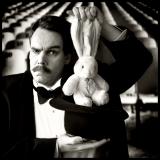
    If you are teaching "qigong healing" and just happen to pull a rabbit out of your hat, is it ethical to say "My qi is feeling jumpy today?" I think not. I think you should say, "I will now attempt to pull a rabbit out of my hat," do the deed, then say, "Ta-Dah!" and take a bow.
    The ethic of multiculturalism requires us to tolerate some weird blending of performance and healing, but those same ethics also require us to hybridize by drawing some dotted-lines between, for instance, performance and healing, or stretching and kowtowing.

    In trying to understand and practice qigong and gongfu ethically, we should be aware of the religious meaning in these practices, and the relationship our style has to various healing, performing and devotional traditions.

    Rabbit Love

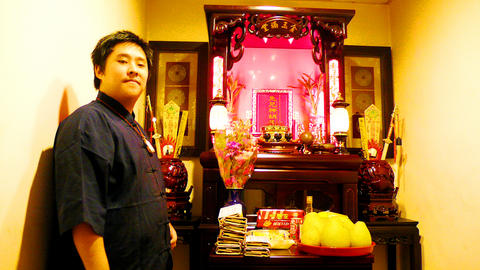
    Alter to the Rabbit God Chinese popular religion is pretty dynamic. This article talks about how a local cult to the Rabbit God got started and how it is serving a local population.
    The guy in the picture is a Fashi, a master of methods. He is not a Daoshi (Daoist priest), but as the creator of this temple/shrine he is in charge of managing the offings people make, the amulets people take away, and the way in which the Rabbit God is addressed.

    Rabbit GodDaoist priests are also called Tianshi (Celestial Masters) because they are responsible for determining, managing and updating the hierarchy of gods. The Rabbit god falls under the control of the City God. The shrine to the City God was likely the focal point of martial arts training during the Song Dynasty, and is the context from which the word gongfu (Kungfu) got its meaning. Gongfu means "meritorious action," people training martial arts on behalf of the community did so as part of their participation in the cult of the City God.

    Zhenwu, the Icon (or god) we talked about yesterday is currently (since about 1650) the center of the Chinese hierarchy of gods. Before that it was the Jade Emperor (he is now retired). All gods deal with questions of fate and freedom. Daoist morality is not concerned with stopping behavior, it is concerned with finding one's place. Gods have a place, Demons have a place, even Starbuck's has a place.

    Meditation Muscle

    ZenIn an earlier post I talked about the invocation of Zhenwu (The Perfected Warrior) as a preliminary stage of all meditation. In the secular world, which includes Zen, Yiquan, and Vipasina among others, the invocation of of the Perfected Warrior becomes just "the discipline to be still."

    Particularly in the Soto School of Zen (Chan) the posture itself is the central teaching, the method and the fruition. Zen has the Zhenwu preliminary stage, it just isn't given any attention in theZhenwu the Icon of Fate teaching, except to say, "sit still."

    In Yiquan, Zhenwu becomes a barely active body. Thus students are instructed to wrap their arms around an imaginary tree and try to move it. This constant vigilance could also be called "stillness ready to pounce."

    While it is entirely possible to just start practicing meditation with no instruction save a posture; meditation does require a certain kind of strength. Let's call it meditation muscle.  Generally the Zen tradition helps people build this meditation muscle by having new students join a daily group of people who have already established a committed practice.

    Willing oneself to "be still" by constantly resisting the urge to move has the same effect as the Yiquan approach of "stillness ready to pounce." Both approaches develop this meditation muscle. They are both pulling on the same "rope."

    Since we are not actually Zhenwu (a permanently meditating war god ready at any moment to leap up and charge off into battle), all these methods give-in to something softer and weaker, they reveal our true nature--they are non-productive.

    Chansi Jin (Silk Reeling Power)

    I dropped by to see George Xu yesterday and he gave me this great list of the seven levels of chansijin.


    1. Like a Three-Section Staff.

    2. Like a Rope.

    3. Like a Snake.

    4. The Dantian becomes a perfect ball that rolls in all directions.

    5. The Outside and Inside move together.

    6. Sense of space moves the body.

    7. The mind spirals. (Only the opponent feels the spiral.)Silk Cocoon


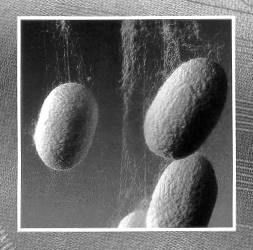
    Chansijin is closely associated with Chen Style Taijiquan, but the idea of spiraling is common to most internal martial arts. Chen Style has spun-off its own qigong system called chansigong (silk reeling work). The metaphor here is the act of transferring a silk cocoon to a spool by pulling just a single filament (strand) of silk out of the cocoon. The filament is gently attached to the spool and then the spool is slowly and continuously turned. Once you have many spools of filament silk, they can be spun together into a very strong thread, which can be made into fabric.

    When I studied with Zhang Xuexin he liked to call this same practice "making noodles" which mixed the metaphors of pulling and twisting with the resulting looseness.

    Contest

    Fat!If it is true that, at the time the various taijiquan postures got their names the main people practicing taijiquan were pirates, then the names should actually have salty meanings.

    I know most of you out there have at one time or another made fun of the silly sounding names of the taijiquan postures. My guess is that who ever came up with those names had a sense of humor and was also a bit of a dandy.

    The posture "Lazy About Tying One's Coat" probably means, "Forgetting to tuck in your shirt (after a quickie)."

    What do you think the posture names/metaphors actually mean? Can you unlock the indoor secret (salty) teachings?

    The Whirling Circles of Ba Gua Zhang (last chapter)

    The Eight Trigrams (gua)The last chapter of The Whirling Circles of Ba Gua Zhang, is titled "A Moving Yi Jing." The meat and potatoes of this chapter are two great lists.

    The first list is a paragraph for each of the qi transmissions associated with each of the eight "mother palms" and gua (trigrams) of B.K. Frantzis's baguazhang system (which has no form).

    The qi transmissions are supplemented in the applications section too. The authors clearly and succinctly describe the feeling of each palm change; how it moves and what makes it distinct. They also explain that the best way to develop these qi transmissions is through the practice of Soft-hands, Roshou (a dynamic moving and slapping version of push-hands).

    I plan to do a video for each of the Baguazhang qi transmissions with in a year.

    What is a Daoist Body? 

    The second list is this:Dance of Death

    1. The Physical Body

    2. The Qi Body

    3. The Emotional Body

    4. The Thinking Body

    5. The Psychic Body

    6. The Causal Body

    7. The Body of Individuality

    8. The body of the Dao


    The authors give very short descriptions of what each category might mean, calling them energy bodies. Beyond that what they say is embarrassing for it's lack of connection to anything real.  (Baguazhang is not a self-help program, and neither is the Yijing.)
    Religious Daoism conceptualizes a human being as not just one body but many bodies. Calling them "energy bodies" is misleading. Your house is a body that you share with everyone else who lives there. You can clean, remodel, or move to another house, but the fact that you have such a body is a given. All bodies relate to other bodies. If you live in a damp shack for a month your physical body will start to creek at the joints and your lung capacity will decrease (effecting your qi body).

    The way religious Daoists conceptualize it, we share a body with everyone who reads this blog or speaks English. More importantly, we share a body with everyone who makes the same commitments we do, thus Christians all share a body, Muslims all share a body, and everyone who worships Guanyin shares a body.Possession Inspiring

    Ghosts have very weak bodies, demons and gods very strong ones (we give them our strength).

    Horror movies are so visceral because as you watch them your various "commitment bodies" are being contorted, poked and exploded. (Obviously, I love the horror genre.)

    This is a list used to train Daoist exorcists. In order to do an exorcism you must be able to recognize all the different types of possession in other people and in yourself.

    1. Physical possession is pain. In it's lesser forms we recognize it as tension or even "strength." Physical possession causes people to lash out and to blame.

    2. Qi possession is associated with controlling the breath, it amplifies feelings, creates excitement and it can lead to transcendent states. (Godlike or "I can't feel my body" types of disassociation.) Mania.

    3. Emotional possession translates perfectly into English. Possessed by fear, anger, love, etc...

    4. Thinking possession is like believing that the oceans are going to rise because we drive to work. Or that everything that happens in the Middle-East matters. You know, "Global Conspiracy," "The world is in crisis, dude."

    5. Psychic possession is believing you know what someone else is thinking, or what is about to happen next.

    6. Causal possession is like schizophrenia. When you think objects or icons or voices in your head are the cause of something in the real world. Profound disassociation.

    7. The body of Individuation is supreme ego-mania. There are a number of narcotics that can bring about this near-death experience. It is when you feel/believe that you are the cause and purpose of everything.

    8. The body of the Dao is a complete death. Sometimes call immortality. It is experience without any limits or conceptions.


    Baguazhang is a dance form that explores all the different ways we can become possessed.  It is dancing with what it is to be alive.  Perhaps we could think of it as a personal, daily exorcism, although that certianly isn't traditional.

    In case I lost you-- and you don't see the connection to martial arts-- notice that I just made a really good list of what might cause someone to attack you.

    The Whirling Circles of Ba Gua Zhang (Part 4)

    Continuing my discussion of the Whirling Circles of Ba Gua Zhang, by Frank Allen and Tina Chunna Zhang, we turn to the chapter entitled "The Daoist Roots of Baguazhang."

    The chapter can be summarized like this: Dong Haichuan and Liu Hung Chieh both studied with some unnamed Daoists and Daoists do meditation. Baguazhang practitioners do sitting, standing, and walking meditation, which must have come from these unnamed Daoists. See the problem yet?

    In the second paragraph we read:
    Apparently, these Daosits looked to their predecessors--the shaman founders of Chinese culture--for some of the patterns of their moving meditations. Some of the oldest texts relating to the study of the Dao have chronicled a few of the dance patterns of the legendary Yu, mythical father of Chinese Shamanism. The patterns of many of these Shamanistic practices were circles and spirals.

    The connection of the Dance of Yu to baguazhang is one of those big multi-layered topics for another day. But I can at least point out what the authors don't; Da Yu (the Great Yu) was an exorcist. The reason he is considered the founder of Chinese culture is because 4000 years ago he toured the known world (the whole country) performing the first national exorcisms.

    Pace of Yu

    I grew up around a lot of Cantonese speaking kids. When they got mad they would shout "Fuk Da Yu!" which sounded so much like F--k Y-u! that we had a lot of fun saying it. It turns out that they were saying "A curse upon your ancestors." Yu is the mythic ancestor of all Chinese and his name has actually come to mean "ancestor!"

    The authors present Professor Kang Gewu's thesis that the roots of baguazhang are to be found in a circle walking practice of the Longmen sect. The concept of "secularism" does not translate very well into Chinese. For instance, Catholicism and Protestantism have often been viewed by Chinese as completely different religions. The idea that Daoism has sects is foreign to Daoism itself. This notion adds somewhat to the confusion about baguazhang's daoist roots. If it's possible to be ordained in a Quanzhen monastery, go and study ritual with a Tianshi householder, and then go live in a Zhengyi hermit enclave on Mao Mountain--then these categories don't meet the definition of sects.

    To the authors credit, Longmen (Dragon gate) is correctly identified as a later Daoist lineage (1656) of the Qing Dynasty which merged with Confucianism and promoted a public code of conduct for lay practitioners. (I think of it as decaf-Daoism. It would be very hard to figure out why people drink coffee everyday if the only kind you had ever tried was decaf.)Jiangxi Exorcism Procession

    That's most of what the authors have to say about Daoism. At one point they describe the meditative goal of circle walking as, to "make heaven and earth reside within one's own body," thus joining our inner world with the outer world to become "One with the Dao." Thanks for that. Basic Chinese cosmology posits that we are a temporary contract between Heaven and Earth to hang out in a body for, give or take, 80 years. How does walking in a circle make that more or less true?

    In the second half of this chapter, the authors describe in detail a method of "dissolving" taught by B.K. Frantzis. The method described here is great. The problem is that without contextualization, without some grasp of the view which inspired this method, there is a very high probability that the fruition of practice will be overlooked. (And that appears to be what happened.)

    The method they describe has the goal of clearing "energy blockages" from the body so that we can store unlimited amounts of qi. I'm deeply familiar with this method but I don't personally like to think of myself as being full of energy blockages, whatever that means. Frankly, the method is not very important.

    My intension is not to sound dismissive, by all means, clear out those energy blocks! But taking a step back, isn't that what I am-- a big old energy blockage. To all my fellow energy blockages out there (this means you, dear reader) I say this: Respect yourself, lighten up, and trust your experience. You'll figure it out.

    Buy it From Amazon

    The Whirling Circles of Ba Gua Zhang (Part 3)

    Chapter 6 is a translation with commentary on the Bagauzhang Classics. If someone actually thought these ideas worth putting into poetry, I should hope that an effort would be made to make them sound like poetry in English. Maybe the problem is in the original, I can't tell. The book doesn't give enough background about these classics for me to know if I should take them seriously. They don't say much. The Taiji Classics where written for the advanced student, but these classics seem more rudimentary. Usually poetry is multi-layered, but if there is a second layer to these classics, the translation hides it. Why are we writing songs about martial arts anyway? In an age of video, a martial arts song better have some substance.
    Here is a song about martial arts worth singing. "bmm bmm bmm...another one bites the dust."

    Still, I'm going to study the classics. I can't help it. But I find myself wishing they saidjade lady something different. Here is a fun one (#33). The Chinese title is "not-two-natural-principle" The authors' translated it "Accuracy Method.":
    Do not shoot an arrow without a target,
    Shoot again if the target is missed.
    Even if he moves like a ghost,
    I catch the evil spirit in no time.

    The authors commentary interprets this to mean be accurate, wait rather than strike blindly. If you strike and miss, you leave yourself open. If you do miss, keep striking constantly until you win.
    This was worth putting into poetry? A jade-maiden just whispered this in my ear, perhaps it is an improvement:
    Baguazhang is an art without arrows or targets;
    If something can be missed once, it can be missed again.
    Even if my opponent is already committed to his own death,
    No time or distance separates us.

    Here is another one from the book (#31):
    Blocking is a skill of protecting,
    To avoid attacks with a casual attitude.
    When the distance is more than inches away,
    Skills are useless and power will not be effective.

    The commentary says it means blocking is important and should be casual and effortless. Be close enough to block, if you are too far away you won't be in control.

    Oh, I feel another tickle in my ear. She says write!
    If blocking works, it's not a real fight.
    It's not my intension to melt,
    I simply have nothing to protect.
    Wolves bite flesh, not air.