In depth discussions of internal martial arts, theatricality, and Daoist ritual emptiness. Original martial arts ideas and Daoist education with a sense of humor and intelligence.
New Eastover Workshop, in Eastern Massachusetts, Italy, and France are in the works.
Daodejing Online - Learn Daoist Meditation through studying Daoism’s most sacred text Laozi’s Daodejing. You can join from anywhere in the world, $50. Email me if you are interesting in joining!
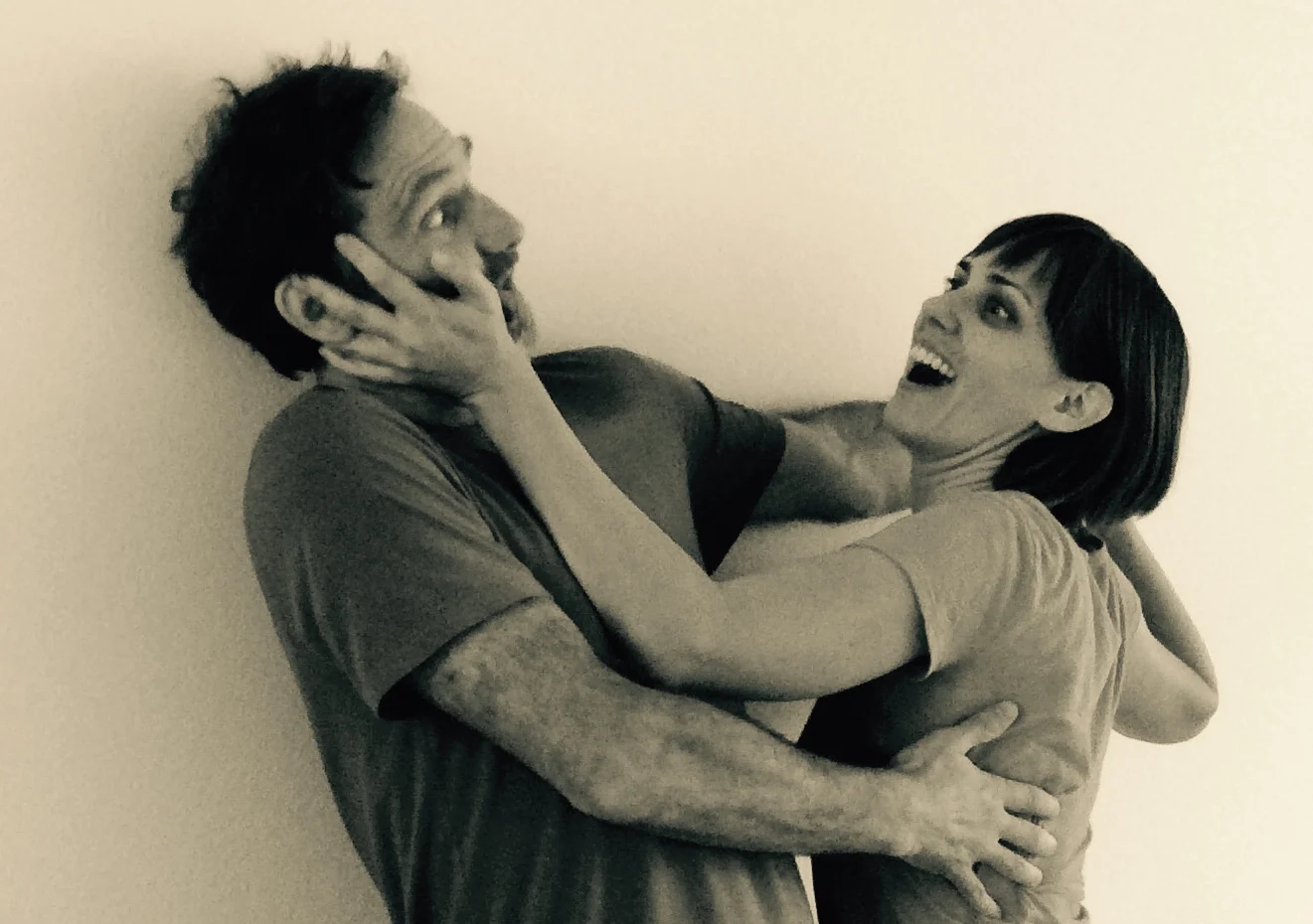
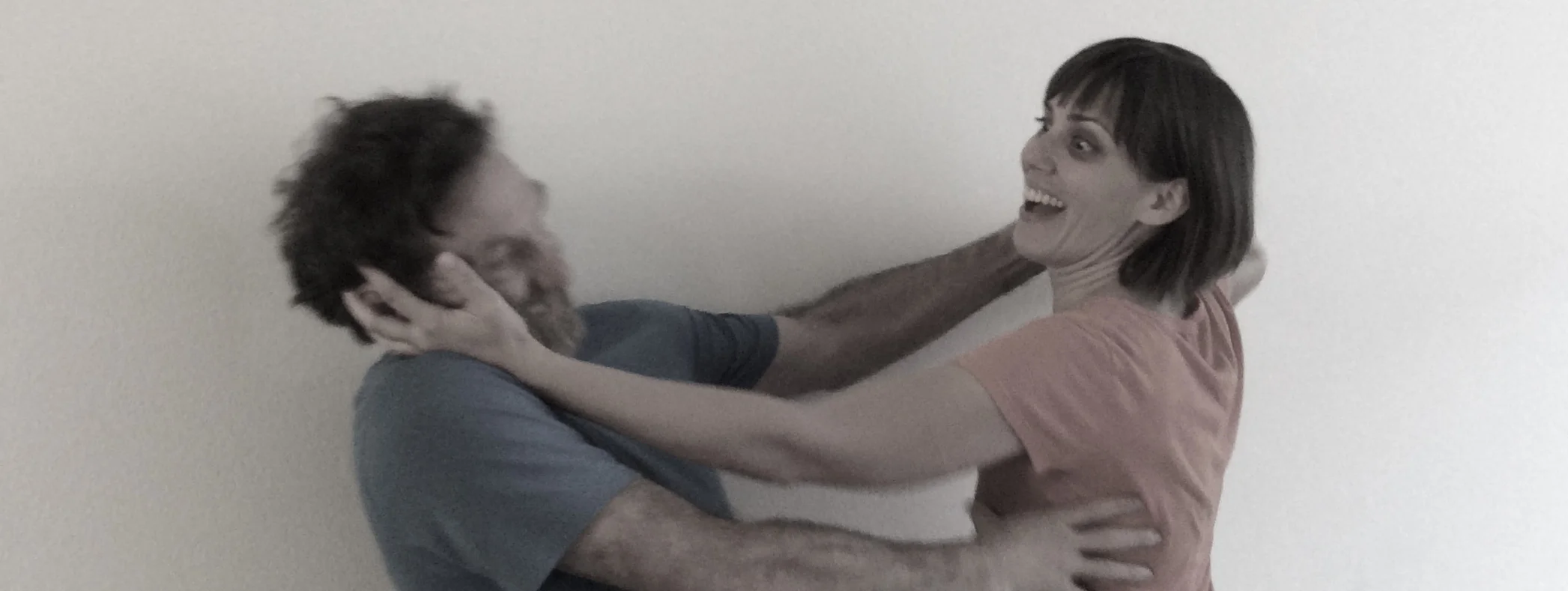
Here is a sample of the kind of secret Italian martial-dance that is slowly becoming available. This change in perceptions about the martial origins of dance, is a parallel-opposite of the transition happening in North Asian martial arts which are taking back their theatrical and religions roots.
Please come to my workshops in San Francisco/Oakland [Nov. 29th and Dec. 2nd] Read about them and sign up at the Soja website: sojamindbody.com/schedule/ (make sure to click on "Adult Workshops"). You can also see Anna Valdiserri's and Rory Miller's workshops there, I highly recommend them.
I would like to spend a little time pitching my workshops here. The copy text is challenging to write because I'm in uncharted territory. I'm a cowbody doing my own thing.
The Circus Daoyin class is my attempt to bust yoga people out of the "prison" of the yoga mat.
This wonderful publication is now out. It is free, and I have a review it. Check it out! Download it. Share it. A new field of study has come into existence.
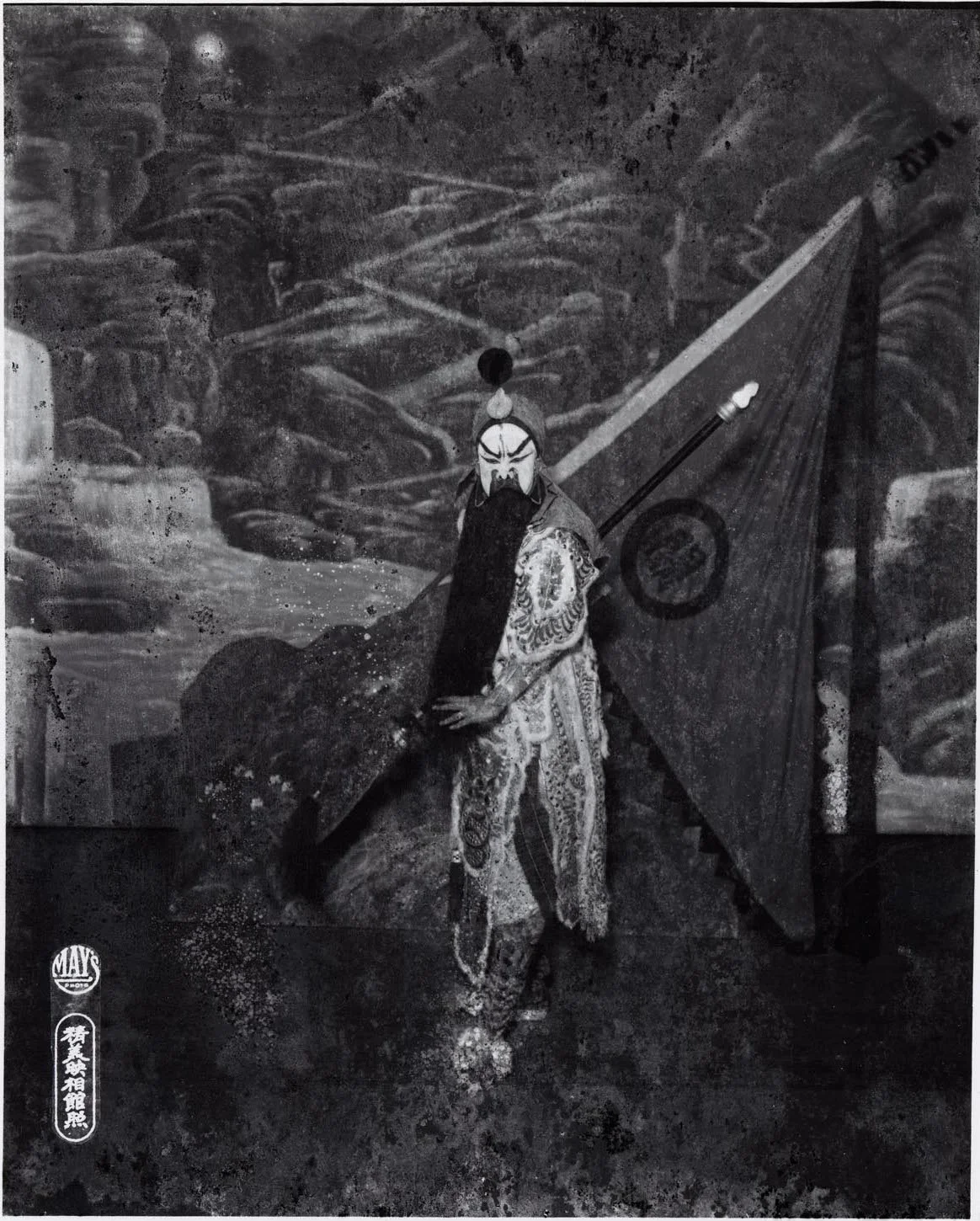
The martial arts connection to medicine is very weak unless we dive into specific religious notions of medicine and health. That view has long made me a polarizing teacher, some people love me, some hate me. As my regular readers are aware, connections between theater, religion and martial arts were severed at the beginning of the 20th Century. Because of this, few people can actually see the religious connections between medicine and martial arts. What we got, almost by a historical fluke, was the valorization of the martial arts school connected to the herbalist and the bone-setter. This connection is certainly real. The connections between ways of training the body and massage techniques (bodywork, tuina, etc) are strong in practice. That is why the Daoyin for bodyworkers program has been successful. But for this connection to be meaningful, the language has to be correct. Otherwise it just becomes laying theory on top of practice; an unnecessary burden.
Monday is my day to post a blog. I failed to post on time this week because I was trying to come to terms with copyright law, use permissions, and the failed concept of public domain works of art. (I'm happy to report I'm that far along with both my high quality video productions and my book.)
Most of my readers are decent and upright citizens, and may not be aware of terms like copyright nazis. Consider this. If one were to re-record a recording of a piece of music by, for example, by putting a microphone in front of a speaker, most people would not consider this a new piece of art. It certainly wouldn't be copyrightable. But, in fact, if one takes a purely technical photograph of a photograph, that is considered a new work of art. Even if a photograph is very old, and is clearly now in the public domain, a person or a corporation, or a museum can take a new picture of it and restart the copyright. These works can be owned too, creating some incomprehensible process by which I, or you, can be required to pay for permission to use them. You need to be a lawyer to understand it.
I live in Boulder, Colorado. If you get into trouble socially in Boulder, all you have to say is the magic word, "sustainability." This works for all situations. If the police are trying to arrest you, just say, "sustainability," and they will let you go. If you step on someone's foot at the cafe, say "sustainability," and everyone smiles. If your dog barks at someone, if your goats get out of the yard and chew up the seats of your neighbor's convertible, if you forget a friend's birthday, just say "sustainability;" it is the universal safe word for Boulder. All advertising, marketing, education and politics uses the word "sustainability," in all situations.
Weakness is a door for returning to our true, unconditioned, baby-like nature (zhende 真德, yuande). But weakness itself is not a type of fruition we seek. The idea of nurturing weakness arose because aggressive intentions preclude subtlety, cover up sensitivity, and obscure awareness. Focus is aggressive. Focus limits responsiveness. Weakness is a way of keeping options open.
In the early debates between Buddhists and Daoists, both advocated for a kind of potency. Buddhists argued that a focused mind could be used to break through to clarity, and Daoists countered that clarity was self-arising.
Daoists also argue that strength is self-arising. In fact, I have become an advocate of self-arising strength. The problems with strength all come from putting intent into the muscles. If strength is limited to the physical body, the power of the void will be less accessible. If this sounds mystical, bring it up with Rory Miller, he is saying similar things. It isn't mystical, it is the way our bodies work when we drop aggression.
In order to develop coordination and self-healing, many people find it beneficial to develop the ability to feel every part of the inside of their body. This is okay, as long as those senses do not become hardened. The reality is that the inside of our bodies cannot be felt directly, the true feelings are defuse and confusing. That's why babies need to wiggle their arms and legs for many months before they actually gain control of them. It is a process of linking up the imagination with felt experience and visual perception. All that is a function of the imagination, and it should stay imagination, flexible and dynamic. The interior of the body should not become some hardened notion of truth. When our imagination becomes hardened truth, Daoists call that death (or the birth of a ghost).
A key concept of internal martial arts is the idea that the body can feel hollowed out. This is called tong, sometimes translated "through." It is the type of emptiness that allows a flute to produce sound, a hollowness that goes all the way through. I am an advocate of any type of strength which supports the experience of tong.
At some point, I noticed that students who do not have much tone in their biceps have trouble keeping their shoulders tong. This led to my own experiments, and now I advocate keeping the biceps toned all the time as a way of keeping the shoulders tong. Relaxation is fine as long as the biceps remain toned. Another way people lose tong, is by pushing their shoulders down, this destroys the open space and commits the arms to a line of power. This is probably the biggest structural error in the world of martial arts. It is very common. People with this training will have to pass through a period of feeling weak before they can establish actual strength with tong. I used to think this period of weakness needed to last months or years, but that was a hook without a worm for most people. I have since figured out that students can replace strength with shapes of empty vanity by flexing their biceps all the time. By this method one can drastically cut the time it takes to develop tong shoulders. The key is that strength must stay in the imagination, the biceps must not be used to carry. If a student picks up a weapon, they must imagine that it is part of their body, not something they are carrying.
So weakening into the void means recognizing the emptiness of all strength, and cultivating it. The mind does not go into the muscles. The mind must remain unfocussed and without limitation. Plastic. The mind goes into the void.
Naturally, acting skill works the same way. Strength or image which is committed to the body becomes permanent character. Theatricality can be built either around a profound change in a person's character, or around a character who refuses to change even while everything around them is changing. In either case, the actor does not want to become a permanent character, acting skill is the ability to take on new characters and imagine dynamic worlds for them... Acting requires being weak and unconditioned enough to allow strength to be self-arising. Daoists call this pacing the void (步虛 buxu).
Here is a diagram for the ritual from Michael Saso's website:
Since I began teaching qigong around 1990, I have learned, practiced, and taught countless styles. I think we should change the naming conventions of qigong because they do not match my empirical experience.
There is one book everyone who practices qigong should read, Qigong Fever, by David Palmer. It is a history of the politics that created the name "qigong," and the communist political clique that created a vast quantity of junk science claiming qigong was good for everything from curing cancer to re-directing guided missiles (I'm not kidding).
The problem arose because the methods (styles) of practicing qigong were removed from the Golden Elixar (jindan) framework that originally grounded it. That framework is jing-qi-shen; where jing is everything physical or structural, and shen is everything imaginary including the functional spatial imagination. In this framework, Qi is the intermediary between these two conceptual-experiential categories.
Qigong is simply moving with a felt sense of qi around ones body. With regard to the internal martial arts, that feeling of qi acts as a buffer in between the physical body and the spatial imagination. The quickest way to develop this feeling is through brush bathing.
Brush bathing is very simple. Sit on a bench and pour a bucket of hot water over your head. Then scrub your whole body with a stiff brush; starting at the top and moving towards the feet, scrubbing the yang meridians before the yin meridians (back before front). Then pour four buckets of hot water on your head and one cold bucket. After each bucket visualize (see and feel) the steam as a color permeating your skin and out into space. The colors should changed from dull to bright, and follow the five element color sequence: green, red, silver, violet, gold.
Brush bathe everyday for a couple of months until this felt visuallization is easy to conjure. Meanwhile, learn to dance while maintaining these felt visualizations. That, in my experience, is the entirety of qigong, the rest is marketing and hand-holding.
So what are all those other "qigong" type things that people do? They all fall either into the category of jinggong or shengong. (The word "gong" means work in modern Chinese, but in a non-communist milieu it means to accumulate merit.)
Jingggong is any specific pattern (or quality) of movement. (Once you have the pattern, you can add your qigong felt visualizations to it.) The purpose of jinggong is to change ones physical body through refining ones awareness of it. That covers a wide range of experiences including: coordination, relaxation, imitation, rhythm, breathing patterns, and ways of connecting or integrating through the body.
Shengong is the practice of moving the body exclusively with the imagination. This is how all the internal martial arts work, but it also includes subtle or invisible movements that may happen while practicing visualizations in stillness.
Jinggong works fine without qigong. And qigong is a wonderful practice on its own too. They also work well together. But shengong is not going to work unless one has mastered the qigong practice. And shengong will not work for martial arts or dance unless the movement patterns (jinggong) are established first. At the risk of stating the obvious, if one does not know how to kick someone in the head shengong will not help, learn the skill first.
Colors are a useful way to trick ones mind into experiencing empty space as having substance, so that it becomes easier to manipulate. There are countless other tricks. I suspect it will be some time before my naming conventions become conventions. But calling everything qigong, is not consistent with the basic cosmology of the body or the practice. Let's change it.
Joan Mankin was a dedicated student of mine and a living treasure in many ways; let me tell you about some of them. She was an actor, director, physical comedian, teacher, swimmer, pioneer of women's martial arts, and a rabbi. Most people knew her by her clown name, Queenie Moon, but I will always remember her by her martial arts, hero name--Jade Mango.
Joan attended the University of Chicago in the late 1960s and moved to San Francisco to work with the Mime Troop at a time when they were at the center of hippy counter-culture. She once did a topless trampoline show in Union Square, the most public space in San Francisco. Later she worked with the pioneering Pickle Family Circus. I have fond memories of seeing her perform with both of these groups when I was just a child. She went on to perform with almost all the major theaters in the San Francisco area. As a performer she was among the best in the business. Here is an obituary of her as an performer.
Joan came to my class three mornings a week for more than ten years. She was my student; however, when someone with high-caliber skills like Joan's comes to study with you, you become their student too. In class, when something funny was said, she would ask the questions, "Would adding some physical element improve it? A waddle perhaps? What about the voice, or the phrasing? What really makes that funny? Do we understand it? What does it tell us about who we are? What does it tell us about the human condition?" We all developed the habits of making things more funny.
But before I go on, I want to tell you how I met Joan. One night I went on a double-blind date, which involved a Hawiian outrigger-canoe and the four of us paddling on the San Francisco Bay. It was after midnight and we snuck into the women's bathroom at the South End Rowing club, and since I was there, I posted a flier for my martial arts classes in the sauna. Joan came to class a couple days later. I was immediately honored and amazed to have her as a student. But she kept asking who I knew at the South End Rowing club, and I kept saying I don't know anyone. Joan was persistent, knowing I had a secret was like an invitation for her. When I finally told her I had put the flier there myself, she was incredulous, after all, it was in the women's sauna! That made her more animated, forcing me to tell her every lurid detail. After that when she wanted to give me a hard time, she would say, "Wait, who do you know at the South End Rowing Club?"
She swam in the freezing cold San Francisco Bay several times a week, and her daughter Emma held the record for the youngest person ever to swim underneath the Golden Gate Bridge; she made the crossing at age 10.
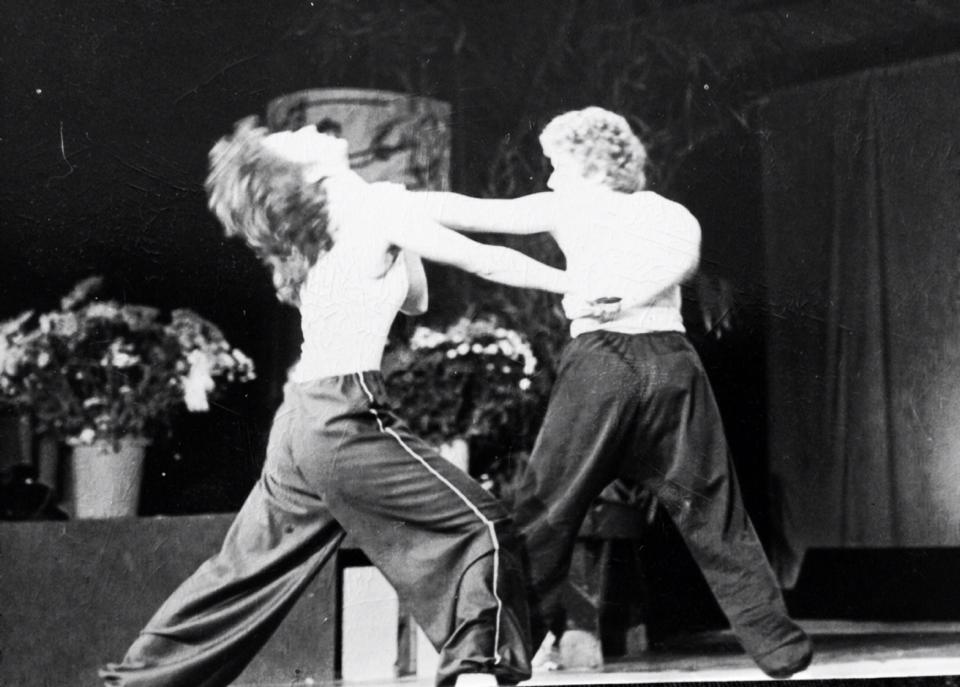
Joan was a pioneer of women's self-defense in the 1970s. She understood that freedom comes with responsibility. Below is a picture of her and Laurie Cahn, they both were students of Adam Hsu's, performing a theatrical demonstration about the importance of self-defense.
Joan was from a long tradition of fighting rabbis. A rabbi is a well-read person, knowledgeable in multiple realms, who can argue many points-of-view simultaneously. A rabbi is one who listens carefully and does not hesitate to take a contrary view if she believes it is merited. This is why you can trust a rabbi. You know they will tell you what they think. And you also know that their commitment to you is deeper than anything you can say.
Several times I had to get in-between Joan and another student she wanted to clobber. Joan never required anyone to agree with her, but if you dismissed her ideas she would kick your ass. As it should be; however, as the teacher, it was my job to keep the peace, and in each instance I actually thought Joan was wrong. But so what, I loved her for that.
Joan's moral authority made it possible for me to run a martial arts class where people could pinch each other's butts, mock each others physical skills, make faces behind my back while I was giving instructions, insert slapstick comedy, and become overwhelmed by shock, insult, love, offense, or a good smell.
Here is what it was like having Joan around. We all got martial arts, hero names while making this video. Her name came to me while I was eating a mango and discussing the sword name, Jade Destiny, from Crouching Tiger Hidden Dragon. Henceforth, she was known as Jade Mango!
On September 11, 2001, Joan and I heard about the first plane hitting the World Trade Center on our way to morning class. As we practiced together, we knew something big was happening, and it would become a powerful bond for us. The next day on the beach, no planes in the sky, I talked with a close friend about what had happened, what was happening, and I realized that things could get tough for me. I decided not to tell anyone what I thought about 9/11 because I could see that I was going to lose friends over it. And several months later, when I finally decide to speak up, I did lose most of my friends. But Joan was steadfast. She understood tragedy and that we were living through one.
Joan knew that the San Francisco theater scene had become an ideologically rigid world. She totally agreed with me, for instance, that the San Francisco Mime Troop had been putting on a different show with the same stupid plot for twenty years. She was shocked by my anti-union positions, but she listened intently. That kind of thing just made our mutual respect deeper. Listening is an opportunity to change one's mind, that is what listening is, and she modeled it.
Joan loved teaching and directing. The head of the School Of The Arts (SOTA) called her up one day and said, "I've been interviewing people to teach Physical Theater here and everyone so far has had your name on their resume as a teacher, so I thought, why not go directly to the source and see if you want to teach here?" She did. She also taught at the San Francisco Circus Center--Clown Conservatory. Her influence as a teacher is vast. Whereever you are in the world, there is a good chance you have laughed at something she had a hand in. She even spent a few months teaching clowning in China. Teaching was also a big bond between us, we shared problems and successes. Having someone to talk to regularly about how to be a better teacher is a fantastic gift.
On a more personal note. In the aftermath of 9/11, I was having trouble dating. The problem was that my dates would be going along fine and then, back at the apartment, I would get some question designed to trigger a statement of hatred toward a certain George W. Bush. If I failed to deliver, my date would suddenly have to go. The president had become a sort of gateway to women's vaginas. Of course, I could have lied and gotten all the sex I wanted. But that made me angry, I didn't want to lie. Joan understood this and was sympathetic. One day I told her that I really wanted to whistle at beautiful women. She was like, "Why would you want to do that?" and I was like, "You, know, it isn't really about them. It is just a desire to express my own sexuality." And she was like, "Ooohhh, great, do it!" So I took her advice, and it helped.
Joan was someone you could go to the dark side with. Laugh about it, a lot, and come back stronger. It was a great honor to know her.
Scott Park Phillips
A place to train and learn about traditional Chinese martial arts, which are a form of religious theater combined with martial skills.
In depth discussions of internal martial arts, theatricality, and Daoist ritual emptiness. Original martial arts ideas and Daoist education with a sense of humor and intelligence.