Ligaments

One thing that I recently learned about ligaments is that they are generally more elastic than tendons.
tendon/ligament
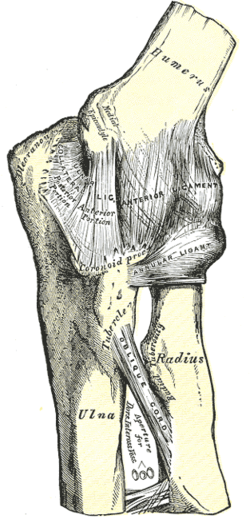
Muscles, bones, tendons, cartilage, and ligaments are all made up from the same basic stuff but in different ratios. So tendons are like ligaments, the defining difference being ligaments connect bone to bone, tendons connect muscle to bone.

The main purpose of ligaments (besides stopping our mass from flying apart when we smash into a more solid mass) is to transfer force from one bone to another.

Since all our bones grow into a spiraling shape, the ligaments continue those spirals from bone to bone, transferring force through the continuity of a given spiral. It is key to the effective transfer of force that weight does not go into the joints. Thus if your opponent touches you or puts their weight on you--all of that force should travel in a spiral through your bones to the ground.

Whenever you transfer force from one bone to another, it is the ligaments that do that job.
Troops

It is not a great idea to let your muscles lead. When muscles get tired they are like vampires craving blood! Like hormone enhanced teenagers looking for trouble. Hungry muscles will take what ever they can get, they want slow-food, fast-food, sugar, even beer--anything that can be turned into blood.

Thus the metaphor used in Daoism and Chinese medicine is that the muscles are the troops, soldiers. They need to be well trained and well cared for.

If the muscles are making decisions, you will have mob rule. Alternately, the internalligaments organs can function as a government, the heart/mind is the Emperor, the lungs are the chief ministers, the spleen is in charge of ordering, logistics, "ways & means", and the liver is the general, in charge of delivering blood to the troops and mustering them to action.

Well trained troops certainly can take some personal initiative. If it is truly in support of the larger cause, personal initiative can make or break a campaign, still the troops are rarely in a position to make good independent decisions so most of the time it is imperative that they simply follow orders.

For an army to function well, every stage of leadership must be clearly delegated and the chain of command exact.

Our body has things called proprioceptors which tell the brain where we are in space, where we are moving, and how fast. Most people's armies are in disarray because their proproceptors --scouts, spies, and communications networks-- are poorly trained. I don't know for sure, but my experience tells me that large numbers of proprioceptors live in the ligaments.

The muscles can move without consulting the ligaments but it is clumsy, the ligaments should lead--calling the troops, the muscles, to order. Once that mechanism is in place and scenarios have been set up and drilled, then the troops can be commanded.

Happy Ching Ming Day

Here is a good article about religion in Hong Kong:


This long weekend marks Ching Ming, a significant Chinese festival, but one that few tourists would notice unless they happened to see people burning offerings on the sidewalk. It is a private observance held mostly at home shrines, ancestral villages or cemeteries, as the living give gifts of food and fresh flowers to the dead, and sweep and clean their graves. You may also see stands selling paper replicas of everything from yachts and cars to mobiles and MP3 players. In modern, materialistic Hong Kong, these can be burned as offerings, too, in case your ancestor would like having a new Mercedes or Motorola in the afterlife. A traditionalist would warn you against buying one as a kitsch souvenir, though.

[Ching Ming means Clear Bright, it is also the name of the Qi Node for the next two weeks. Qi Nodes divide the solar calendar into 24- two week segments. The Western banking calendar divides the solar calendar into 4 segments (solstice/equinox).]

According to The South China Morning Post, the temple will spend H.K. $140 million, or about U.S. $18 million, on building what they say will be the largest worship hall of its kind in China, plus an LED-lit glass dome filled with Taoist entities. That sounds about as modern as burning an i-Pod offering for your late grandma.


________________________________________


And here is an article about a new approach to Daoism I would call "stuttering and embarrassed." Looking beyond the Chinglish writing style, and the picture of the "empty suits," the Research Association of Laozi Taoist Culture (CRALTC) looks like it was invented to kill off anything ziran, spontaneous or naturally beautiful.


China has started to invest more money and attention into Taoism after it has successfully exported Confucianism to the world by establishing hundreds of Confucian institutes and schools around the world. China.org.cn reporters witnessed the largest ever International Daodejing Forum held in Xi'an and Hong Kong last year. Daodejing, the Taoist bible, is one of the most widely published books on the planet, only second to the Christian Bible.


And then there is this event last year which I found by following the link in the above paragraph.  (I'm speechless.)


As the prelude of the forum, a total of 13,839 citizens recited Daodejing together at Hong Kong Stadium on April 21, setting a new Guinness record for "most people reading aloud simultaneously in one location."


My comments on other blogs and some reruns

I left a few comments on other blogs today.  Two are here on the subject of martial arts metaphors.  Another one (at the bottom) is on self-defense as a way of staying open.

In case you missed these back in August, I'm still rather fond of these four posts on eyes.
Eyes

More about Eyes

Eyes and Baguazhang

Eyes and Baguazhang (cont.)

Yoga is not what it seems

Charles Weidman --Photo by Barbara Morgan (1944). Gift of Mr. and Mrs. David C. Ruttenberg, 1987 

Charles Weidman --Photo by Barbara Morgan (1944). Gift of Mr. and Mrs. David C. Ruttenberg, 1987 

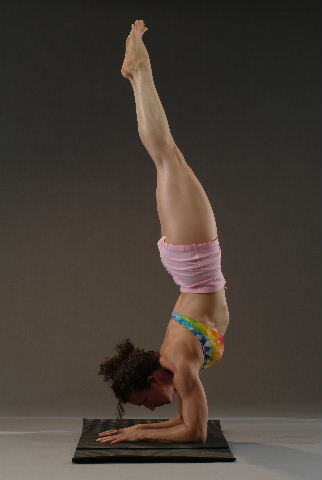
I admit that I've had it out for yoga for years. It is not the fact that people are getting to know themselves by practicing something physical with discipline, that part I find beautiful. My problem has always been that yoga seemed so "in the box" when compared to dance and martial arts. To put it bluntly, if your "downward dog" doesn't eventually scamper around the room and chase its tail, what is the point?

Years ago I had a dance teacher who trained with one of the early moderns,

Charles Weidman. Incidentally, his stuff rocked. Anyway she said to the class one day, "You know at some point during the late 70's people started saying that the way I start my class is like yoga. It wasn't until years later that I took a yoga class and saw what they meant. I wonder where those early modern dancers learned it?" Hmmm....

I was at a party a couple of years ago and spoke with a woman who made a lot of dough in the first internet explosion. She has been a Zen practitioner for 30 years and has practiced yoga for the last 20. She told me that when she first started practicing yoga, the meditation component was entirely Vippassina oriented. Meaning that it was a process of examining and transcending the body. Now yoga classes are almost all Zen (what she referred to as the "Insight" tradition) oriented meditation, meaning they see the precision of the posture as the method and the result, non-conceptual, non-transcendent, emptiness without a goal.

You are doing ancient 1000 year old practice!

She wasn't really taking sides as to which type of meditation goes better with yoga, and neither am I, she was just saying it is an unacknowledged innovation.

Well, maybe this article from Yoga Journal will shed some light, as the yoga crew are fond of saying. The article is partly a review of The Yoga Tradition of the Mysore Palace by N. E. Sjoman, as this quote shows:

Modern hatha yoga draws on British gymnastics? The yoga of Iyengar, Pattabhi Jois, and Krishnamacharya influenced by a potpourri that included Indian wrestlers? These are claims guaranteed to send a frisson of horror up the limber spine of any yoga fundamentalist. But according to Sjoman, his book is meant not to debunk yoga, but to pay tribute to it as a dynamic, growing, and ever-changing art.

Here is a quick quote from an Amazon review:

The core of the book is a translation of a text from the 1800s from the private library of the Mysore palace which is the only textual documentation of an extended asana practice - asanas being the yoga positions that form the core of yoga practice today.

I haven't read the book but it purportedly explains that the standing and inverted posses in yoga come from western gymnastics and the ubiquitous "sun salutations" come from Indian wrestling!

Is it true? I don't know, but you gotta love this stuff.

Oh, and just in case anybody is wondering (or listening) all that health stuff about how this or that posture is good for this or that organ, this or that problem...that all happened in the last ten years! --Intelligent people combining personal experience with wishful thinking and a little (Martha Steward inspired) "distressing" the surface to give it that antique feel!

Check out this wonderful list of all the things people are doing with Yoga these days over at Jen's Reviews. 18 Amazing Benefits of Yoga, According to Science.

Sarah Brumgart

Eating Bitter

umeboshiWell, now that it is spring I will give some simple nutritional advise.

Eat one umeboshi pulm a day. Umeboshi is a special preserved plum from Japan that is really sour, squish up your face sour. It is prepared with shiso leafs (sesame). The sourness will be a jolt to your system, which feels great coming out of winter into spring. Think of it as breaking up the ice and letting the rivers flow. Umiboshi will create a lot of saliva and invigorate your digestion. It literally makes me want to squirm and jump.

I have a real appetite for umeboshi, but I didn't know that until I was in my twenties in Japan. At first I just ate them when I sat down to breakfast because everyone else was eating one. It was like a "I can survive this!" challenge.  Over time I felt my body start to gently crave umiboshi.

Americans are so used to eating by taste, they will often claim not to know what appetite is, outside of "I'm starving." Appetite is sensitivity to your internal organs.  Sensitivity of what each part of your system needs. The muscles crave blood like thirsty vampires. Organs which have a role in producing blood all extract different types of gu qi (nutrition) from food. These organs communicate what foods they need in order to produce quality blood through appetite.

All internal martial arts improve appetite sensitivity,...if you are paying attention.

____________________________________________

Bitter melon was in my local farmer's market this fall and winter. I'm not sure if it was there during the summer when Chinese traditionally eat the bitterest foods. Americans only eat bitter with sweet in the form of burnt things. That ruins the effect.

Bitter foods like grapefruit and bitter melon are really good for improving the function of the liver, which is in charge of blood distribution throughout the body. The heart's job is really easy if the liver is working optimally, so bitter foods are considered especially good for the heart.

bitter melonAlcohol and sugar go right to the heart and brain, so the liver doesn't get a workout. Alcoholics often have really healthy hearts when they die of liver disease. Here is an article about Bitter melon and the seemingly endless modern experiment to completely ignore the role of appetite in health.

and here too. 

note: My current favorite way to prepare raw bitter melon is to slice it very thinly, sprinkle it with salt and leave it for 4 to 6 hours covered in the fridge.   (A single portion raw is a one inch chunk.)

Does intent matter?

Up until I was in my late twenties in San Francisco, there were many places where I could practice gongfu outside, even when it was raining. Sheltered areas in parks, tunnels, the overhangs of buildings, even thick tree canopies were available as public space. Now there are almost no public sheltered spaces because bums were using them for sleeping.

Our legal system is based on assessing a persons moral intent to do harm. A bum sleeping in the park is intending to sleep. They don't intend to make our quality of life worse, so we don't feel morally right punishing them for the destruction of public space.


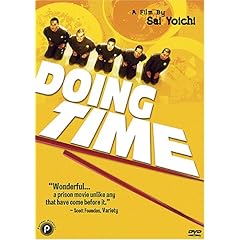
Japanese society has no such problem because they don't care about moral intent. They treat crime as a problem of impulse control. This point is beautifully and brilliantly illustrated in the film Doing Time by Sai Yoichi. A guy goes to prison for the crime of wanting to feel the power of firing a pistol. He shoots into a bucket of water alone in a rural area but he gets caught anyway and sent to prison.


Almost all Japanese convictions come with a confession. (Historically in China, all convictions required a confession.) Prison in Japan is not a place to punish, it is an isolated environment where people with weak impulse control get an opportunity to develop it.


If I ever teach high school students again, I think I'll make this film required viewing.


OsenseiThis is important in the realm of martial arts because the pivotal term here, the operative word, is intent or yi in Chinese. Many internal and external martial artists claim that intent is the most important part of practice.


You can have a really clear and strong intent and still not get the results you want. Our good intentions do not necessarily produce good results. Intent can actually be a type of aggression that stops us from experiencing subtlety. Highly focused intent can even make us blind to what is right in front our our faces.


In our legal system we also make a distinction between pre-meditated intent and spontaneous intent.


I'm honestly not sure how to explain the difference between the Chinese term yi and the English term intent, but I thought this little discussion about impulse control might generate some insights.


Note: Yoyogi park, in central Tokyo, has a designated area for people to permanantly camp-out. It is clean and safe, and kind of edgy weird experimental.


Down With Health!

I'm really starting to hate qigong.


A member of my extended family who is a famous lawyer once said to me that she couldn't understand people who do things for their health when they aren't having any health problems.

I'm sick of hearing people ask, "What is this good for?" The operative this being some exercise or even some entire internal martial art.

But I'm even more sick of the answers other teachers give. "This is good for lowering blood pressure," "This one is helpful for diabetes symptoms," "Do this everyday and you'll never get migraines," "This is proven to help with balance problems as you age."

This is all just as lazy as the infantile martial arts extremists who say you should practice so that if by a stroke of bad luck you happen to get attacked, you will be thoroughly trained to defend yourself against all odds.

Listen world! If you want to have a long life, your best shot is having friends of different ages in different walks of life. Be part of a complex active social network.

If you want to be healthy, take a walk everyday.

The reasons for studying internal martial arts are: truth and beauty. Study because you want to explore the truth about how your body works, how it feels, how it changes, and how it operates in diverse situations. Study because you want to experience the truth about the stuff you are made of, about the situation of your birth.

The discovery of beauty requires perception, sentience, introspection, and re-creation. The discovery of beauty comes from making mistakes, from getting it wrong, from mis-seeing things and then changing your way of knowing.


Please, trust me. If you know your body inside out from deep daily experience and exploration you will have tools for healing and transformation that are beyond what most other people can comprehend. It's like an extra bonus that comes with the territory.

Qigong was invented as a distinct category during the Communist era to answer the inane question, "What is this good for?"

waterfall

Bones

There is a Chinese expression that goes, "You know it so well it is written on your bones." First I should explain where this expression comes from.

In Daoism the quest for immortality is extremely varied and so quite difficult to define; however, a significant factor in immortality is that other people recognize you have become an immortal at the time of your death or sometime after your death. The so called "highest" way to demonstrate becoming an immortal at the moment of death is to "Rise up in broad daylight with your dogs and chicken." Zhang Daoling (the founder of Religious Daoism) did this, as did his wife, his 3 sons and their wives.

Dao Hongjing and Ge Hong, the two most famous alchemists, became immortals simply by hiring a carriage (you know, a taxi) taking a trip out into the wilderness and then "Sending the Carriage Back Empty." There are hundreds of unique (loosely) documented ways of demonstrating the transition to being an immortal. Often when Chinese people died they were put into big ceramic jars in a squatting position. Then, after their skin and organs had fully decomposed their bones were transfered to a smaller jar. It turns out that some immortals were recognized during this transfer of bones because Daoist sacred texts (like the Daodejing for instance) were written on their bones!

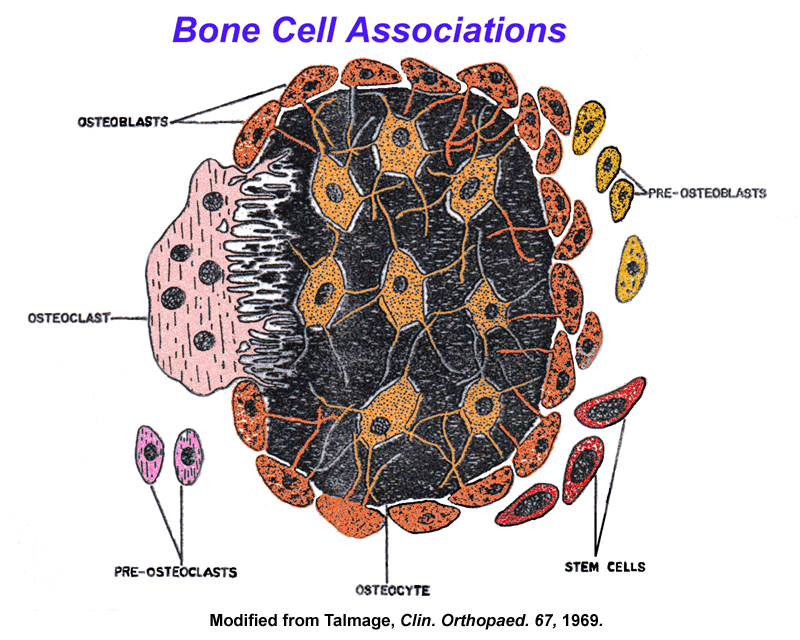
You can tell an enormous amount about how someone lived by studying their bones. The shape, density, places of wear, and chemical composition of a persons bones tell a real story. This is the premise of the wonderful Fox T.V. show Bones where a forensic anthropologist and an FBI agent team up to solve crimes by looking at bones. Since my sister is an Archaeologist I sometimes call her up after watching the show to find out if what they did on the show could really happen. Often it can! My sister says she can often tell what kinds of work a person did, or what kind of weapons a person used by looking at their bones.

This got me thinking. It must be possible to tell what kind of martial arts a person was doing by looking at their bones. I want to know if there are people with Taijiquan type bones or Shaolin type bones a thousand years ago. This could be done, and eventually it could be done so well that we could see the entire history of martial arts by region over 3 thousand years!!!bone stuff

So little is known about our physiology. It is hard to put a percentage on, but if we know more than 10% of what there is to know about physiology I would be surprised. Here is some very cool new research about bones, here too.
...(N)ew research shows that bones release a protein called osteocalcin involved in controlling sugar and fat absorption, thus acting like a hormone....

"Because osteocalcin is secreted by one organ and acts on others, it fits the definition of a hormone, making bones part of the endocrine system..."

What do you have written on your bones?

Master Cat

Kungfu KittyA long time ago Tiger was awkward and clumsy. Lacking skill he found a great gongfu master and begged him to accept him as a student. This is how he came to study with Master Cat.

Tiger studied and practiced Master Cat's lessons with great diligence until one day, after many years, he believed he was more powerful and more skillful than Master Cat.

Tiger said to Master Cat, "Thank you Shifu, you have taught me all your greatest secrets and now my gongfu is superior to yours, now I'm going to eat you!"

In the time it took Tiger to say these words, Master Cat had scaled a tree and walked out on a branch, "Oh," said Master Cat, "There was one thing I forgot to teach you."

--------------------

I like this story for its cuteness and because it plays on what we think we know about natural ability. Did the tiger really learn all his gongfu from a cat? It makes sense to me.

But the story also takes for granted the paranoid old master. I have felt that fear of giving away gongfu secrets lurking there in even the most open and generous masters.

Even as we can feel Daoist inspiration surging through the internal martial arts, nudging us to let go of fear as a driving force in our quest for power--the lingering mythic fear of the Mongols, the Qing Dynasty, the Taiping Rebellion, the Boxer Rebellion, WWII, the Purges, the Great Leap, the Re-education camps....haunts our movements and our practice.