Shyness

I've been teaching children for 20 years. In my opinion, there is no such thing as shyness. I believe it is possible that there is some type of mental illness which manifests as shyness; but for the most part what teachers call shyness falls into two categories: Reluctant deadbeats and indolent wannabe royalty.

Fear is real. Students may feel afraid that they are going to be humiliated, or that their assertiveness will result in abuse by their classmates. They may even fear adults.

Some teachers believe that the way to deal with such fear is to create incremental steps which allow students to make conservative choices. Modest choices which are not really threatening. The logic is that over time frightened students will see that participation is fun and will want to take more risks.

Wrong! That only proves that they were reluctant deadbeats or indolent wannabe royalty. If students are afraid, the teacher should try to create exercises which feel really scary. The teacher should simultaneously model supportive behavior. Teachers should communicate thatMadonna being shy anything that goes wrong in the class is the teacher's fault! I tell students "Blame me!" Give students honest feedback and they will trust you. Make it clear that you will take responsibility for anything that goes wrong and they will take risks.

Activities which seem frightening at the beginning become thrilling when they are experienced with out actual negative consequences. (That's how I got addicted to horror movies.) Children who are taught to take risks grow into spontaneous confident adults. Students taught to make conservative choices feel stifled and repressed.

Reluctant deadbeats are usually suffering from lack of sleep or bad nutrition (either too much food or not enough of the right foods.) These problems should be dealt with outside of class.

Indolent wannabe royalty should be given maximum responsibility, preferably control over life and death! Address such students by their proper titles; Prince Zhang, Princess Alia, Queen of the Elves. Allow them to pick the next "volunteer!"

That usually works, but sometimes a very skilled princess will pretend that they are afraid to speak. In that case pretend that they gestured with their eyes at some other student who wasn't looking and call that student up. If they are a true queen they will become indignant and declare that they did not, and would not have made such a choice. You have won. Now all the other students know they are not shy.

[I got this line of thinking from Keith Johnstone who wrote Impro, which is the best book on teaching I have ever read. It claims to be about teaching theater but all the principles are universal.]

Bathing Practice

Each culture has totally different standards and conceptions about what constitutes clean. Last year the New Yorker had some pictures of people living in a garbage dump in Nigeria. They were wearing bright beautiful clothing and looked cleaner than I do. Japanese are incredibly clean, I've watched men in public baths scrub their entire bodies as many as eight times before getting in the bath to soak. Yet I've seen rural places where Japanese will toss trash on the ground.

Within the United States, even among my friends, there is a lot of variation in what we each perceive as "clean enough." For instance I've noticed that female Italian Americans have very high standards of what constitutes a clean kitchen.

I must admit I find Chinese notions of cleanliness puzzling. Chinese brush-bathing seems to be as much about a feeling of health as it is about getting clean. The idea is to enliven the protective layer of qi on the surface of the body.

This layer of qi is called weiqi. The entire surface of the skin is stimulated so that the weiqi will be distributed evenly around the body. Uneven weiqi results in one part of the body being cold while another part is hot. It is also associated with the first stage of many illnesses, and historically with various types of spirit possession.

I highly recommend trying brush-bathing everyday for two months during the winter. After two months if you like it you won't want to stop.

Developing your weiqi will make you more sensitive to wind and changes in temperature. It tends to improve circulation and may help tonify the liver and the lungs.

Instructions

  1. Bathing room should be clean, free of drafts, and not too bright.

  2. Rinse in warm water, a bathing stool, a small bucket, a large bucket, a washcloth, and a brush.

  3. Sit on the stool and fill the large bucket with hot water and douse yourself (repeat).

  4. Refill the large bucket and use the washcloth on your head, neck and face.

  5. Scrub your whole body thoroughly and evenly with the brush, beginning at the top and working toward the feet.

  6. Douse yourself with the remaining water.

  7. Use the smaller bucket to rinse yourself four times with hot water, then once with cold.

  8. Rise your equipment and vigorously dry off using a rough towel.

Mung Bean-thread Salad

At the end of summer Daoists eat foods which cool blood to release any trapped summer heat before starting the tonification process leading into winter.  This bean-thread noodle recipe by Daoist priest Nam Singh is designed to clear heat.

Heat in the blood has symptoms very similar to mild infection.  If the heat is not cleared it can eventually become swelling of the joints, rashes or fever.

The word for mung beans in Chinese is chingdou, which can mean both clear or green. The long clear noodles made from these green beans are  sometimes called long-life noodles. Enjoy!
Prepare 


  • 8 tender romaine heart leaves, washed and dried

  • 1 small package dried beanthread, soaked until soft

  • 2 large stalks of celery, cut in 1-inch strips and blanched inBean Thread Noodles boiling water for 30 seconds

  • 4 scallions, sliced thinly on diagonal

  • 1/2 cup roasted unsalted peanuts

  • 2 eggs, mixed and cooked like thin omelet, sliced as celery

  • 1/2 cup fresh blanched peas or sliced snowpeas


Strain soaked beanthread and add to boiling water and cook until clear and tender.
Dressing


  • 3 T peanut oil

  • 1 T black sesame oil

  • 1-1/2 T rice vinegar

  • 1 T fresh peanut butter

  • 1 T tamari

  • 1 t curry or five spice powder


Blend all dressing items thoroughly with a wire whisk in a large bowl.  Use water to create a light and creamy texture.  Mix with beanthread and vegetables then chil for 30 minutes.  Serve in romaine leaves.

Clairvoyance-Annoyance

Many years ago I studied a mixed internal/external system of gongfu called Lan Shou (Open the Door) with George Xu. I was training 6 hours every day. One of Lan Shou's specialties is the development of ripping and tearing power. We were practicing techniques designed to rip off limbs. It was a lot of fun, no one ever actually got a limb torn off. Injuries were infrequent but when they did occur we used the same basic body of knowledge and experience to fix people that we were using to rip them apart. Years later I learned that we were practicing Tuina (healing massage, literally: push-pull).

When you train to tear off a limb you have to develop specialized Yi, often translated: intentionality. We trained our ability to see weaknesses in peoples underlying structure which could be leveraged to rip a muscle, tendon or ligament. The side effect of all this training is that I would get on the bus and see everyone's chronic physical problems. I would look at someone and imagine myself ripping them apart as if they were a chicken. In my mind each person would come apart in a unique and different way.

The more I trained, the more weaknesses I saw in everyone's underlying structure. It got weird. Finally I decide it was too weird walking around ripping people apart with my mind so I stopped doing that type of practice.

Still, I developed the ability to see and correct alignment problems, and to spontaneously create simple exercises that release tension and increase mobility in joints. This ability is a kind of intuition.
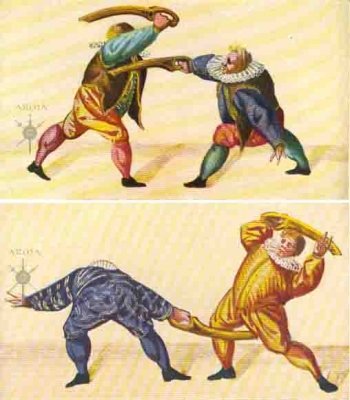
All forms of healing, medicine, and bodywork rely on intuition to some extent. Intuition and clairvoyances are closely related, the difference is that clairvoyance includes a claim of certainty. Superior forms of medicine attempt to verifying what is perceived through intuition, both before and after treatment. Clairvoyant claims are usually self-verifying, and tend to be dismissive of challenges.

In my experience, bodywork is between 60 and 90 percent intuition. The other 10 to 40 percent is technique. I strongly encourage people to develop their intuition, and to reject clairvoyance.

While we can get very technical about mechanisms of injury and repair, we can never be certain what causes healing.

Precpts

The Xiang’er Precepts of the Dao are meant to summarize what the Daodejing says about appropriate conduct. They are held and regularly renewed by all Celestial Master (Tianshi) daoist priests. In a traditional daoist village lay people would also be encouraged to keep these precepts. The word translated here as "practice" is xing which actually means "a way of moving":


The Nine Practices


Practice lacking falseness.

Practice flexibility and weakness.

Practice maintaining the feminine. Do not initiate actions.

Practice lacking fame.

Practice clarity and stillness.

Practice good deeds.

Practice desirelessness

Practice knowing how to cease with sufficiency.

Practice yielding to others.


Translated by Stephen R. Bokenkamp in, Early Daoist Scriptures.


The ninth precept, yielding to others, is wuwei. The first precept probably works better in English as "Be Honest." The second precept is often the tough one for people. The flexibility part sounds cool, but the weakness part is confusing. Here is what Wang Xiangzai says should be the second step of martial arts training:


If one does not have the basic mechanical ability, then no matter what the movement is like, it is all wrong. The same applies to using strength and not using strength. The movements of an ordinary person cannot have strength without constant unilateral tension that disturbs the blood circulation. Every kind of strength based on constant unilateral tension is stiff and inharmonious, and besides that, harmful to health. Having strength without constant unilateral tension is namely having strength without using strength, and when using it, one gains strength.


There is a type of strength that develops from fear of being weak. And there is a type of weakness that develops out of a fear of being too strong. The type of strength (shili) we are trying to reveal when we practice internal arts is potential strength--It can be cultivated while walking, sitting, reclining and standing still.


Walking #4

It's been a busy weekend but I've been reading this interview with Wang Xiangzai that "adz" sent me. It's from the 1940's and really captures Wang's voice like nothing else I've read. He riled people up in a good way. Check it out. If anyone knows the Chinese for "...intuitively perceiving the peristalsis of the whole body," I'd like to know the characters.

Here is my "Dao of the Day": We don't know how humans can walk on two feet.

Birds can walk on two feet but they have huge feet relative to the size and weight of their bodies. Humans have at least six different mechanisms which allow us to balance, a few of which we understand, like fluid in our ears. But basically walking on two feet is still a mystery. When my students are trying to learn something new that seems difficult I remind them that they have already mastered walking, and that's a skill way beyond anything I can teach.

Irreversibility

Kitchen GodThe reason for discipline is to make a practice irreversible.
There is a gongfu rule of thumb, "one day missed, ten days lost." If you start a practice and miss a few days of practice right at the beginning, you basically lose your momentum and have to start over. If you learn something new and don't practice it the next day, it is usually lost by the third day, you'll have to re-learn it. If you have been practicing everyday for nine months and you miss three days of practice, you've basically set yourself back a month.

Chinese martial arts work by momentum, that is why discipline is so important. In English we often say, "Practice it until it becomes second nature." This is a similar idea.

Problems arise when we don't really understand why we are doing a particular practice. Kinesthetic learning often starts out with a method that is supposed to reveal some type of fruition over time. Once the fruition is revealed it can be integrated into everything we do. Sometimes this means we can drop the method. Sometimes the method is itself part of the fruition.

Kitchen GodFor example, the Kitchen God lives over the stove in Chinese homes. He represents an irreversible commitment to keep the house clean. The method is cleaning on a regular schedule. When cleaning becomes "second nature" the method can become more spontaneous, but it can't really be dropped. The fruition is living in a cleaner, simpler, healthier environment, where things are easy to find, easy to store, and easy to get rid of.

But discipline itself is a hook with out a worm. If the fruition does not reveal itself, or if the fruition we thought we were going to get doesn't materialize, the experiment is a failure--the discipline should be dropped. With kinesthetic practices expect to have a clear idea what fruition will eventually become irreversible after about two months. It sometimes takes a little longer to get the idea. A method can easily take two years to truly become irreversible but you should know long before that what the method is doing and how it is changing you.

Kitchen GodMost Daoist inspired methods reveal something about your true nature. Often it is an appetite of some kind. The most obvious example is that sitting or standing practices reveal an appetite for stillness. After about two years of discipline your appetite should be strong enough to direct your practice, rigid or militaristic discipline will actually hold you back. I know my morning standing practice is irreversible because if some anomaly or emergency disrupts my practice, the rest of the day I feel myself being pulled toward stillness--At the end of the day I jump into bed and savor the thought of waking up to my practice.

The rule of thumb is this: We are doing experiments which reveal our true nature; we are not signing up for self-improvement.

Zhang Sanfeng

I've been weeding around for a standard translation of the Zhang Sanfeng Taijiquan creation story. Every book or website seems to tell the tale a little bit differently.

Let's try this one:
Zhang Sanfeng's family came from Dragon Tiger Mountain (Longhushan). Sometime around the end of the Song Dynasty(960-1279 CE) he passed the Imperial exam and worked for the government. He learned some Shaolin and some jindan (meditation). The Mongols invaded, there was war and a new Yuan Dynasty(1279-1368). Side stepping the turmoil and chaos he went off to live on Wudang mountain.

One day he saw a crane and a snake fighting. Each used different natural styles of movement to yield and attack, but neither the snake nor the crane got hurt. That night he had a dream in which the deity Xuanwu appeared and taught him a way of moving. When he awoke he began practicing what Xuanwu had taught him. Sometime later he was attacked by 100 bandits and using his new practice was able to defeat them all. He lived for over 200 years and his practice eventually became known as Taijiquan.

What does this mean?

The Zhang family residence at Dragon Tiger mountain was the home of the Tianshi, the head priest of Religious Daoism. The name Sanfeng means "three mountains" and most likely means he was a member of an inner alchemy jindan lineage. Lineage names are picked from a secret poem, so people in the same lineage of the same generation sometimes have the same name. Either he really lived for 200 years or was several different people from the same generation within a Daoist lineage.

The last part of Zhang Sanfeng's life corresponds with the founding of the Ming Dynasty (1368-1644 CE). At that time the Tianshi, the most important religious leader in the country, went into a nine year retreat on Dragon Tiger mountain for the purpose of teaching the God Xuanwu, to be the head deity of the Chinese pantheon of gods. At the end of the nine years Xuanwu was promoted to the seat at the North Star and given the title Zhenwu, the Perfected Warrior. This god was promoted at the request of the first Ming Emperor who had made many sacrifices to Xuanwu (Mysterious/Dark War God) during the years he battled the armies of the previous Yuan Dynasty.

The snake uses wave action, rolling from one one end to the other. The Crane uses opening and closing, drawing in toward the center and pushing out toward the periphery. Zhang lived in a natural setting and practiced Daoist Dreaming. This is the practice of weaving Night and Day seamlessly together. His experiences during the day drifted into his dreams, and his dream body became his waking body.

Infants do not know if they are awake or asleep and they can spend hours playing with their internal organs. To the infant what is inside has no name and what is outside has no name. This undifferentiated state has a name in Chinese: Taiji.

The art of Taijiquan is a guide to weaving our day into our dreams and the unbounded movement of our dream bodies into our waking bodies.

The two Zhang's (Sanfeng and the Tianshi) were on the same mountain, hanging with the same god as he went through a transformation. In Daoism they are called seed people because they carry knowledge from previous eras and make it relevant in the present.

Why Create a Martial Art?

I just wrote a long response to José de Freitas whose comment at the end of the New Students post is worth reading. It raises the very difficult and multi-layered question of why and how Chinese martial arts were created. To answer it adequately requires knowledge of Chinese history, religion, language (my weakness), and martial arts.

Here is an excerpt of my response to stimulate your appetite:
It might make more sense to argue that Chinese Martial Arts were created to promote the idea of universal responsibility. In a world with no aristocracy and no warrior class, it is the citizen-merchant-farmer who must be prepared to defend the nation, the family, and the internal social order. (Notice I did not include self-defense, which did not exist as an excuse for fighting in Chinese history.)

I absolutely love this question. If we look at all the individual and wildly diverse Chinese martial arts and all the individual and wildly diverse motivations people have for training in them--and try to work backwards to explain why they were created; it is a mighty tough task. What were the social milieus that inspired and supported the invention of Chinese martial arts? Do they exist in any form today?

I have commented in previous posts that there are quite a few books these days which assert that martial arts were created and preserved exclusively by people who had martial arts jobs. However; many martial arts creation stories talk about someone wandering out of the wilderness, or dreaming a dream, or finding a secret text. I find it hard to believe that these are just silly stories. It is more likely that they are summaries of a longer, more complex story. So in the next day or so I will take on the Taijiquan creation story.

Daoist Ritual Standing

Daoism has always maintained its roots to the shamanic and ecstatic worlds and at the same time used them do distinguish itself. Orthodox Daoist's do not practice any martial arts yet Daoists use swords in ritual dance and summon demon armies.

Ancient martial arts traditions are surely an important influence in the development of Daoism, and Daoism has continued to spin-off inspirations for martial arts. I have a bunch of posts dealing with this that I'm working on, but let me start by addressing an interesting quote that "adz" left in the comments sections of my posts on standing.

For me standing is a very active practice (as bizarre as that sounds to some folk). There are so many different aspects that can be worked, but Yao ZhongXun has already said it much better than what I ever could: Training of the mind alone is not Yiquan as is not physical practice alone. The two must be combined. The essence can only be cultivated by integration of the mind and body. Visualization or mental imagery must be employed in relaxed standing (Zhan Zhuang) to direct an integrated neuromuscular coordination that results in a whole-body response. Kinesthetic perception of the internal/external opposing force pairs (Zheng Li) and internal isometrics is developed to seek, sense, experience, cultivate, understand and master the whole-body balanced force (Hun Yuan Li).

This secular attempt to describe jindan (the golden elixir meditation) runs into the same problems Mantak Chia did.

In Taijiquan it is standard to learn "peng, ji, lu, and an" as four separate internal changes and then put them together in a seamless circular motion. The circles then become smaller and smaller. In Xingyi a very similar method is used in, for instance, the metal element to create cutting movement which resembles a forward moving skill-saw-blade.

Wang Xiangzai, the founder of the Yiquan system mentioned above in the quote, may have developed his method from Xingyi. One practice we do in Yiquan is to stand like we are holding a tree. We then move the imaginary tree imperceptibly up-down, left-right, forward-back, and inward-outward. Like taijiquan, this individual training eventually becomes a seamless movement and what starts as small circles becomes smaller and smaller until we can integrate these small circles into our larger movements. We then have power in all directions.

It is a stretch to call this meditation or standing still, no? My friend was joking that it is meditation for people with Attention Deficit Disorder (A.D.D.).

(Here I go digging myself a whole so deep I can't possibly dig myself out in one post.)

In Acupuncture we call the first needle, "calling the qi to order." In Daoist ritual the first act is also called, "calling the qi to order." To call the qi to order one must first invoke the Perfected Warrior, Zhen Wu. This is done by standing still using the physicality of the method described above. It is a totally ready stance--able to instantaneously issue force in all directions.

But Zhen Wu is not just a physicality, he is a whole way of seeing the world, and he is the first stage in the practice of jindan (golden elixir) (Daoist ritual was totally integrated into a solo meditation system during the Tang Dynasty, 600 CE.)

Zhen Wu is visualized in his armor with skin like the night sky drawing inward, chain and silk is woven into his hair. He has bare feet and he is energetically on the edge of his seat. Think of him as holding a sword in one hand, without a sheath, the tip of the blade is dragging on the ground. He is the embodiment of the taijiquan concept song (or sung, let go, sink) he is utterly fearless, the god of nothing-to-lose.

This is stage one. Don't get me wrong, stage one is cool. But these secularists have no way to deal with stage two, and no coherent explanation of fruition. (Perhaps we should have an old-folks home especially for people who can issue power in all directions at once.)

UPDATE: the quote about mentions "whole body balanced force," when I wrote this ten years ago I didn't know what that was. Now I teach it! But I call it the six dimensions and three thresholds of counterbalancing.