Unarmed
/In this post we discuss why the term "unarmed" is rarely appropriate for news reporters to use. What vocabulary is appropriate for news organizations to use when discussing violence? What can we learn from self-defense law?
Read MoreNorth Star Martial Arts
In depth discussions of internal martial arts, theatricality, and Daoist ritual emptiness. Original martial arts ideas and Daoist education with a sense of humor and intelligence.
Books: TAI CHI, BAGUAZHANG AND THE GOLDEN ELIXIR, Internal Martial Arts Before the Boxer Uprising. By Scott Park Phillips. Paper ($30.00), Digital ($9.99)
Possible Origins, A Cultural History of Chinese Martial Arts, Theater and Religion, (2016) By Scott Park Phillips. Paper ($18.95), Digital ($9.99)
Watch Video: A Cultural History of Tai Chi
New Eastover Workshop, in Eastern Massachusetts, Italy, and France are in the works.
Daodejing Online - Learn Daoist Meditation through studying Daoism’s most sacred text Laozi’s Daodejing. You can join from anywhere in the world, $50. Email me if you are interesting in joining!
In case my readers want to check out my entire work history and education, my Curriculum Vitae 2014 is now available for download here on my website and also for viewing at academia.edu.
It is a brave new world (again).
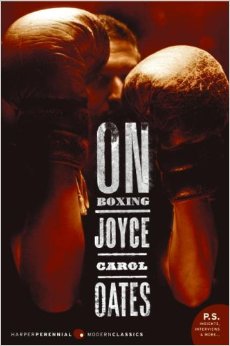 I just finished reading On Boxing
The book jumps right into philosophy and has great stuff like this:
The old boxing adage--a truism surely untrue-- that you cannot be knocked out if you see the blow coming, and if you will yourself not to be knocked out, has its subtler, more daunting significance: nothing that happens to the boxer in the ring, including death--"his" death--is not of his own will or failure of will. The suggestion is of a world-model in which we are humanly responsible not only for our own acts but for those performed against us.
And boxers have frequently displayed themselves, inside the ring and out, as characters in the literary sense of the word. Extravagant fictions without a structure to contain them.
She has much to say about notions of "primitive" and the intensity of emotions:
Those whose aggression is masked, or oblique or unsuccessful, will always condemn it in others.
After putting both feet forward into philosophy she wanders around into the lives of boxers, and major events in boxing history. Some of the essays in this book are informative, in depth reportage, but they are also languid, timeless; as a reader one gets the sense that she deeply savors hanging out in the world of boxing.

On Boxing includes a number of enticing and complex book reviews (more books added to my reading list) and she is not at all shy about discussing racism and, in the final essay, fascism. Check it out.
A review of the film Rigor Mortis (2013) "Geung si" (original title), Director: Juno Mak Writers: Lai-yin Leung (script), Philip Yung (script) Stars: Anthony Chan, Siu-Ho Chin, Fat Chung
I watched Rigor Mortis on the airplane on the way back from Boston last month. This film was dropped in my lap by a scholar I met at the conference named Sean Allen (His abstract is write at the top of this link). He gave a wonderful presentation on Daoism in horror films. Talking afterwards we had lots of ideas to share and I left with a list of films to see! The next day he dropped Rigor Mortis in my lap, extracting a promise that I would review it.
I think we can understand Rigor Mortis as an assertion of cultural archeology. My sense of traditional theater/opera going back 200 years or more, is that the horror-ghost-supernatural genre was very widespread, it may have even been the dominant genre. But like horror today, it isn't the art form that inspires a lot of literary intelligence. To the contrary, if it is written about at all it is often to say, "that was a scary waste of time." But some of us consider it the most creative genre in terms of costumes, props, music and sets, not to mention the most forgiving of bad acting. The horror genre is the most willing to utilize improvisation and ultimately the most willing to risk offending concerned mothers, government officials, and just about everyone else. I suspect this was true in historic China as well.
The makers of Rigor Mortis obviously had a broad knowledge of popular religion, as there are 100's of cultural artifacts in there, actually it would be fun to watch it again and count them. The whole thing can be framed as and example of the land of Millet dreams. The notion of a millet dream world is key to the cosmology of Chinese religion, it comes from a story first written down about 1500 years ago about a scholar who is struggling to start his career, he happens to meet an old Daoist in a café and falls asleep over his millet. He dreams his whole life, apparently in real time, and then wakes up with his millet still warm. You can read about it in this wonderful new complete and concise history of Chinese Literature
In the film, an old apartment building becomes the location of the millet dream, which doesn't actually involve any millet, they use stir-fry instead, and begins at the end of a career not the beginning. It works well because the notion of another reality as a metaphor for where we are living our lives is ultimately and traditionally conceptualize spatially. That is, the unseen-world of ghosts, spirits, ancestors, gods, and demons is ever present, all around us, below us, above us, inside us, beside us, manoeuvring around in chaotic time tunnels. Like and old apartment building.
The basic tentative working hypotheses of Chinese exorcists when dealing with ghostly and demonic forces is that upright conduct has the capacity to lead to the complete resolution of chaotic forces. On the other hand, sex, blood, pain, and other yin substances and actions tend to draw out chaotic forces and even feed them. Thus, in this film an exorcist has to walk this line between drawing out chaotic evil and resolving it. He does this while managing another not-so-well-behaved exorcist who would like to harness some of that slimy red yin power. There are some scary monsters and basically the whole thing is about the undead, conceptualized as conflicting emotions which live on fear, lust and pain, endless loops of suffering. You know, a real family film.
Rigor Mortis doesn't actually let us know for sure whether it is a dream world imposing itself on reality or whether reality is just an illusory aspect of a dream world. Thus it posits the basic traditional-- Zhuangzi is dreaming he is a butterfly, and the butterfly is dreaming he is Zhuangzi-- Operatic framework of illusion vs. disillusion (See Sophie Volpp
At this moment in history this sort of illusion vs. disillusion art work strikes me as a comic attack on modernity and rationality. Truth isn't knowable so it isn't that important, lighten up already, it's just fake blood and special effects! When it is all over we can get back to the important work of friending and unfriending people on Facebook.
At the Daoist Conference in Boston the issue was raised that in popular film there is often label confusion between tangki or other ritual experts and Daoshi (literally: Officails of the Dao). I would suggest that this may actually reflect real anxiety about the difficulty lay people have in knowing which types of ritual experts to trust. Popular culture, documented in written plays and more recently by anthropologists of village level ritual, sometimes portrays Daoshi as wild warriors and liminal exorcists with amoral magical powers. As we learned at the conference, some groups of elite literati were comfortable using spirit writing to create new forms of Daoism. I think we are headed toward more expansive definitions of Daoism which may include illiterate but theatrically intelligent forms of Daoism.
Still there is good reason for caution about changing our definitions of Daosim. I hope the discussion continues to be framed by Clifford Gertz's ideas that we try to be a form of literature which is expert at relating what people say about themselves, and each other.
Anyway, it is a fun movie, plenty of crows blood, creepy rituals and powerful talisman--check it out!
__________________
The Natan Sharansky
Hong Kong was not a democracy, but under British rule the rights of self-defense, freedom of speech, freedom of assembly, the right to a lawyer, and the right to petition the government for redress of grievances were pretty much intact. But now Hong Kong has been handed over to the Peoples Republic of China (PRC). So naturally I asked Sean Allen (who later gave me my copy of Rigor Mortis and who is an expert on Hyper Masculinity in Asian Horror), "Has Hong Kong made a horror movie since the PRC took over?" He answered that there was indeed a lull, for a few years the masters of horror were holding their breath, but in the last 3 years a number of very serious horror movies have been produced.
This is a real source of optimism for me. I am an American, I believe strongly in Democracy, but societies that protect basic contract rights, rights like self-defense, and freedom of speech can exist alongside democracies. I don't know what the future holds, but the PRC is allowing Hong Kong to make horror films and that is a reason to be optimistic. I now have a list of new horror films to see and review for my readers, as well as some older horror films that deal with Daoist priests. There is no way of knowing whether or not we are in some sort of millet dream, but as long as the horror movies keep coming, I'll pretend that we are.
I'm going to be in Northampton teaching some private lessons and working on a paper for a week starting tomorrow. If anyone lives around there and wants to get together, or you know someone in the area you think I'd like to meet, drop me a line.
This a very funny read, about an important part of Tibetan History. The commentary is already excellent so I'm not going to add anything, but if you think all those famous enlightened Masters of the past were well behaved you probably haven't read the Beer Sutra.
This is a silly post about being in Boulder, Colorado. I'm sitting in a fancy café watching the end of the Tour De France, incidentally. This café has marble tables and black leather seats. Everyone here is in incredibly good shape, it is on a major bicycle route. But Boulder is like this in general, people are in great physical condition.
Anyway, there is a game people play in Boulder called 22/52. Incidentally, I was pretending not to be listening into a conversation in another café when I learned about this game. The rules are simple, you are hanging out with a friend and you see someone in the distance, you then say "22/52" and you both guess whether the person is closer in age to 22 or to 52. If you guess differently the game is on. As the chosen target gets closer it usually becomes obvious who won. You can play for push-ups, or beer, or just bragging rights.
I'm not sure this game would work anywhere but in Boulder but if you have nothing better to do, you can play it all day here. There really are that many "fit" people here.
This makes me think about a concept my father invented called "Social Sorting" back in the late '80's or early '90's. The idea is now popular with economists, especially when thinking about where people choose to live. The idea is that people sort themselves out into different groups by looking first at a "flag" or a signal that tells a person they may want to join, second experiencing a "screen", which is some kind of measuring-up, assessment, or perhaps a necessary barrier, and third the "overflow," which weeds people out who for whatever reason don't fit in.
Anyway this all gave me a really cool idea for a Tai Chi video commercial. Instead of 22/52 it would be called 42/72. The camera would start way off in the distance (perhaps a few shots from a helicopter) watching someone doing Tai Chi (or Baguazhang or some other type of gongfu). "42? or 72?" flashes on the screen, then the camera zooms in on this really old woman jumping around like a grasshopper. It should repeat three times with different people in different location for variety. At the end it can have some tag-line like, "Aging with power and grace: The art of Tai Chi."
Check out the latest article by Ben Judkins about a Junk that was sailed to New York and then London in 1851.
The most exciting thing about it is that a group of 20 Southern Chinese sailors, hired to sail the boat, just happened to have enough martial arts and opera training to put on shows in New York and then in London for 2 years. That is strong evidence for two things:
One, that martial arts and opera training were wide spread at least among sailors. Actually opera might not be the right word here but they had some kind of theatrical performance training, most likely amateur.
Two, they conceptualized martial arts as a performing art that could easily be incorporated into a larger performance.
There is a lot of other fascinating stuff in there too, a ground breaking law suit, a visit by Charles Dickens, and Westerners playing Chinese opera instruments. There is also some suggestion that the religious rituals they performed for themselves were accessible as performance. Now I want to know more.
A place to train and learn about traditional Chinese martial arts, which are a form of religious theater combined with martial skills.