
Charlie Chaplin in Java and Bali
/Some interesting stuff all the way through but the dance lesson happens around 8 minutes in:
North Star Martial Arts
In depth discussions of internal martial arts, theatricality, and Daoist ritual emptiness. Original martial arts ideas and Daoist education with a sense of humor and intelligence.
Books: TAI CHI, BAGUAZHANG AND THE GOLDEN ELIXIR, Internal Martial Arts Before the Boxer Uprising. By Scott Park Phillips. Paper ($30.00), Digital ($9.99)
Possible Origins, A Cultural History of Chinese Martial Arts, Theater and Religion, (2016) By Scott Park Phillips. Paper ($18.95), Digital ($9.99)
Watch Video: A Cultural History of Tai Chi
New Eastover Workshop, in Eastern Massachusetts, Italy, and France are in the works.
Daodejing Online - Learn Daoist Meditation through studying Daoism’s most sacred text Laozi’s Daodejing. You can join from anywhere in the world, $50. Email me if you are interesting in joining!

Though its muscles still have a vital role - after all, a quarter of the frog's entire mass is in its legs just for this purpose - these jumps would be physically impossible without its springy tendons.
As the frog readies itself to leap, its calf muscle shortens. After about 100 milliseconds, the calf muscle stops moving, and the energy has been fully loaded into the stretched tendon. At the moment the frog jumps, the tendon, which wraps around the ankle bone, releases its energy, much like a catapult or archer's bow, causing a very rapid extension of the ankle joint that propels the frog forward. The entire jump — from preparation to leap — lasts about a fifth of a second, the experiments showed. Other frog species jump much faster.

WUHAN, Nov. 16 (Xinhua) -- China will build a theme park showcasing the traditional martial art of Tai Chi in Wudang Mountains area, legendary home of the marital art and a UNESCO World Heritage Site renowned as a center of Taoism.
The administrative office of Wudang Mountains and American company Landmark Entertainment will cooperate to set up the Tai Chi theme park in the central province of Hubei, said an official with the administration on Wednesday.
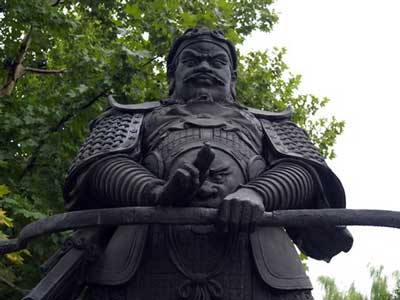
 Click for originals and bigger size.



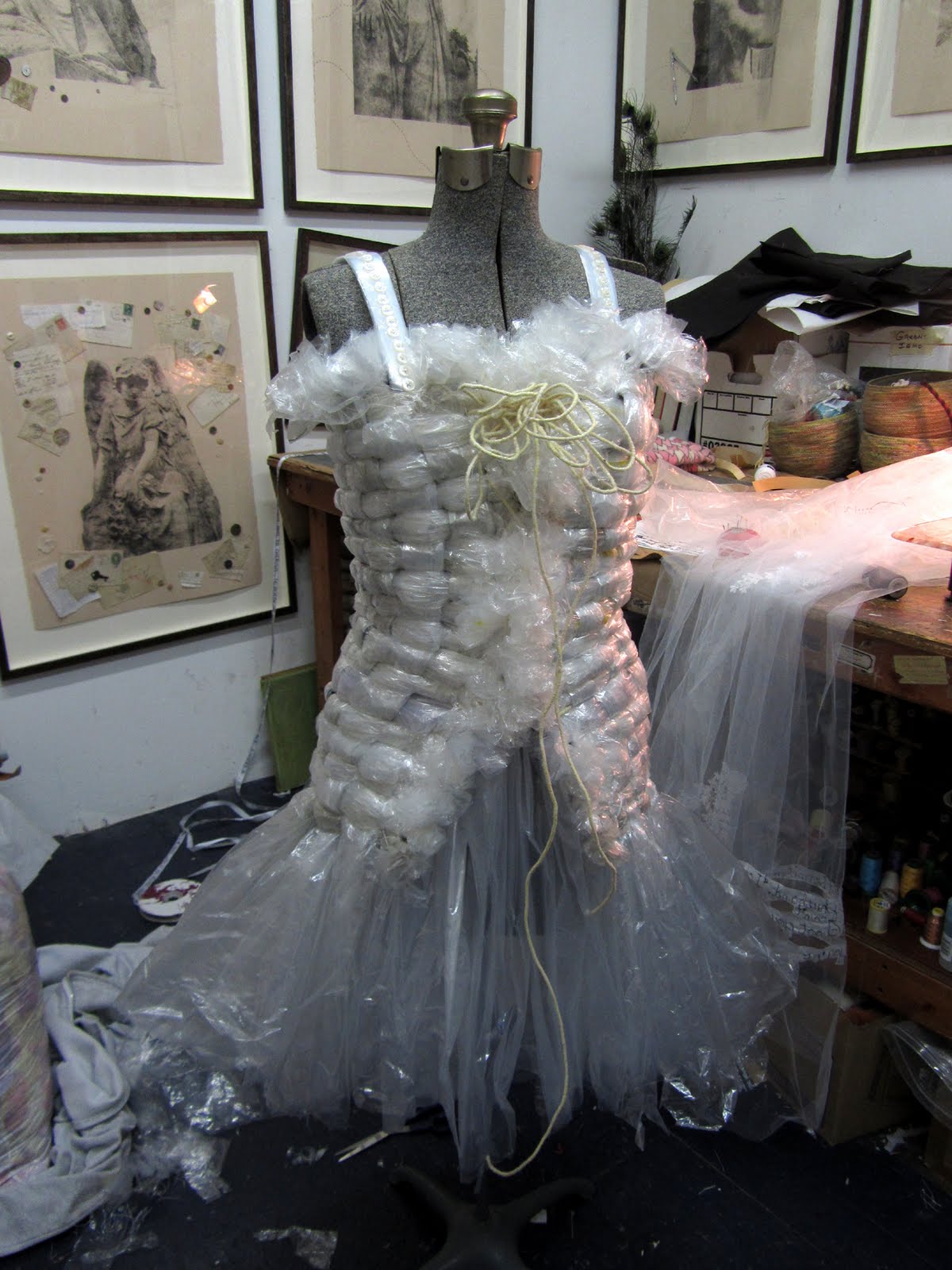 Dry Cleaning Plastic Dress by Susan Lenz
![alg_kidneys[1]](http://s3.media.squarespace.com/production/1425671/17265221/blog1/wp-content/uploads/2011/10/alg_kidneys1-300x223.jpg "alg_kidneys[1]") Autumn is the season for clearing heat from the lungs and refining technique. One of the best foods for clearing heat from the lungs is the pear. The skin of the pear is used if the condition is medical. So eat pears raw or lightly stewed with a dribble of honey. The Classic of Medicine (Neijing) says clearing heat from the lungs protects against fevers in Winter. Not sure what the mechanism is there, but I love pears so I'm sharing. The suggestion to refine technique is a message about efficiency, the Autumn is about toning it down and taking time to integrate all the wild experimentation of the past two seasons.
Autumn is the season for clearing heat from the lungs and refining technique. One of the best foods for clearing heat from the lungs is the pear. The skin of the pear is used if the condition is medical. So eat pears raw or lightly stewed with a dribble of honey. The Classic of Medicine (Neijing) says clearing heat from the lungs protects against fevers in Winter. Not sure what the mechanism is there, but I love pears so I'm sharing. The suggestion to refine technique is a message about efficiency, the Autumn is about toning it down and taking time to integrate all the wild experimentation of the past two seasons.
And if you've been doing that, in about four weeks you will be ready to start transitioning into Winter practice. In Winter we store Qi, water the root, and nourish the kidneys. So what does this mean? In the days before industrial commerce made food cheap and plentiful, to the average peasant it probably meant eat whatever rich foods you can find. The best way to do that in our era is with nutrient rich bone stock that you make yourself. If you want organic stock bones, in my part of the country, you are in direct competition with the massive pampered dog population. However, if you buy bones in bulk it's a little more reasonable. We filled up our freezer with bones for the Winter for about $60. 'Watering the root' basically means drinking nutrient rich broth the way most of our ancestors did. Think stews.
The Daodejing says, "to be full, hollow out," thus in order to store Qi one must first cultivate emptiness. Once emptiness is established, storing Qi is automatic.
Well, not totally automatic. You must also nourish the kidneys. How does one do that? Hold that thought.
Hopefully none of my readers were paying attention last year when I had an argument on the insane internal martial arts discussion website Rum Soaked Fist about whether the terms jin 勁 and jing 精 actually mean the same thing. As my Indian Dance teacher used to say, "A little learning is a dangerous thing."
Jin is translated by Louis Swaim (I'm doing this from memory) as 'power which resembles the flowing of underground streams.' Jin is an expression used in compound forms like pengjin (wardoff), mingjin (obvious power), or tingjin (skillful sensitivity), to mean a specific type of power which requires skill and time to develop.
Jing on the other hand is a much bigger and harder to explain key concept in Chinese cosmology. It is usually translated 'essence,' because of it's association with purification. But it generally refers to stuff that reproduces itself. In quasi-medical terms it is sperm and eggs, scabs, what clots the blood, and when it is strong in the body--a full head of hair and strong finger nails. In Daoism Jing is the most solid and substantial form of Qi. If we posit that the entire cosmos is one giant mind form, then jing is its memory function. Stay with me...
Any first year Chinese Medicine student will tell you that Jing is stored in the kidneys. They will also tell you that sex, drugs and rock'n'roll will deplete it. Daoism has a precept against wasting jing or qi. The term is pretty amorphous as you may have deduced by now. In is particular Daoist precept the distinction is that qi wasting is unnecessary effort, while jing wasting is depletion to the point of injury. So to damage ones body is to damage ones jing. Why? because the moment injury happens, the kidneys start to release jing-- jing is released from the kidneys because it is what repairs us.
Obviously, jing is one of those concepts which, as Roger T. Ames might put it, offends against the most basic notions of Western categorical thinking--it is simultaneously an event, a substance, a trend, and an action. Jing repairs (verb), it is what repairs (noun), it is visible only indirectly and is measured by that which it repairs so to some degree it is the substantive aspect of our bodies. Jing is the shape of our eye, and the dark circles that accumulate around them after years of not enough sleep. Jing is the markings of age. Jing as a substance decreases in either quantity or quality as we age. But as a substance it remains pure.
Tension in our bodies is simply qi concentrated by the mind. Disperse the qi and the tension will be gone. But chronic tension is qi concentrated in the same location day after day. Qi is pure and has no memory function, the tension's location is remembered by jing. So chronic tension is regularly drawing jing out of the kidneys where the mind mixes it with qi. Because jing and qi are both pure, they naturally separate, like oil and water. For chronic tension to happen at all takes considerable and regular effort.
I would never have gotten into the argument at Rum Soaked Fist if I hadn't been repeating what I heard from George Xu: "Jing and jin are the same."
"What?" I asked, "How could that be, they are different characters in Chinese?" (精 and 勁)
"It doesn't matter," he said, "They were once the same term and the same character."
Remember way up at the top of this post I asked the question, "How does one nourish the kidneys?" We're getting there. The kidneys love sleep. They love sleep because they love stillness. The kidneys are like a very fine instrument measuring vibration, shock, tension and fatigue. If we can feel our kidneys they will indicate when we are exerting effort or experiencing strain. And...They will tell us when we are using power. Ah hah! You say, power, you mean jin right? Yes, young Skywalker, any trained or refined gathering of power or release of force is called jin, in Modern Chinese. The kidneys experience all jin as stress, as a loss of jing.
Thus pure internal (martial arts) should be defined as not using jin/jing. If an art uses jin, then it is mixing jing and qi. It is exerting some strain on the kidneys. The basic Tai Chi adage goes: "The body follows the qi and the qi follows the mind." If the mind causes jing to be released from the kidneys, qi will mix with jing in the body, and the mind will move the three all at once--thus destroying the mind-then-qi-then-body order of movement. On the other hand, if the body is totally quiet, as measured by no loss of jing from the kidneys, then the qi will automatically float off of the body and the mind will easily lead it. If the whole torso is also empty, it will naturally fill with qi.
And that is what it means to nourish the glorious kidneys.
A place to train and learn about traditional Chinese martial arts, which are a form of religious theater combined with martial skills.

