Workshop Yu Cheng Yong

Yu Cheng Yong

I'm going to a workshop this weekend with Yu Cheng Yong:
Master Yu Chen Yong Born in 1943 Tian Jing, China. Started his training as a wrestler in 1953 then moved to Tai Ji in 1957 with famous Master Wu and Master Niu. He also studied Ba Gua with famous Master such as Gao Yi Shen and Yang Ban Hou large frame Tai Ji with Master Niu Lian Yuan and Zhao Bao Style Tai Ji with Master Hou and Master Yue. One of his teacher is the very famous master Han Mu Xia whom defeated the Russia champion wrestler in 1930, which he then went on to win 10 gold metal from 10 different countries. The metals are now in the China National Historical Museum. In 2000, the master performance in Tian Jing master Yu got 1st place for the title of "best Master performance". In 2005, Master Yu acquired famous master Zhao Bao Tai Ji title from Wu Dang Mountain.

UPDATE:  The US State Department would not give him a visa.

Cranes Feet

Bay Area NatureTaijiquan is often said to be the combination of the movements of a crane and the movements of a snake. I haven't had a lot of time to observe cranes but there are some great blue herons around the park where I teach.

The other day I watched a heron stand on a grassy field and eat five live baby gophers. It waited in stillness and then struck suddenly into the soil. I have it from a reliable source that they are actually feeling the vibration of the gopher under the ground. They must use the difference in the intensity of the vibration in each foot to determine the location of the gopher. They may even develop a mental picture of the gopher's movement and tunnel system.

When you practice internal martial arts you want your feet to be so relaxed that you could pick up even the slightest vibration and get a mental picture of what is causing it. Any tension or excess movement in your feet and this ability will be obstructed. Your feet must be completely devoid of an agenda.

Our great ape ancestors hunt gopher-like critters called bushbabies. They sharpen sticks and wait by their holes to spear them. My guess is that they also have some ability to sense vibration with their feet and use it to create a mental picture.

I have an "edge theory" based on my experience which goes like this. At the tip of our tail bone there is a small sphere called the coccygeal body (Wiki). It is surrounded by a capillary net strongly suggesting that it excretes something which goes directly into the blood, a property which would make it an endocrine gland. But so far, no one has figured out what it excretes. My theory is that vibrations come up both legs and meet at the tip of the tail bone simultaneously triggering this gland and vibrating the spine all the way up to the teeth. If the frequency of the vibration is one we associate with small animals which we would like to eat, our mouth starts watering. If the frequency of the vibration is very deep like from an elephant, a stampede, or a lion, our mouth goes dry, creating a fear response. (Here is a wacky site which presents another edge theory.)

Anyway, practice keeping your feet so relaxed that you can feel under the ground.

Why Ritual?

Sometimes we have very rational explanations for our actions which later turn out to be dubious. The human mind likes to believe it is taking a particular action because it is right or justifiable or natural or smart. We have the ability to think up strategies for gaining advantage. We can manipulate our environment. But we also seem to have the ability to get "stuck" in "mind-sets" and to repeat strategies which have worked before but which no longer are very effective.

Occasionally I get a student who has a strong reason for wanting to study gongfu or qigong who sticks with it for a few months or a year and then forgets why they are studying. Perhaps that is because their relationship to movement and body image has changed and they simply don't have the same problems they used to have.

Sometimes that forgetful student who used to have strong motivations will quit practicing for a time until they come up with a new reason for studying. Then they will start the cycle over again, eventually they forget why they came to practice and they quit again.

There are hundreds of great, mediocre, and rather weak reasons for practicing gongfu or qigong. Just because you are able to remember your "strong" reason for practicing doesn't make it true. In actuality our reasons for practicing are changing continuously. From era to era, from year to year, from day to day, from hour to hour.

The ability to use reason effectively means understanding both how easily it can change within a complex or dynamic context and how easily we can fall prey to dogma or a mind-set or a "strong reason."

Ritual; whether it is doing a gongfu practice everyday, or performing a Daoist ceremony on a particular day of the calendar, is done regardless of the immediate reasons one may have or not have. Ritual is action taken with out consistent meaning. Ritual practice itself is not a defense against dogma; however, the practice of ritual has the capacity to reveal the way or mind seeks to lock on to a particular way of perceiving our world.

For heaven's sake, ritual is not a discarding of reason. It is a good thing we use reason to manipulate our environments for pleasure and power. But reason is a form of aggression which itself can cloud our vision. Ritual has the capacity to re-pose the question: How important is reason?

If you don't practice ritual from this point of view, you will occasionally have a crisis of meaning.

The Coccyx and the Xiphoid

coccyxI could not find an image of a whole human torso in the mid-sagittal plane on the internet. Perhaps that is the reason why I am writing this post. (This project to map the body will be great when it is finished.)

Everyone that has even peeked at Traditional Chinese anatomical concepts is familiar with the du and ren channels which wrap the torso at the mid-sagittal plane. (The term du meaning governing, and the term ren meaning conception.) Basically, one goes along the back of the torso and other goes along the front. The coccyx and the xiphoid process run along these meridians.

The coccyx, otherwise known as the tail bone, and the xiphoid process, located at the very bottom of the sternum, are simular in many ways. They are both bones whxiphoid processich attach at one end to another bone and at the other end appear to be reaching out into the abyss. They are both joints. They are both capable of movement much like the tip of a finger. Most people have little awareness of either, and it is even rarer that someone would comment on their mobility, or mention the two of them in the same breath.

They are in fact connected together. A ligament extends from the bottom of the sternum straight down to the pubic bone which is then connected by a series of bifurcating ligaments to the coccyx.

The xiphoid process is involved with breathing and it touches the diaphragm. Ligaments also come down from the back of the diaphragm along the front side of the spine all the way to the tip of the coccyx.

If force along this plane is diverted to the left or the right by tension or irregularly shaped bones it will be diminished. Feel the connection between these two important bones and joints. Check to see if you transfer power directly between them along the ligaments. If not, you will want to improve that connection, it will improve your overall alignment and power.

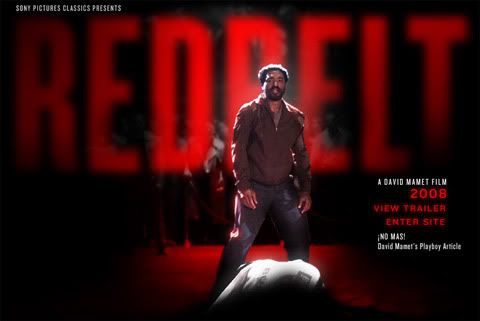
What David Mamet Understands

David Mamet understands that whether you are in your own backyard practicing forms, in a knife fight at a bar, or competing in the Ultimate Fighting Championship--martial arts is a performing art which does two things:
1. It demonstrates that martial prowess has a unique potential to transform situations.

2. It transmits a set of values.

Whether your martial prowess is called "Weakness with a Twist" or "Bloody Elbow," it still demonstrates potency. Your martial arts performance can convey a wide range of different values, from extraordinary discipline, to winning is paramount, to never intensionally hurt someone--but it always communicates--it always transmits. In that sense, it always has a social function.

The film Redbelt is a must see!

Shaolin Monks: Ballet

Lines BalletLast night I saw a wonderful sold-out performance of Alonzo King's Lines Ballet company doing their smash hit Shaolin Monks. Watch a clip here.

Much to my relief, the performers from Shaolin Temple USA were a pretext to show some great dancing, not the main attraction. It was a vehicle for exploring a theme.

The choreography is pure modern, in the sense that its single purpose is to display virtuosity. What I personally love about ballet is perfect technique, and these dancers have it. Their bodies exquisitely reveal the heights of muscular agility. The dancers muscles draw the torso inward and upward; creating a dense yet highly mobile structure for the expression of line and shape, time and gravity.

Interestingly, from a martial arts point of view, dancers don't move around their center. This is funny to me because I myself studied for two years with Alonzo King (20 years ago) and like all dance teachers, he teaches his dancers to "find their center." But in dance, one's center is the center of mass or the center of gravity. Ballet dancers are sometimes even more perceptive about space than martial artists are, but they don't differentiate qi and jing, they don't move qi around the body.  They spin like a dynamic top which can change its shape in motion, not like a gyroscope.

Alonzo is a wonderful teacher, encouraging and funny, he taught me to appreciate classical music with every cell in my body. Although I was always a jumper who loved jumping, my favorite part of class was Adagio, big and slow. (Small wonder that I ended up putting most of my eggs in the internal martial arts basket.) During the very last class I took with him, we were doing balance work at the barre (leg extensions and port de bras). I remember I was having a really good day, my balance was on, I was on my toe with my leg in an arabesque and my hand off the barre. Alonzo noticed, walked over, and whispered in my ear, "Great, but you look like a zombie."

It was very funny, but I thought to myself, "Ballet is turning me into a zombie!" My long term readers will probably remember that I love zombies; however, at that time I didn't want to become one. I realized that I didn't care enough about how I looked to be a ballet dancer, and I still needed to find out what I did care enough about.

Yesterday afternoon a group of about 25 of my Northern Shaolin students performed at their school. These 3rd and 4th graders rocked the house. One of the things I'm most proud of is that I've been teaching a number of Special Education students with autism and other disabilities. They have improved so much that you would not have known which students they were just from watching the show.

A few of my students are getting so good that I was disappointed. I wanted them to be more professional, I wanted them to put on the best possible show. They don't yet have the consistency of a professional, even if they do some things as well, or dare I say it, better than the "monks" from Shaolin Temple USA!

In a way it is not fair to compare them because Shaolin Temple USA is not authentic Shaolin. It's wushu. It lacks the weight of true Shaolin. (You may be thinking, come on man, who are you to say that? But remember, I started studying Shaolin in 1977, before Shaolin Temple was reconstituted.) The "monks" are at their best when they are in the air or rolling on the ground and doing tricks. Near the end of the piece a few individual "monks" did some elegant soft choreography that I would love to see again.

Forgive me, I'm too tough to be a proper critic, I care too much. I'm too inspired! If this show is coming through your town definitely check it out! It will inspire you too.

I also hope that this is the beginning of a trend--where dancers and martial artists see their common goals, aspirations, and history.

And Alonzo, if you are reading this-thank you.

Are Some Ideas About the Heart Trash?

In chapter eight of the Neijing Suwen we have the saying:book
The heart holds the office of lord and sovereign.

The radiance of the spirits stems from it.

That translation is from Claude Larre and Elisabeth Rochat, The Secret of the Spiritual Orchid. Often called the Inner Classic of Chinese Medicine, this 2000 year old text is referenced occasionally in the modern teaching of Chinese Medicine. It is used more often when teaching esoterica because it isn't all that specific.

The expression translated above as "radiance of the spirits," is actually a common martial arts term--mingshen.

Mingshen is mentioned in the taijiquan classics as the fruition of practice. I think it is what I see in a young student's eyes when they are ready and eager to learn. It is also that quality you see in a great fighter's eyes which is capable of ending the fight before it has even started.Mencius

Mencius said: If a ruler has mingshen, when he and his army invade a country, its people will lay down their arms and join him. Now that sounds like either a really good reputation or very potent shamanic prowess.

Descriptions of mingshen in the martial arts deal with perception, consciousness, proprioception, and kinesthetic awareness. These descriptions often sound mystical. Mingshen is the ability to wield forces that seem to be outside your body, outside your opponent's body too. This "space power" gives liveliness and dimensionality to our movement, it is the main subject of the highest level martial arts.

Trash You can't really be a "modern" person and not ask the questions with regard to pre-20th century ideas, "What should I keep and what should I discard?" "What can I use, and what will just hold me back?"

Everyone has to answer these questions for themselves. Are useless acts good for the heart? Does extraordinary martial prowess have any real utility?
Hardly any country in the world has done as much discarding in the 20th century as China has. But it hasn't always been honest or well considered discarding. Now they are looking through the trash to see what can be salvaged.

Fight to the Death

Shake and Bake!Is push-hands a fight to the death or an intimate bonding experience where you try to get your partner to blush?

That depends on what rule set you are using. The rule set you choose will be determined by your view-- that base or root which orients you towards experience.

People whose primary orientation is health, are often worriers. Push-hands is just not self-centered enough for them. Put in a push-hands situation, they will be flimsy and blasé. They'll be thinking, "Why would I want to puuuush you?"

People who see life as a struggle will be looking for an advantage because "Baby, if you aren't on top, you're on the bottom!"

Nobody holds on to the same view all the time, it would be too exhausting. I often teach push-hands from the view that aggression is a naturally occurring process which obscures subtlety. Aggression makes it more difficult to see or feel what is happening. At the same time, this view is not a rejection of aggression, after all who wants to live in a world where everything is subtle? A world without sci-fi or punk rock? (OK, I know the answer, Buddhists right?)

So from this view, the rule set should be designed to bring out an aggressive intent which consistantly loses to a less aggressive intent.

I know some of you are reading this and thinking, "Come on, how is that going to train killers?" or "How could we apply that idea to produce the worlds greatest fighter?"

Is it possible that the weakest approach is destine to prevail? This is not about me claiming to know.  It's about having fun trying.

But let's return to the beginning and look at the question of how people determine their rule sets for push-hands.

I was one of several people teaching at a retreat and after class a guy wanted to push-hands with me. He was strong and thin, about 5 inches taller than me and about 30 lbs heavier. He had been practicing martial arts all his life. We agreed on fixed foot rules. As I filled in his empty spaces, he would duck and twist rather than lose his footing. This is what my students and I call, "losing your frame." If I want to win in such a situation (at least at the jin level of practice) I have to apply either shoulder attack, elbow attack, or split. All three types of techniques could be considered an increase in aggression because they have a high probability of producing an injury in the opponent. Since I didn't want to hurt him, I didn't apply those techniques and I didn't win. But he really wanted to win and so after one of these duck-twists his stiff hand came up and hit me in the jaw chipping my tooth.

Afterwards he told me that he usually practices push-hands with a mouth piece. Later he told one of my students that all of his teeth were knocked out, he had false teeth.

Over the years I've had many push-hands matches which I lost because I would not up the aggression when the other person did. In all cases, at the point in which we were playing by the same set of rules, I was winning, but as the rules changed I accepted the loss.

Kuo-lien Ying said, "You can't convince someone that martial arts works if they don't want to be convinced." They will always have a reason why that wasn't the "real thing."

When I'm teaching I give myself handicaps. I create rule sets which allow the student to win if they catch me being aggressive. For instance, rather than trying to sink below my student, I may sink my qi to exactly the level they are sinking to. I'll take out all the tricks I know and try to use the simplest clearest techniques. If I win, the student has a better chance of understanding why. If I lose, the student should be able to show where my defect was.

If my students start to win by aggression I'll change the rule set and my handicap so that they are always looking for the less aggressive way to win.  (People are often so in love with their aggressive strategies, they have so much fun losing, that it takes a long time to get them to progress. )
Unfortunately you can't do that with a friendly challenger from another school, you have to work with whatever rule set you have in common and hope they don't try to change the rules halfway through.

Again, it is not that winning by aggression is bad, we are always winning by aggression even if that aggression is really really subtle.

What is the fruition of this practice? Is it a skill? Do you get really really good at it? The answer to those questions will depend on your view (that which orients you towards experience).

Clearly a fruition for me has been that I have a choice about whether to react aggressively. That choice may have always been there, but I doubt I would have taken it if I hadn't done the practice. Another fruition is that I welcome aggression rather than rejecting it or attempting to flee it or dominate it. Students are free to explore aggression in my classes, if it comes up we play with it.  And that's true in my daily life too.

Is that a skill?  Am I good at it?  The thing about push-hands is that the moment you kinesthetically understand a skill, it becomes a form of aggression--such that-- if you recognize that skill  in your opponent, you can use it to defeat him/her.  If you catch your opponent using a skill you understand, you can easily defeat them in push-hands.  So skill accumulation is not personal, you don't own it, it is something you are learning to recognize.  A skill is something which will cause you to blush if you get caught using it.  Like an old cheesy pick-up line you thought was original.

Breath

MintDave from Formosa Neijia asked why I didn't mention breathing as a method for lowering heart rate in the previous post about the heart.

First of all, yes, labored breathing is an indicator that you are over working the heart. But if you are panting, or gasping you have gone too far. In other words it is not a very good indicator of over work because the heart has to be pumping too fast for a while before it effects the breath.

To extend the classic Chinese metaphor. The heart is the Emperor and the lungs are the Ministers. If the Emperor is acting inappropriately, the Ministers are likely to be indulgent for a while and they'll try dropping subtle hints before they run into court shouting.

But all of this misses the point that liver stagnation is rampant everywhere there is a booming service economy and cheep food! (For those of you who don't speak Traditional Chinese Medicine Lingoâ„¢, Couch Potatoismâ„¢ is the modern slang term for liver stagnation.) People with liver stagnation need to breath hard! They need vigor. They need to get their hearts pumping. They need to stimulate the liver to surge blood in and out of their limbs. They need to shout at something other than the TV set.

Another reason I didn't mention breathing in the previous post about the heart is that breathing practices are too strong and very hard to generalize about. I have two basic teachings about breathing: 1) Yin Proceeds Yang. 2) "Breath like the silk spinner and the jade carver."
Teaching about breathing is highly individual. If you have ever had an injury to your pelvis, shoulder, neck, ribs, or spine, there is a high probability that it changed your breathing. When injuries occur the breath immediately comes in to numb the area and increase blood flow. It is a bit of a mystery to me why these injuries linger so long in the way a person breathes, but they do. So teaching breathing is highly personal and esoteric.

In The Fundamentals of Pa Kua Chang by Park Bok Nam and Dan Miller they outline a systematic way of developing breathing. They start with one type of breathing and then move to another and then another. But they are very careful to point out that when you switch from one type of breathing to another has to be decided by a teacher who is monitoring your progress closely. In other words, the method can't really be systematized, it is esoteric.

In fact, over many years, unmonitored breathing practices can be harmful to the heart. I'm thinking particularly of taijiquan and yoga instructors who guide their students to breathe into the arms.

While I'm on a roll I should also point out that during intense exercise the muscles and the heart/brain compete for blood.  Since the heart/brain is more important, your body will close off the perineum at the base of your pelvis in order to restrict circulation into the legs, and sometimes it will do the same thing at the armpits.  You will know this has been happening to you if after exercising you feel all "tingly" in the limbs.