
Strategy
/ Sun Tzu, the Art of War
You can not control the future, that is the first rule of warfare. When circumstances change, and they always do, your strategies must adapt and change too. Strategies must have built-in flexibility and a failing strategy must be dropped immediately.
Defense
If you know what type of attack is coming, and you have the time and money, you can build an effective defense. The history of warfare is simple-- a successful attack will inspire an effective defense against that sort of attack. Then comes a new type of attack, which inspires a new type of defense. Periods of good defense cover much longer periods in history than periods of new attacks. (Perhaps modern weaponry will change this, I don't know. There are now defenses for nuclear weapons, they suck, but shelters can be designed to survive an attack, and nuclear missiles can be exploded above your own cities to destroy incoming missiles.)
Not-defending
This explains why matched fighting uses so much defensive technique and real fighting doesn't. In a real fight you have no idea what type of attack is coming. This is one of the priciples that push-hands and roushou are suposed to teach. But of course if you always think and practice defensively, your push-hands will just be a waste of time.
Strategy involves intimate knowledge of everything from terrain, to psychology, to logistics. If you are more familiar with the details of warfare than your opponent, you can devise a winning strategy based on you opponent's weaknesses. Even if you are fewer in numbers or weaker in some other way, you can still win.
Losing Well
It is possible to lose well. All of these lessons are important to martial artists, but this last one is the hardest to learn. I'm reminded of the story of a group of reporters in the Congo whose jeep was stopped by a rebel road-block. The rebels, armed to the teeth with machine guns, took everyone out one by one and shot them. One guy burst into tears. The rebels laughed at him, he seemed utterly pathetic, and then they put him back in the jeep told him to drive off.
Now I'm not saying that reporter actually had a strategy, but if he did, there is no reason to believe it would work a second time. That's the nature of warfare, of fighting, and knowing how to lose well.
Although Sun Tzu doesn't say it, he fundamentally rejects the notion of honor.
 I stay far away from politics in my blog. But yesterday's Wall Street Journal article about a self taught Tribal Warfare Expert named Iraq Mac is just too good to not submit to my readers too.
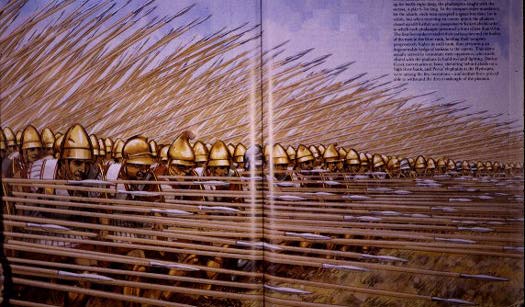 I think this picture helps explain why people developed rooting techniques. From the time of Alexander the Great until Julius Caesar this type of warfare was totally dominant.
 with something called a Centurion. A Centurion was 100 men divided into 20 groups of 5 which were capable of acting as a unit.
 This is a continuation of the series on jin, that started below with a discussion of pulsing.
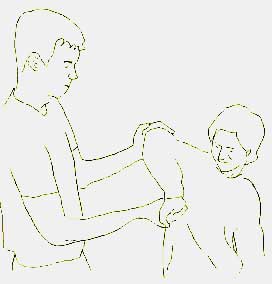 Twisting unevenly will cause lots of damage. That's how joint locks and breaks work. Practice on a chicken if you want. For instance, to bust the wrist, just twist it while immobilizing the elbow.
 Imagine you are a wolf, or some other predator, who is absolutely terrified. Not just passing fear, but the kind of fear that colors everything. Tree branches could fall on you at at any moment, the sun burns and dehydrates, the night freezes. Even the air you breath is frightening.
 I'm working on some posts about fear, but they aren't finished yet.
 I have said before that most medicine comes from war.
 nd too often was secret. There is also a long tradition of publishing best practices.
 . For instance, a liver that doesn't move like a jellyfish when active, will slowly, over years, change the shape and alignment of the bones. An injury to the neck will effect the dexterity of the hand.